7
Standardized A-P radiographs is also critical in assessing proper
femoral offset. If there is a native hip on the contralateral side,
the proper offset can be determined by the horizontal distance
between the center of rotation of the head and anatomic axis of
the femur. If there is a well functioning total hip prosthesis on the
contralateral side, a similar assessment can be made using
the REDAPT™ templates.
Difculties sometimes arise when the contralateral hip is
deformed or has a malfunctioning THA. Additional problems
may be encountered if the ipsilateral acetabulum has failed or
has a protrusio deformity. In these cases, it is up to the surgeon
to determine intraoperatively what the proper offset should be
so as to achieve a hip that is stable without impingement in all
physiological positions.
Once the bone stock has been assessed and proper leg length
and offset have been determined, the surgeon should template
the femur to determine the appropriate stem size. If there is any
compromise in the diaphyseal femoral bone, it is recommended
that the implant bypass the decient bone by approximately
5-7cm and that it engages in good diaphsyeal bone.
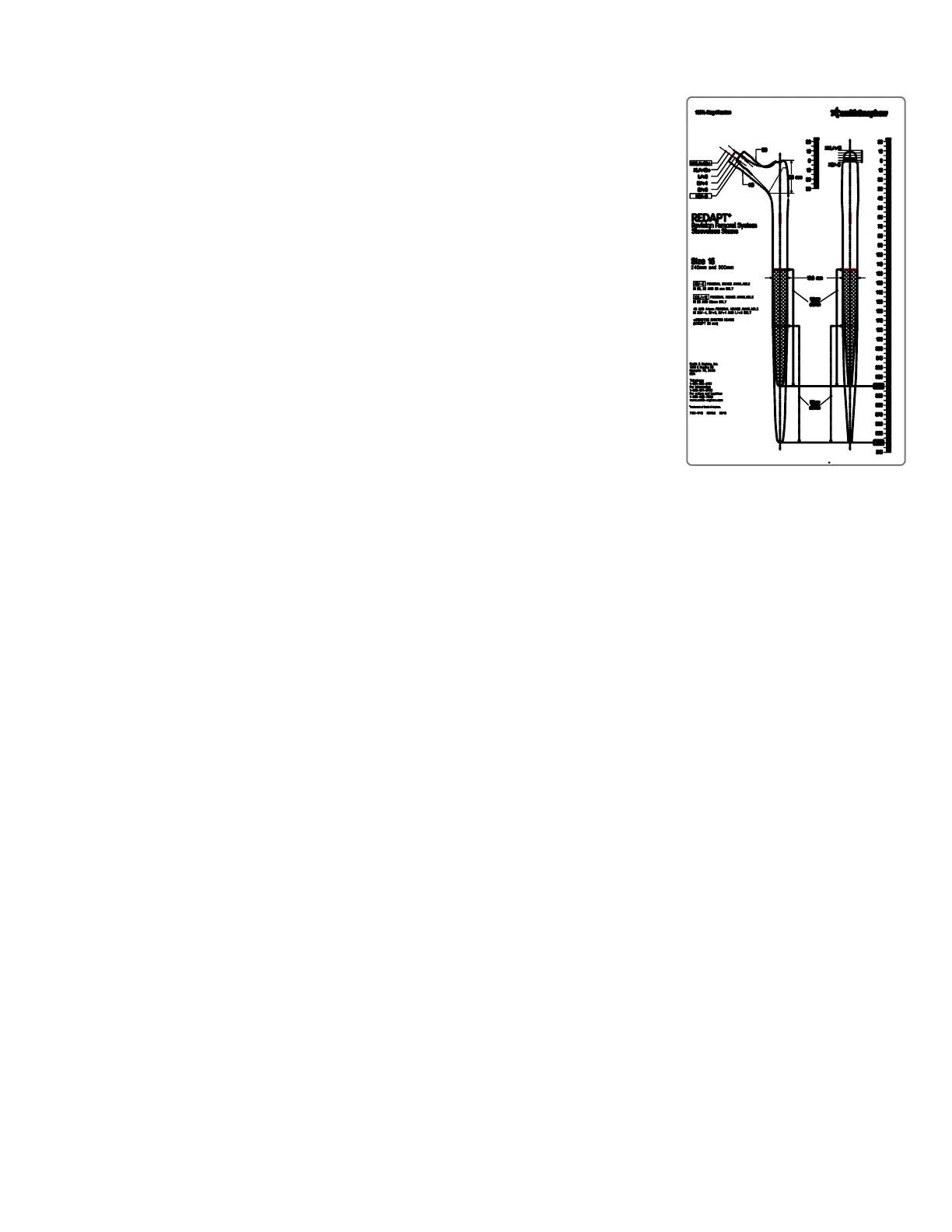
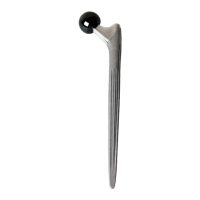
REDAPT templates are available in digital and acetate formats
(Figure 3). Consult your Smith & Nephew representative for
assistance in obtaining templates.
Surgeon tip After the preliminary femoral stem size is determined,
physically draw these on the A-P radiograph in proper position.
Drawing is valuable when selecting the proper implant in
conjunction with the intraoperative ndings so as to establish the
proper implant position.
Figure 3



 To Next Page