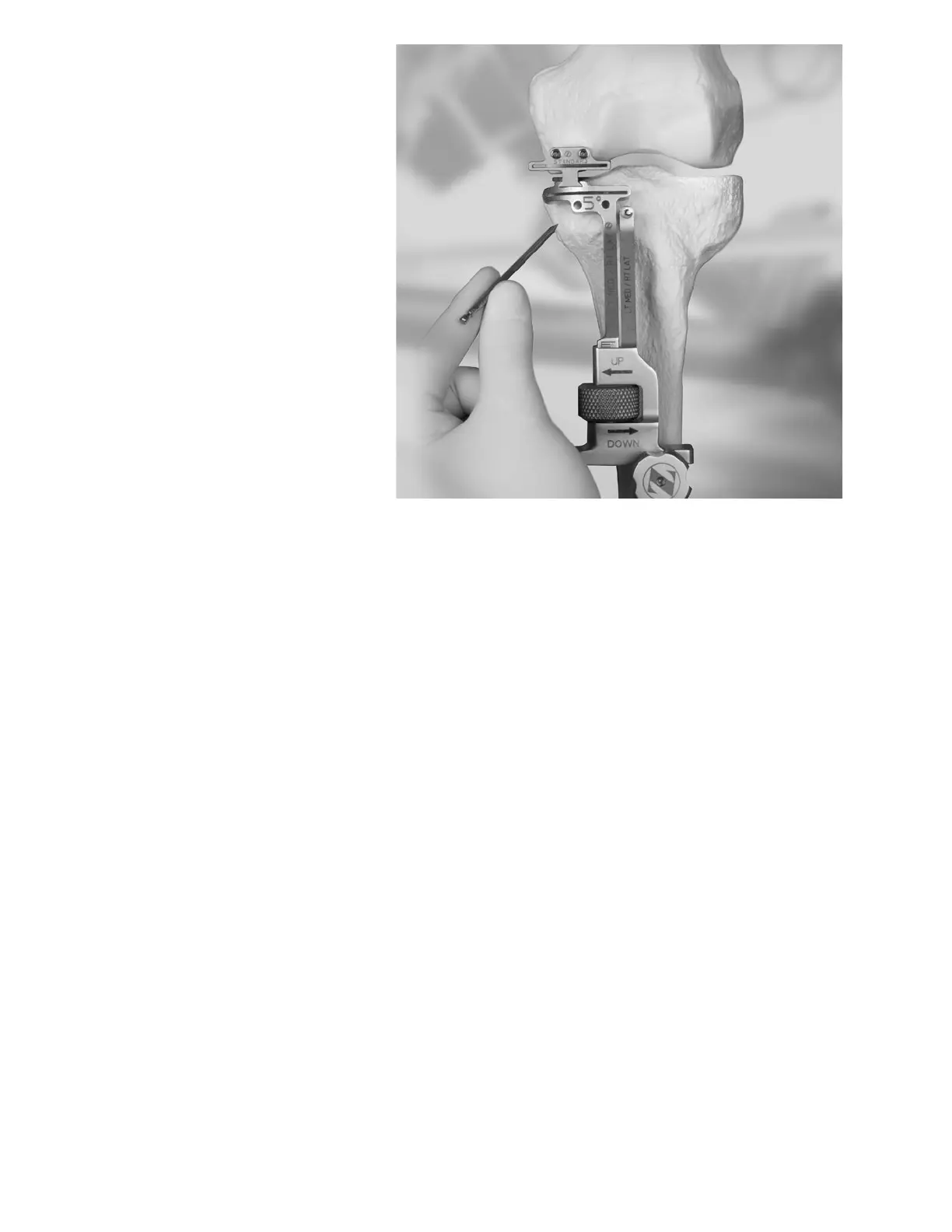
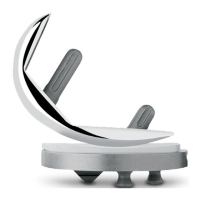
Unicompartmental High Flex Knee
Intramedullary, Spacer Block
and Extramedullary options.
Minimally Invasive Surgical Techniques
for the Medial Compartment
Developed in conjunction with
Jonathan Braslow, MD
Arthritis Institute – JFK Hospital
Advanced Orthopaedics
Indio, California
Andrew A. Freiberg, MD
Arthroplasty Service Chief
Massachusetts General Hospital
Boston, Massachusetts
John J. Swienckowski, DO
Clinical Professor, MSU, COM
Botsford General Hospital
Tri County Orthopedics, P.C.
Farmington Hills, Michigan
James E. Wood, Jr., MD
Chief of Orthopaedics
Harbor Hospital
Baltimore, Maryland
The following technique is for informational and educational purposes only.
It is not intended to serve as medical advice. It is the responsibility of treating
physicians to determine and utilize the appropriate products and techniques,
according to their own clinical judgment, for each of their patients. For more
information on the ZUK Unicondylar Knee, including its indications for use,
contraindications, and product safety information, please refer to the
product’s label and the Instructions for Use packaged with the product.
Indications
Unicompartmental knee implants are indicated
for restoring either compartment of a knee that
has been affected by the following:
1. Noninflammatory degenerative joint disease
including osteoarthritis, traumatic arthritis,
or avascular necrosis;
2. Correction of functional deformity;
3. Revision procedures where other treatments
or devices have failed; and
4. Treatment of fractures that are unmanageable
using other techniques.
Unicompartmental knee implants are single use
only and are intended for implantation only with
bone cement.
Contraindications
1. Cases where there is poor bone stock which would make the
procedure unjustifiable.
2. Active, local infection or previous intra-articular infections.
3. Mental or neurologic conditions that tend to pre-empt the patient’s
ability or willingness to restrict activities.
4. Neuropathic (Charcot) joint.
5. Conditions that tend to place increased loads on implants such
as age, weight, and activity level, which are incompatible with a
satisfactory long-term result.
6. Collateral ligament insufficiency (except in cases where a constrained
knee system is indicated and used).
7. Skeletal immaturity.




 To Next Page