4
EEJP201MBK-Z Rev. A (10/17)
STEPS WHEN CONNECTING
TO BATTERY
RISK OF EXPLOSIVE GASES. A SPARK NEAR THE
BATTERY MAY CAUSE A BATTERY EXPLOSION. TO
REDUCE THE RISK OF A SPARK NEAR THE BATTERY:
1. Attach the output cables to the battery and chassis as
indicated below. Never allow the output clamps to
touch each other.
2. Position the DC cables to reduce the risk of damage
by the hood, door and moving or hot engine parts.
NOTE:
— If needed, close the hood during the engine
starting process.
— Ensure the hood does not apply pressure on the
case or cut the insulation of the cables.
3. Moving parts can cause injury, stay clear of fan
blades, belts, pulleys and other parts.
4. Check the polarity of the battery posts. The POSITIVE
(POS, P, +) battery post may have a larger diameter
than the NEGATIVE (NEG, N, -) post.
5. Determine which post of the battery is grounded
(connected) to the chassis.
6. If the negative post is grounded to the chassis, follow
the steps below.
— For a negative-grounded vehicle, the POSITIVE
(RED) clamp from the engine starter to the
POSITIVE (POS, P, +) ungrounded post of the
battery.
— Connect the NEGATIVE (BLACK) clamp to the
vehicle chassis or engine block away from the
battery.
— Do not attach the clamp to the carburetor, fuel
lines or sheet-metal body parts.
— Attach to a heavy gauge metal part of the frame
or engine block.
7. If the positive post is grounded to the chassis, follow
the steps below
— For a positive-grounded vehicle, attach the
NEGATIVE (BLACK) clamp from the engine
starter to the NEGATIVE (NEG, N, -) ungrounded
post of the battery.
— Connect the POSITIVE (RED) clamp to the
vehicle chassis or engine block away from the
battery.
— Do not attach the clamp to the carburetor, fuel
lines or sheet-metal body parts.
— Attach to a heavy gauge metal part of the frame
or engine block.
SAFETY RULES FOR
BATTERY DISPOSAL
The RBRC ™ Seal on the lithium-ion battery contained in
this product indicates that Snap-on is voluntarily
participating in an industry program to collect and
recycle these batteries at the end of their useful life.
Snap-on’s involvement in this program is part of its
commitment to protecting our environment and
conserving our natural resources.
Risk of explosion or fi re.
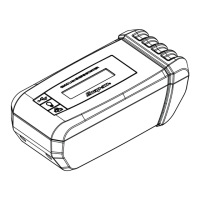
Do not throw away engine starter! Return your
engine starter to a Snap-on authorized repair center
for recycling.
Explosion or flames can cause injury.
Risk of burn.
• Do not attempt to disassemble the engine starter or
remove any component projecting from the battery
terminals.
• Prior to recycling, protect exposed terminals with
heavy insulating tape to prevent shorting.
Fire can cause injury.
SAVE THESE
INSTRUCTIONS




 To Next Page