EasyManua.ls Logo

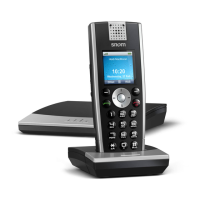
Snom M9 - User Manual

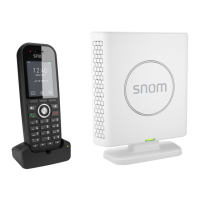
Snom M9
73 pages
Print Icon
To Next Page IconTo Next Page
Loading...
© 2011 snom technology AG
snom m9 Webinar (ST802)
Ahmar Ghaffar, snom
Jan 20th, 2011
snom m9
Unleashed VoIP!!
1

Other manuals for Snom M9

Question and Answer IconNeed help?

Do you have a question about the Snom M9 and is the answer not in the manual?

Summary

DECT;DECT 6.0

What is DECT?

Defines DECT, its standards, utility, coverage, range, quality, security, interoperability, frequency, codec, and adoption.

DECT or WiFi?

Compares DECT and WiFi features, focusing on quality, security, capacity, interoperability, coverage, and performance.

Product Overview

snom m9 - At a Glance

Provides a summary of snom m9 features including SIP accounts, handsets, capacity, pairing, configuration, maintenance, security, CTI, NAT traversal, and Lync 2010 support.

snom m9 Handset Features

Lists key features of the snom m9 handset, such as SIP URI dialing, call forwarding, call hold, voicemail, address book, and intercom.

Server Profiles

The Motivation for Server Profiles

Explains the reasons behind using server profiles for ease of use, integration, and managing firmware builds for snom m9.

Interoperability with Server Profiles

Details how server profiles support non-standard functionality, including SIP and RTP parameters for interoperability.

Supported Platforms for Server Profiles

Lists various VoIP platforms like Microsoft Lync 2010, Cisco Call Manager, Asterisk, and snom ONE that are supported.

Server Profile Setup

Guides on configuring server profiles via the SIP tab, including selecting server types from a dropdown list.

CTI with Action URLs

What are Action URLs

Defines Action URLs as HTTP GET requests for phone interaction with web applications for CTI and remote notification.

Available Events for Action URLs

Lists events like DND on/off, call forwarding, incoming/outgoing calls, and hook states that trigger Action URLs.

Action URL Setup

Explains that Action URLs are provided per SIP Identity and can be configured manually or automatically.

Picture Caller-ID

Picture Caller-ID Overview

Describes the feature allowing the handset to display caller pictures and specifies image format (40x50 Pixels JPEG).

Picture Caller-ID Mechanisms

Explains two methods for displaying caller pictures: VCARDs and SIP "Call-Info" headers.

Using VCARDs for Picture Caller-ID

Details how to use VCARDs to display caller pictures, requiring a 40x50 Pixel JPEG assigned to the contact.

Creating and Uploading VCARDs

Guides on creating VCARDs with pictures and uploading them to the snom m9 base station for display.

SIP Call-Info for Picture Caller-ID

Explains using the SIP "Call-Info" header with an "icon" parameter to provide HTTP links for caller pictures.

LDAP

LDAP Overview

Defines LDAP as a protocol for looking up contact information from a server, listing retrieved data like name, email, and phone number.

LDAP Features on snom m9

Explains LDAP's use for retrieving Caller-ID info and accessing corporate address books on the snom m9 handset.

LDAP Caller-ID Lookup

Describes how snom m9 uses LDAP to retrieve calling party names from an LDAP server for incoming calls.

LDAP Address Book Searching

Details using LDAP to view corporate address books and search for contacts directly from the snom m9 handset.

LDAP Setup

Guides on configuring LDAP settings for identities, including server address, port, name filters, and lookup options.

IPv6

IPv4 Issues Addressed by IPv6

Lists problems with IPv4 like address exhaustion, routing issues, security, and mobility challenges.

What is IPv6?

Explains IPv6 as the successor to IPv4, primarily designed to expand the internet address space.

Primary Advantages of IPv6

Highlights benefits of IPv6, including larger address space, multicast, auto-configuration, and enhanced security.

IPv6 Address Assignment and Auto Configuration

Describes how snom m9 handles IPv6 address assignment using DHCPv6 and ICMPv6 router discovery.

IPv6 Dual IP Stack

Explains the snom m9's ability to maintain both IPv4 and IPv6 interfaces in parallel using a Dual-IP-Stack.

IPv6 DNS Support

Details snom m9's support for IPv6 DNS queries (AAAA records) and routing to IPv6 destinations.

IPv6 SIP Registration

Explains how snom m9 selects IP interfaces for SIP registration based on returned addresses (IPv4/IPv6).

IPv6 Registration Sample

Provides an example SIP registration message demonstrating IPv6 communication.

Security

Certificates

Discusses X.509 certificates, client certificates for authentication, and server identity verification.

Client Certificates for Verification

Explains how client certificates verify identity for SSL/TLS servers, eliminating the need for username/password.

Server Identity Verification

Explains how snom m9 performs server identity verification using trusted X.509 chains and rejects unknown CAs.

Custom CA Setup

Details customizing trusted Root CAs on snom m9 for server identity verification using XML tags.

Auto Configuration

Device Administration with Auto Configuration

Explains how auto configuration allows managing and upgrading snom m9 devices remotely with zero-touch interaction.

Automatic Setup via DHCP

Describes automatic setup using DHCP options 66 and 67 to provide server addresses and boot filenames for configuration files.

Automatic Firmware Upgrade

Details automatic firmware upgrades initiated via DHCP server links, enabling automatic reboots.

Auto Configuration XML Structures

Shows XML structures for root, settings, and firmware files used in the auto-configuration process.

Microsoft Lync 2010 Setup

Native Microsoft Lync 2010 Support

Highlights snom m9's native support for Microsoft Lync 2010 and integration via the "Microsoft Office Communications Server" profile.

Supported Lync Features

Lists features supported for Lync 2010, including basic calling, call hold/transfer, conferencing, voicemail, and presence.

Lync Account Settings

Guides on configuring Lync account settings, including display name, account, registrar, proxy, and authentication credentials.

Lync SIP Settings

Details configuring SIP settings for Lync, such as Server Type, RTP Encryption, and Offer ICE.

Lync Presence Support

Explains snom m9's support for the Presence Protocol used by Lync 2010, publishing states like Online, Offline, and In-call.

Diagnostics

Purpose of Diagnostics

Explains that diagnostic tools increase responsiveness, reduce support overhead, and help solve issues remotely.

Application Log

Describes the event-driven application logging interface, including SIP, TLS, Media, DECT, and LDAP events.

Log Filter Functionality

Details the Log Filter feature for increasing or decreasing application log verbosity for different event types.

Packet Capture Tool

Introduces the on-device "Network Analyzer" for packet capture, aiding in analyzing and resolving customer-reported device issues.

Summary

DECT;DECT 6.0

What is DECT?

Defines DECT, its standards, utility, coverage, range, quality, security, interoperability, frequency, codec, and adoption.

DECT or WiFi?

Compares DECT and WiFi features, focusing on quality, security, capacity, interoperability, coverage, and performance.

Product Overview

snom m9 - At a Glance

Provides a summary of snom m9 features including SIP accounts, handsets, capacity, pairing, configuration, maintenance, security, CTI, NAT traversal, and Lync 2010 support.

snom m9 Handset Features

Lists key features of the snom m9 handset, such as SIP URI dialing, call forwarding, call hold, voicemail, address book, and intercom.

Server Profiles

The Motivation for Server Profiles

Explains the reasons behind using server profiles for ease of use, integration, and managing firmware builds for snom m9.

Interoperability with Server Profiles

Details how server profiles support non-standard functionality, including SIP and RTP parameters for interoperability.

Supported Platforms for Server Profiles

Lists various VoIP platforms like Microsoft Lync 2010, Cisco Call Manager, Asterisk, and snom ONE that are supported.

Server Profile Setup

Guides on configuring server profiles via the SIP tab, including selecting server types from a dropdown list.

CTI with Action URLs

What are Action URLs

Defines Action URLs as HTTP GET requests for phone interaction with web applications for CTI and remote notification.

Available Events for Action URLs

Lists events like DND on/off, call forwarding, incoming/outgoing calls, and hook states that trigger Action URLs.

Action URL Setup

Explains that Action URLs are provided per SIP Identity and can be configured manually or automatically.

Picture Caller-ID

Picture Caller-ID Overview

Describes the feature allowing the handset to display caller pictures and specifies image format (40x50 Pixels JPEG).

Picture Caller-ID Mechanisms

Explains two methods for displaying caller pictures: VCARDs and SIP "Call-Info" headers.

Using VCARDs for Picture Caller-ID

Details how to use VCARDs to display caller pictures, requiring a 40x50 Pixel JPEG assigned to the contact.

Creating and Uploading VCARDs

Guides on creating VCARDs with pictures and uploading them to the snom m9 base station for display.

SIP Call-Info for Picture Caller-ID

Explains using the SIP "Call-Info" header with an "icon" parameter to provide HTTP links for caller pictures.

LDAP

LDAP Overview

Defines LDAP as a protocol for looking up contact information from a server, listing retrieved data like name, email, and phone number.

LDAP Features on snom m9

Explains LDAP's use for retrieving Caller-ID info and accessing corporate address books on the snom m9 handset.

LDAP Caller-ID Lookup

Describes how snom m9 uses LDAP to retrieve calling party names from an LDAP server for incoming calls.

LDAP Address Book Searching

Details using LDAP to view corporate address books and search for contacts directly from the snom m9 handset.

LDAP Setup

Guides on configuring LDAP settings for identities, including server address, port, name filters, and lookup options.

IPv6

IPv4 Issues Addressed by IPv6

Lists problems with IPv4 like address exhaustion, routing issues, security, and mobility challenges.

What is IPv6?

Explains IPv6 as the successor to IPv4, primarily designed to expand the internet address space.

Primary Advantages of IPv6

Highlights benefits of IPv6, including larger address space, multicast, auto-configuration, and enhanced security.

IPv6 Address Assignment and Auto Configuration

Describes how snom m9 handles IPv6 address assignment using DHCPv6 and ICMPv6 router discovery.

IPv6 Dual IP Stack

Explains the snom m9's ability to maintain both IPv4 and IPv6 interfaces in parallel using a Dual-IP-Stack.

IPv6 DNS Support

Details snom m9's support for IPv6 DNS queries (AAAA records) and routing to IPv6 destinations.

IPv6 SIP Registration

Explains how snom m9 selects IP interfaces for SIP registration based on returned addresses (IPv4/IPv6).

IPv6 Registration Sample

Provides an example SIP registration message demonstrating IPv6 communication.

Security

Certificates

Discusses X.509 certificates, client certificates for authentication, and server identity verification.

Client Certificates for Verification

Explains how client certificates verify identity for SSL/TLS servers, eliminating the need for username/password.

Server Identity Verification

Explains how snom m9 performs server identity verification using trusted X.509 chains and rejects unknown CAs.

Custom CA Setup

Details customizing trusted Root CAs on snom m9 for server identity verification using XML tags.

Auto Configuration

Device Administration with Auto Configuration

Explains how auto configuration allows managing and upgrading snom m9 devices remotely with zero-touch interaction.

Automatic Setup via DHCP

Describes automatic setup using DHCP options 66 and 67 to provide server addresses and boot filenames for configuration files.

Automatic Firmware Upgrade

Details automatic firmware upgrades initiated via DHCP server links, enabling automatic reboots.

Auto Configuration XML Structures

Shows XML structures for root, settings, and firmware files used in the auto-configuration process.

Microsoft Lync 2010 Setup

Native Microsoft Lync 2010 Support

Highlights snom m9's native support for Microsoft Lync 2010 and integration via the "Microsoft Office Communications Server" profile.

Supported Lync Features

Lists features supported for Lync 2010, including basic calling, call hold/transfer, conferencing, voicemail, and presence.

Lync Account Settings

Guides on configuring Lync account settings, including display name, account, registrar, proxy, and authentication credentials.

Lync SIP Settings

Details configuring SIP settings for Lync, such as Server Type, RTP Encryption, and Offer ICE.

Lync Presence Support

Explains snom m9's support for the Presence Protocol used by Lync 2010, publishing states like Online, Offline, and In-call.

Diagnostics

Purpose of Diagnostics

Explains that diagnostic tools increase responsiveness, reduce support overhead, and help solve issues remotely.

Application Log

Describes the event-driven application logging interface, including SIP, TLS, Media, DECT, and LDAP events.

Log Filter Functionality

Details the Log Filter feature for increasing or decreasing application log verbosity for different event types.

Packet Capture Tool

Introduces the on-device "Network Analyzer" for packet capture, aiding in analyzing and resolving customer-reported device issues.

Snom M9 Specifications

General IconGeneral
Clock with calendarYes
Phonebook capacity170 entries
Product colorBlack, Silver
Voice codecsG.711
Display resolution128 x 128 pixels
Display number of colors65536 colors
InterfaceUSB
Headphone connectivity2.5 mm
Mac compatibilityNo
Dimensions (WxDxH)125 x 50 x 20 mm
Weight and Dimensions IconWeight and Dimensions
Base weight275 g
Handset weight98 g
Base dimensions168 x 144 x 32 mm

Related product manuals