Hooking Up a System
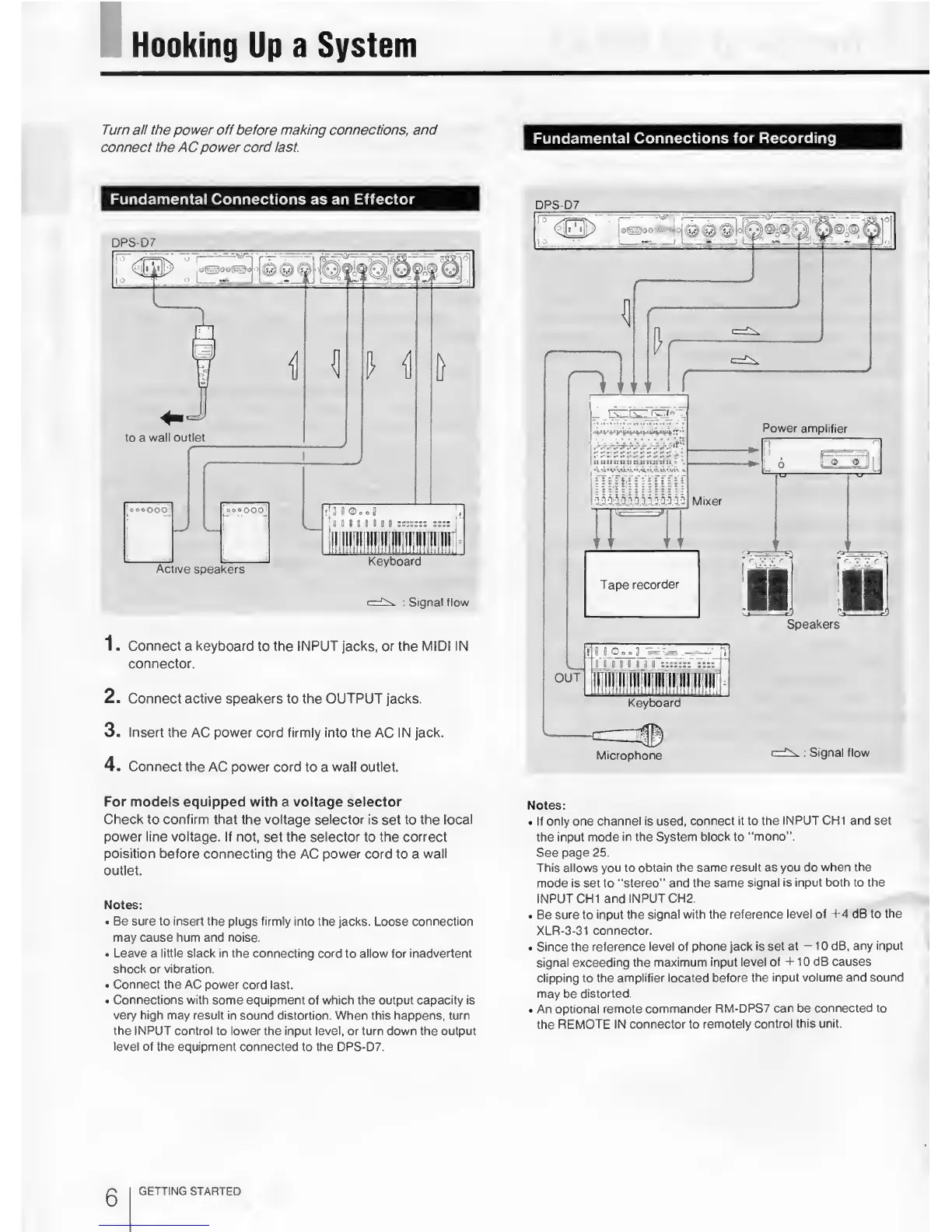
Turn all the power off before making connections, and
connect the ACpower cord last.
1 . Connect
a
keyboard
to the
INPUT
jacks, or the
MIDI IN
connector.
2
.
Connect
active speakers to the OUTPUT jacks.
3. Insert the
AC power cord firmly into the AC IN jack.
4
. Connect the
AC power cord to
a
wall outlet.
For models equipped
with a voltage selector
Check to confirm
that the
voltage
selector
is
set to
the local
power line voltage. If not,
set
the selector
to
the correct
poisition before connecting the AC power cord
to a
wall
outlet.
Notes:
•
Be sure to insert the plugs firmly into the
jacks. Loose
connection
may
cause hum and noise.
• Leave
a little slack in the connecting cord
to
allow for inadvertent
shock or vibration.
•
Connect the AC
power cord last.
•
Connections with
some
equipment
of which the output capacity is
very high may result in sound distortion. When this happens, turn
the
INPUT
control
to
lower
the input level, or turn down the output
level of the equipment
connected to the DPS-D7.
Fundamental
Connections for Recording
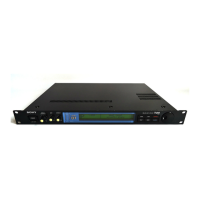
DPS-D7
Microphone
: Signal flow
Notes:
•
If only one
channel is used, connect it to
the INPUT CHI and set
the
input mode in the System
block to "mono”.
See
page
25.
This allows you to
obtain the same result as you
do when the
mode is set to
“stereo” and the same
signal is input both to the
INPUT CHI and
INPUT CH2.
.
Be
sure
to
input the signal with
the reference
level of +4 dB
to the
XLR-3-31
connector.
.
Since the
reference level of phone
jack is set at
—
1 0 dB, any input
signal exceeding the
maximum input level
of
+
10 dB causes
clipping to the
amplifier located before
the input volume
and sound
may
be
distorted.
•
An
optional remote commander
RM-DPS7
can
be
connected to
the
REMOTE IN connector to
remotely
control this unit.
6
GETTING
STARTED


 To Next Page