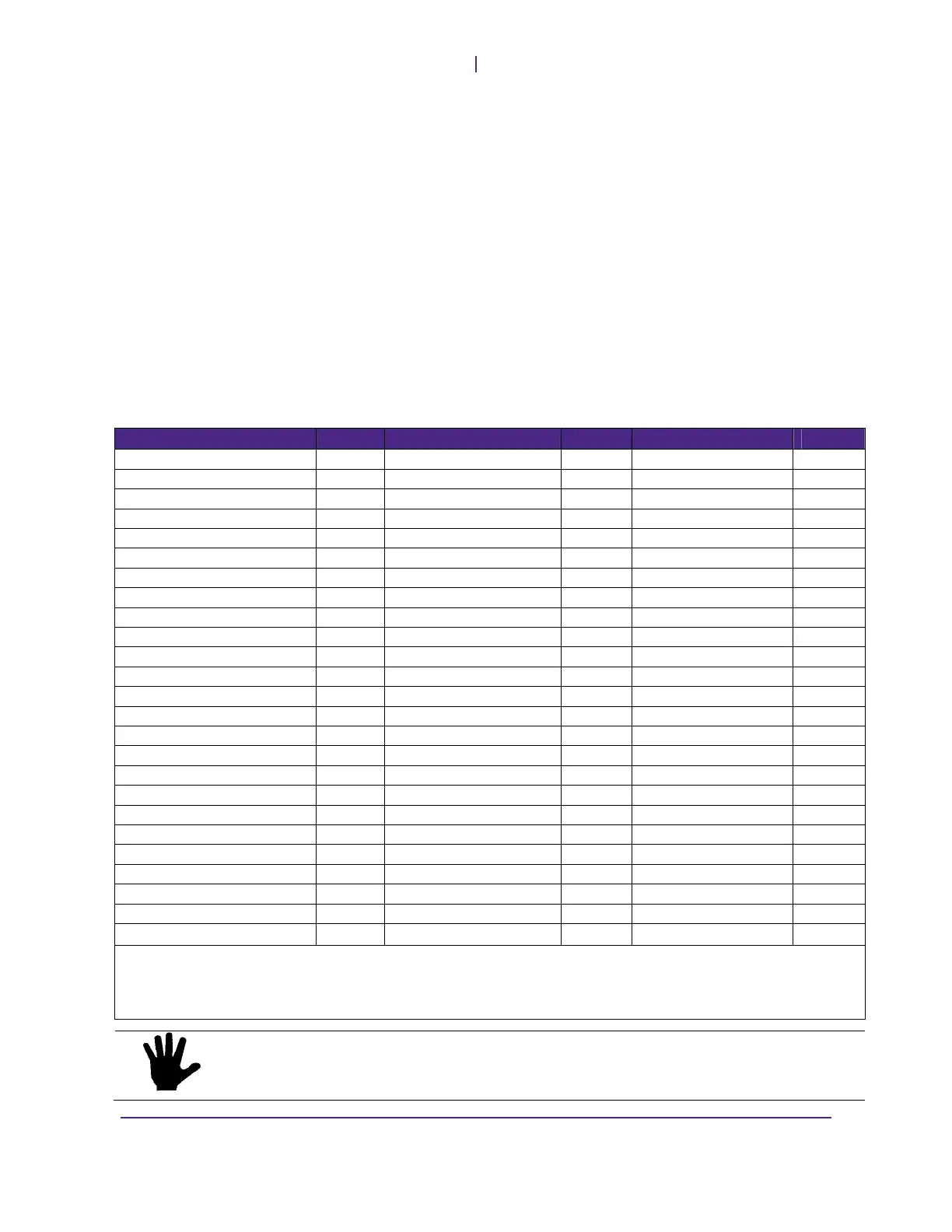
irTis BenchTop 2K, 4K and 6
General Maintenance
Rev 007, 10/11 37
© SP Scientific 2011
Condenser Chamber
The condenser is fabricated from stainless steel. Under normal use, it can be rinsed
and kept clean with mild detergent. If corrosive materials are being freeze-dried,
thoroughly clean and rinse all parts of the freeze dryer that come in contact with
product vapor. This prevents build-up of corrosive materials, which protects the freeze
dryer and subsequent product loads. Add baking soda or a mild buffering agent to the
rinse water to help neutralize acidic residue. A siphon-type squeeze bottle can be
used to direct the rinse spray into difficult to reach areas.
For more information, refer to Appendix C: Stainless Steel Cleaners.
Acrylic Parts
Clean acrylic covers and manifolds with a mild detergent. Use a soft cloth or
Kimwipes® to avoid scratching the acrylic.
The following table may be used as a general guide to acrylic’s chemical resistances.
Chemical Code Chemical Code Chemical Code
Acetic Acid (5%) R Ethyl Acetate N Nitric Acid (10%) R
Acetic Acid (Glacial) N Ethyl Alcohol (50%) LR Nitric Acid (40%) LR
Acetic Anhydride LR Ethyl Alcohol (95%) N Nitric Acid (Conc.) N
Acetone N Ethylene Dichloride N Oleic Acid R
Acetonitrile N Ethylene Glycol R Olive Oil R
Ammonium Chloride (Saturated) R 2-Ethylhexyl Sebacate R Phenol Solution (5%) N
Ammonium Hydroxide (10%) R Formaldehyde (40%) R Soap Solution (Ivory) R
Ammonium Hydroxide (Conc.) R Gasoline (Regular, Leaded) LR Sodium Carbonate (2%) R
Aniline N Glycerine R Sodium Carbonate (20%) R
Battery Acid R Heptane R Sodium Chloride (10%) R
Benzene N Hexane (Commercial Grade) R Sodium Hydroxide (1%) R
Benzyl Alcohol N Hydrochloric Acid N Sodium Hydroxide (10%) R
Butyl Acetate N Hydrofluoric Acid (40%) R Sodium Hydroxide (60%) R
Calcium Chloride (Sat.) R Hydrogen Peroxide (3%) R Sodium Hypochlorite (5%) R
Calcium Hypochlorite R Hydrogen Peroxide (28%) N Sulfuric Acid (3%) R
Carbon Tetrachloride N Isooctane R Sulfuric Acid (30%) R
Chloroform N Isopropyl Alcohol LR Sulfuric Acid (Conc.) N
Chromic Acid (40%) N Kerosene R Toluene N
Citric Acid (10%) R Lacquer Thinner N Transformer Oil R
Cottonseed Oil (Edible) R Methyl Alcohol (50%) LR Trichloroethylene N
Detergent Solution (Heavy Duty) R Methyl Alcohol (100%) N Turpentine LR
Diesel Oil R Methyl Ethyl Ketone (MEK) N Water (Distilled) R
Diethyl Ether N Methylene Chloride N Xylene N
Dimethyl Formamide N Mineral Oil R Trifluroacetic Acid N
Dioctyl Phthalate N Naphtha (VM&P) R
CODES
R = Resistant (withstands long periods of exposure at temperatures up to 50 °C).
LR = Limited Resistance (withstands short periods of exposure at room temperature).
N = Not Resistant (immediate damage may occur upon exposure).
PROPERTY CAUTION! DO NOT USE ORGANIC SOLVENTS OR ABRASIVE CLEANERS.


 To Next Page