Page 8
Pump and Pressure System
The pump and relief valve are the heart of your jet. They have been specially designed for use with water
(temperatures up to 140°F ) for pipe jetting, but can provide useful water flow for many other cleaning
jobs using the optional wash down gun and special attachments. The positive displacement pump (each
crankshaft revolution has to move a certain amount of water) uses 3 plungers (similar to pistons in an
engine) to create water flow. Pressure is not created until the pump outlet is restricted with a valve or
nozzle. The pump, valving and hoses can support pressures to 3000 psi.
The regulator valve acts to direct the water flow to the water tank when the hose reel and gun valves are
off or if nozzles provide too much restriction for total flow. Always use clean water to keep the regulator
valve operating properly. The hose and nozzle are designed to allow full flow at 3000 psi (at 3200
engine rpm) and the wash down gun operates at 1600 PSI max pressure. If leaks develop in the system
between the relief valve and hose reel valve (or gun valve) you will hear intermittent engine surges in
bypass as the bypass pressure gradually drops and is built up again by the pump. Tighten or otherwise
repair the leaks for smooth running. Always stop engine and release pressure before any plumbing changes
or repairs.
Because of the inherent hazards with high pressure, use only Spartan high pressure hoses and components
when repairing your machine.
If the nozzles become worn or if the gun is used with the jet hose, the regulator valve allows the same total
flow but at lower pressure because the restriction is lower. To maintain desired PSI - replace nozzles.
If nozzles become plugged, the regulator valve will direct some of the flow back to the water tank while
providing pressures over 3000 psi. If these pressures are seen with normal engine speed (3200 rpm),
check and clean the nozzles. When using optional lengths of 1/4” hose the operating pressure can also be
over 3000 psi at full gpm. Reducing engines rpm will produce lower pressures to prevent regulator valve
from bypassing off and on. Continued operation at pressures over 3000 psi can cause engine overheat
and reduce engine life.
pp
pp
p
!
pp
pp
p
!
pp
pp
p
!
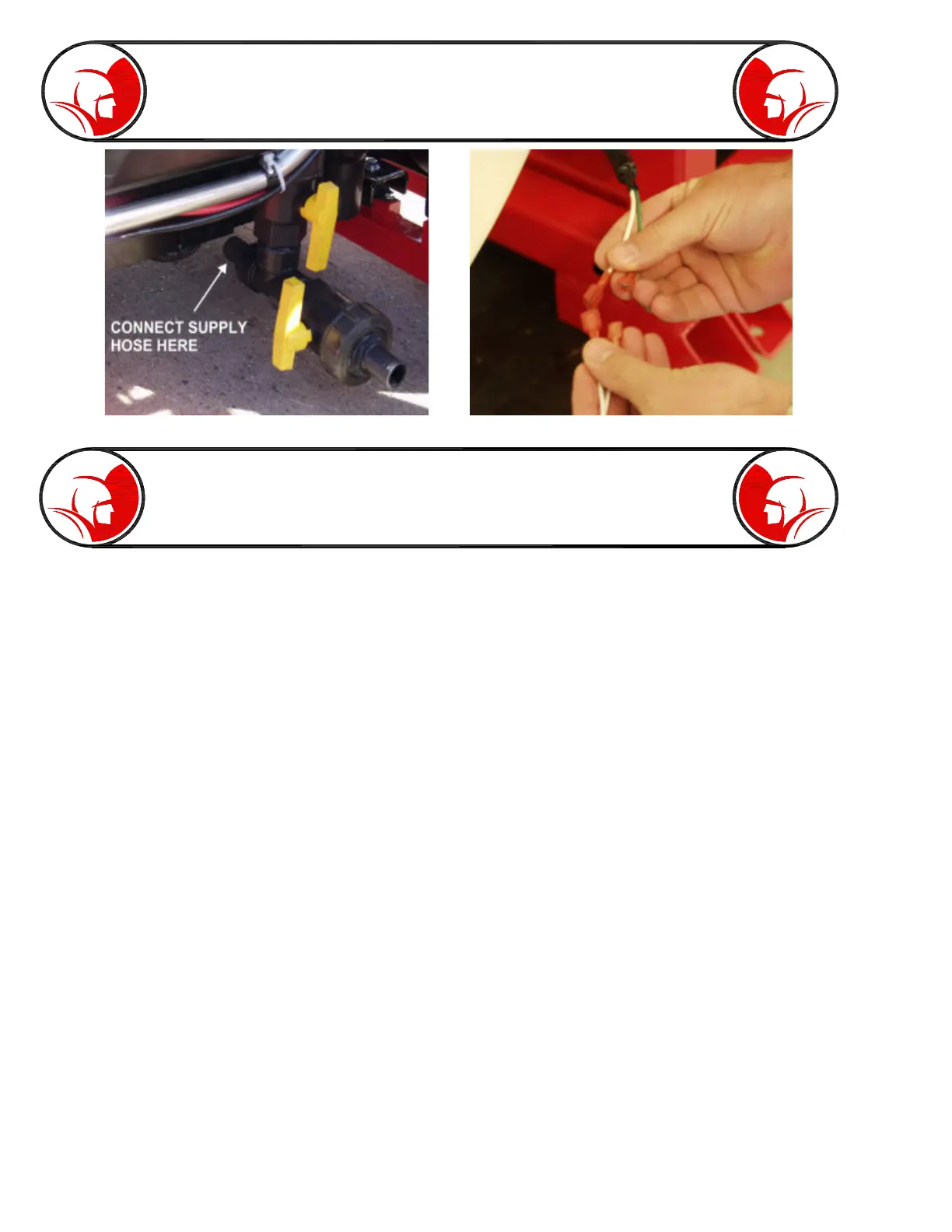
Fig. 3 Fig. 4
Uncrating and Prep


 To Next Page