The Exradin A17 Slice Therapy Ionization Chamber (REF 92675) is a specialized device designed for quality assurance and calibration measurements in radiation therapy, particularly for tomotherapy applications. It is not intended for real-time dosimetry measurements on patients.
Function Description:
The A17 Slice Therapy Ionization Chamber is an instrument used to measure ionization current, which is then used to determine radiation dose. It features an extremely flat response across its active volume, making it suitable for precise measurements. The chamber is designed to be waterproof and includes built-in wall thickness suitable for Co60 energies, making it a valuable tool for weekly QA checks and patient dose verification in tomotherapy. A 6 MeV buildup cap is available as an accessory (REF 72722).
The chamber operates by collecting charge generated when radiation passes through its active volume. It is connected to an electrometer via a low-noise flexible triaxial cable. The collector of the chamber is common with the center wire of the cable and the center contact of the connector. The guard is common with the inner cable braid and the middle connector contact of triaxial connectors, or the connector body of coaxial connectors. The shell (outer electrode), typically grounded, is common with the outer braid of the cable and the connector body for triaxial connectors, or the pigtail extending from coaxial connectors.
The design mandates that the collector and guard operate at essentially the same potential. The polarizing potential, supplied by an electrometer, is applied between the shell and the guard. While either polarity may be applied to the shell, and either the shell or guard may be grounded, grounding the shell is recommended for safety, requiring an electrometer with a floating input.
Important Technical Specifications:
- Collecting Volume: 1.91 cc
- Collecting Volume Length: 8.0 cm
- Collector Diameter: 2.4 mm
- Body Tube Outside Diameter: 12.7 mm
- Wall Thickness: 3.3 mm
- Chamber Length: 17.0 cm
- Body Tube and Guard Material: Shonka air-equivalent C552 plastic
- Response Uniformity: ±1.5% over the central 8.0 cm of chamber length. Figure 1 illustrates this flat response, showing it is flat to within ±1.5% over the central 8.0 cm of its length.
- Collector Material: Carbon Fiber
- Electrical Power Requirements: Operates at +300 VDC
- Nominal Collection Efficiency: 100%
- Maximum Polarizing Potential: 1000 VDC (All Exradin chambers can support 1000 V between shell and guard. However, depending on circumstances and radiation intensity, as little as 90 V may yield essentially 100% charge collection.)
- Nominal Inherent Leakage Currents: 10^-15 A
- Low-Noise Triaxial Cable: 1.5 m long; 50 ohms; 29 pf/Ft
- Connector: Triaxial BNC Plug (2-Lug Male pin) and protective cap connected by chain (standard); other connectors are available upon request.
- Operating Parameters:
- Humidity: 20 to 80%, non-condensing
- Temperature: 10 to 40° C
- Pressure: 680 to 770 mm Hg
- Storage Parameters:
- Humidity: 0 to 95%, non-condensing
- Temperature: -15 to 50° C
- Pressure: 600 to 800 mm Hg
- Product Standards: IEC 60601-1, IEC 61674, CE 0413
Usage Features:
The A17 chamber is designed for ease of use in dosimetry measurements. Operating instructions include:
- Electrometer Warm-up: Power on the electrometer with nothing connected to its input jack and allow at least 15 minutes for warm-up.
- Electrometer Leakage Check: Verify that the electrometer's leakage is within the manufacturer's specified limits.
- Chamber Connection and Bias: Connect the ionization chamber to the electrometer and apply the desired voltage bias.
- System Stabilization: Allow the electrometer and ionization chamber system at least 10 minutes to stabilize. Ensure all cabling is flat and unkinked.
- Chamber Leakage Check: Verify the ionization chamber's leakage is within acceptable limits. If background sources are present, note that their signal will add to the chamber's leakage.
- Electrometer Zeroing (Optional): For electrometers like the MAX-4000, perform system zeroing if desired.
- System Leakage Check (Pre-measurement): Take a reading without exposing the chamber to radiation. This reading should be less than 0.1% of the expected final signal. If not, subtract the leakage from the signal.
- Environmental Measurement: Measure atmospheric temperature and pressure.
- Measurement Acquisition: Position the A17 chamber as desired and take at least three measurements. Ensure readings are stable and not continuously drifting in one direction. For current measurements, allow sufficient time for the value to stabilize.
- Data Analysis: Analyze the data, considering the average of readings, system leakage, temperature/pressure corrections, and calibration factors (both electrometer and ionization chamber).
- Shutdown: After all measurements, set bias voltage to 0 VDC, turn off the electrometer, and disconnect the ionization chamber.
Exradin ionization chambers do not exhibit voltage soakage phenomena, allowing for immediate readings of ionization current after applying the polarizing potential. However, a brief pause of one or two minutes after changing the potential is good practice to allow any electrometer-induced transients to subside, especially in current mode.
Maintenance Features:
- External Marks: The chamber body has three external groove marks. The middle groove indicates the center of the axial length of the collecting volume. The two outer grooves mark the termination of the collecting volume, each 4 cm from the central groove, defining the 8.0 cm collecting volume with a flatness response of ±1.5%.
- Vent Tube: The chamber includes a rugged, flexible vent tube sealed to the chamber body and open near the connector. The triaxial cable passes through this tube. Users are explicitly warned NOT to alter or remove this vent tube, as doing so will void the warranty, allow water leakage if submerged, and potentially loosen the cable, affecting calibration. Any modifications should only be performed by Standard Imaging, Inc.
- Underwater Operation: The A17 Slice Therapy chamber is inherently waterproof and does not require sleeves, caps, or other devices for underwater use.
- Service and Maintenance: The ionization chamber contains no user-serviceable parts. Users should NEVER attempt to repair or disassemble the chamber or connector, as this will void the warranty and change the calibration factor. Under normal use, the chambers are expected to provide years of trouble-free service.
- Disposal: For proper disposal of the product (including accessories and components) after its useful life, it should be returned to Standard Imaging.
General Precautions:
- Electrical Shock Hazard: There is an electrical shock hazard when the device is connected to a 300 V bias supply.
- Intended Use: Exradin Ion Chambers are strictly for quality assurance and calibration measurements, not for real-time patient dosimetry.
- Proper Use: Proper use requires careful reading of all instructions and labels.
- Handling: Do not drop, mishandle, or disassemble the unit, as this can alter the calibration factor or damage the chamber. All servicing must be performed by qualified individuals.
- Cable Care: Do not sharply bend the triax cable, as this can cause high leakage currents.
Warranty and Service Policy:
Standard Imaging, Inc. provides a warranty against functional defects in design, materials, and workmanship for a specified period (2 years for ionization chambers) from the date of original delivery, provided the product is operated under normal conditions and repairs are made in accordance with their guidelines. The warranty is void if the product is altered, disassembled, repaired by unauthorized personnel, or subjected to abuse, misuse, negligence, or accident.
For service, including recalibration, customers must contact Standard Imaging's Customer Service department for a Return Material Authorization (RMA) number before shipping the product. The customer is responsible for proper packaging, insurance, and shipping costs. Items out of warranty are subject to a minimum service fee. Standard Imaging does not provide loaner products. Federal and Canadian law restricts the sale, distribution, or use of this product to, by, or on the order of a licensed medical practitioner, and its use must be supervised by a qualified medical physicist. Measurement of high-activity radioactive sources is potentially hazardous and must be performed by qualified personnel.

 Need help?
 General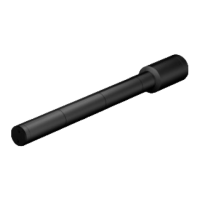

 To Next Page