5FCB
english / USA
factors in the development of whitefinger
disease. In order to reduce the risk of
whitefinger disease and carpal tunnel
syndrome, please note the following:
: Most STIHL power tools are
available with an anti-vibration
("AV") system designed to reduce
the transmission of vibrations
created by the engine to the
operator's hands. An AV system is
recommended for those persons
using power tools on a regular or
sustained basis.
: Wear gloves and keep your hands
warm.
: Keep the AV system well
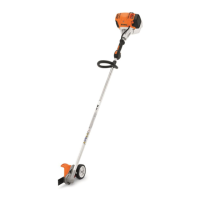
maintained. An edger with loose
components or with damaged or
worn AV buffers will tend to have
higher vibration levels.
: Maintain a firm grip at all times, but
do not squeeze the handles with
constant, excessive pressures, take
frequent breaks.
All the above mentioned precautions do
not guarantee that you will not sustain
whitefinger disease or carpal tunnel
syndrome. Therefore continual and
regular users should monitor closely the
condition of their hands and fingers. If
any of the above symptoms appear,
seek medical advice immediately.
Proper Clothing
!Warning!
Edger operation can
cause serious injury to
eyes, ears and person.
The deflector and skirt
provided with your edger
may not protect the
operator from all foreign objects (gravel,
glass, wire, etc.) thrown by the rotating
cutting attachment. Thrown objects may
also ricochet and strike the operator. To
reduce the risk of injury to your eyes
never operate an edger unless wearing
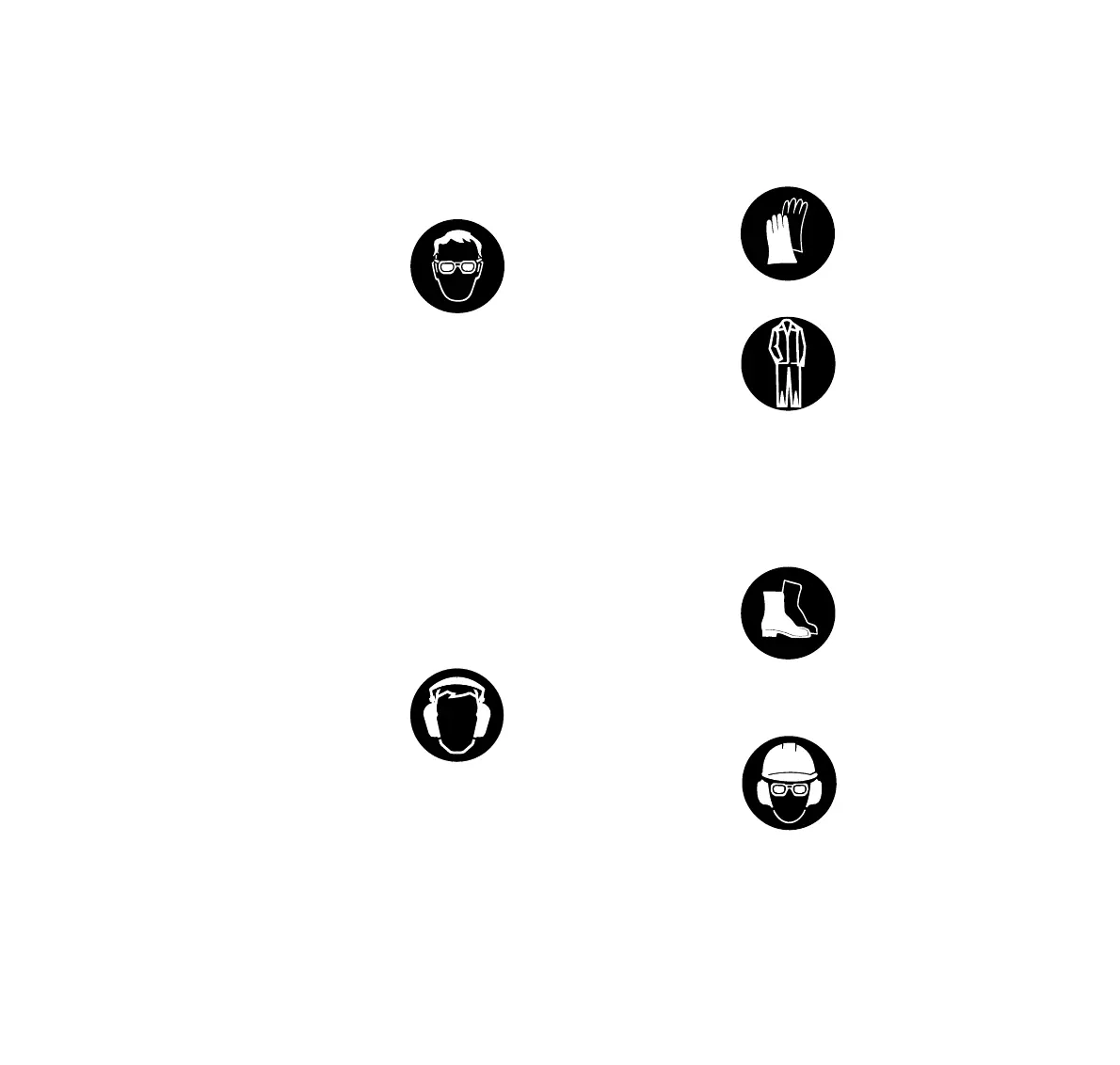
goggles or properly fitted safety glasses
with adequate top and side protection
complying with ANSI Z 87.1(or your
applicable national standard).
To reduce the risk of injury to your face
STIHL recommends that you also wear
a face shield or face screen over your
goggles or safety glasses.
!Warning!
Edger noise may damage
your hearing. Wear sound
barriers (ear plugs or ear
mufflers) to protect your
hearing. Continual and
regular users should have
their hearing checked regularly.
Wear proper protective clothing.
Protect your hands with
gloves when handling the
edger and the cutting tool.
Heavy-duty, nonslip
gloves improve your grip
and protect your hands.
Clothing must be sturdy
and snug-fitting, but allow
complete freedom of
movement. Avoid loose-
fitting jackets, scarfs,
neckties, jewelry, flared or
cuffed pants, unconfined long hair or
anything that could become caught on
branches, brush or moving parts of the
unit. Wear long pants made of heavy
material to protect your legs. Do not
wear shorts.
Good footing is most
important in edger work.
Wear sturdy boots with
nonslip soles. Do not
operate edger when
barefoot or wearing open
sandals. Steel-toed safety boots are
recommended.
Wear an approved safety
hard hat to reduce the risk
of injury to your head
when there is a danger of
head injuries.



 To Next Page