
 Need help?
Do you have a question about the Stryker LUCAS 3 and is the answer not in the manual?
Lists conditions where the LUCAS 3 device should not be used, such as patient size or pregnancy.
Details potential adverse effects like rib fractures or skin abrasions from device use.
Highlights advantages of the LUCAS device, including consistent compressions and freeing up personnel.
Explains the function of the POWER, ADJUST, PAUSE, and ACTIVE keys on the LUCAS device.
Outlines initial steps upon arriving at a patient requiring resuscitation with the LUCAS device.
Procedure for unpacking the LUCAS device and initiating its self-test for readiness.
Steps for positioning the back plate, hood, and suction cup for correct device placement.
Instructions on using the ACTIVE keys to start continuous or 30:2 compressions.
Guidance on correctly attaching and tightening the stabilization strap for the LUCAS device.
Protocol for defibrillation while the LUCAS device is active, emphasizing minimal pause.
Guidelines for moving patients with the LUCAS device attached, including safety precautions.
Instructions for documenting LUCAS device use in EPIC, including adverse effects.
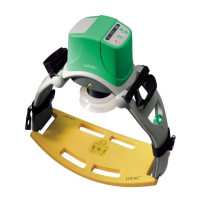
The LUCAS 3 device is an automated chest compression system designed to provide consistent and effective cardiopulmonary resuscitation (CPR) to adult patients experiencing cardiac arrest, particularly when manual CPR is compromised or prolonged. It serves as an adjunct to manual CPR, ensuring high-quality compressions are maintained throughout the resuscitation effort.
The core function of the LUCAS 3 device is to deliver mechanical chest compressions. It operates by pressing down rapidly on the rib cage and maintaining a compression depth for 50% of the compression cycle. This mechanism ensures consistent compression depth and rate, which are critical for effective blood circulation during cardiac arrest. The device is capable of performing continuous chest compressions or compressions with pauses for ventilation, adhering to either a continuous compression protocol or a 30:2 compression-to-ventilation ratio, as selected by the operator.
The device's control panel features several key functions. The POWER Key initiates the device, triggering an audible signal sequence and a self-test that takes approximately three seconds. Upon completion, a green LED illuminates next to the ADJUST key, indicating readiness. The ADJUST key is crucial for positioning the suction cup on the patient's chest. It allows for manual movement of the suction cup up or down. To set the initial compression position, the suction cup is manually pushed down onto the patient's chest. For removal, it is lifted up. The PAUSE key serves two purposes: when pressed after initial suction cup adjustment, it fine-tunes and locks the height position into the START position. During active compressions, pressing the PAUSE key stops compressions and locks the suction cup in its current start position. The ACTIVE key has two modes: one for continuous chest compressions, where a green LED blinks 10 times per minute to signal the need for ventilation, and another for a 30:2 compression-to-ventilation ratio, where the device performs 30 compressions and then temporarily stops for two ventilations, with an intermittent LED and audible signal preceding each pause.
The LUCAS 3 device is designed for ease of application and integration into existing resuscitation protocols. Upon arrival at the patient, manual CPR should be initiated immediately, and ECG defibrillator pads with real-time CPR feedback technology should be applied, ensuring they do not interfere with the LUCAS suction cup placement. Rhythm checks and defibrillation should follow AHA/ACLS standards, with the Zoll CPR feedback device remaining in place throughout the resuscitation.
Unpacking the device involves pressing the ON/OFF button for one second to initiate the self-test. The back plate is positioned at the patient's head while manual CPR continues. To place the back plate, one team member supports the patient's head and shoulders, while another slides the back plate behind the patient's shoulders, ensuring it is correctly positioned below the armpits with the patient's arms outside the plate. The upper part (hood) is then attached to the back plate, with support legs securely locked. The suction cup is set to ADJUST mode and precisely positioned on the patient's chest, aligning with the manual CPR compression point. The lower edge of the suction cup should be immediately above the end of the sternum, and this landmark should be marked with a permanent or skin marker for future reference. If the suction cup is not correctly positioned, the ADJUST function allows for repositioning by pulling on the support legs. Once correctly positioned, the device will adjust the suction cup to the correct START position if it was pushed too hard or too loosely.
Mechanical compressions are initiated by pressing either the ACTIVE (continuous) or ACTIVE (30:2) key. It is crucial that the patient and device are not left unattended while LUCAS is active, and the device's performance (compression vs. frequency and depth) should be checked. To stop compressions, the PAUSE key is pressed.
For patient stabilization, a neck strap from the carrying case is used. It is extended, and a cushion is placed behind the neck. The buckles on the support leg straps are connected to the neck strap, ensuring they are not twisted. The LUCAS support legs are held stable while tightening the neck strap, and the suction cup position is re-verified.
Defibrillation can be performed without pausing compressions with the LUCAS device. If a shockable rhythm is identified, defibrillation is performed per ACLS protocol, with compressions paused for less than 5 seconds only to check the rhythm, and then resumed by LUCAS.
The LUCAS device allows for compressions to continue while the patient is being moved or transported. When preparing to move the patient, the patient's arms are secured at the wrist with the PATIENT STRAPS to the LUCAS hood. These straps are solely for fixating the patient's arms to the device and should not be used for lifting. A caution is noted regarding potential skin burns if the LUCAS hood and battery temperature exceed 118°F (48°C), advising to avoid prolonged contact and remove patient hands from straps to prevent burns.
While the document does not explicitly detail maintenance features in a dedicated section, it implies certain operational checks and considerations that contribute to the device's reliable function. The self-test initiated upon powering on the device is a built-in diagnostic feature, ensuring the device is ready for use. The instruction to "Check that device is working as should- compression vs. frequency and depth" during active use suggests an ongoing monitoring aspect, which can help identify any deviations in performance. The emphasis on correct positioning of the suction cup and the device's ability to adjust to the correct START position if initially pushed too hard or too loose indicates a design that aims to prevent misuse and ensure optimal operation, thereby contributing to the longevity and effectiveness of the device. The documentation requirements, including noting any evidence of patient adverse effects such as skin breakdown, suggested fracture, or chest deformity, serve as a feedback mechanism that can inform future device improvements or maintenance protocols. The reminder to submit data to the Zoll Cloud after each Code Blue suggests a system for data collection that could be used for performance analysis and potentially for predictive maintenance or fleet management.
 General
| Device Type | Chest Compression System |
|---|---|
| Power Source | Rechargeable Lithium-ion Battery |
| Compression Depth | 5.3 ± 0.2 cm (2.1 ± 0.1 in) |
| Battery Life | 45 minutes of operation |
| Battery Charge Time | Approximately 4 hours |
| Operating Modes | Pause |
| Patient Size | Fits most adult patients |
| Operating Temperature | 0°C to 40°C (32°F to 104°F) |
| Storage Temperature | –20 to +60 °C (–4 to 140 °F) |
| IP Rating | IP43 |
| Compression Rate | 100 compressions per minute |




 To Next Page

