12
LiFePO4 Battery System LiFePO4 Battery System
13
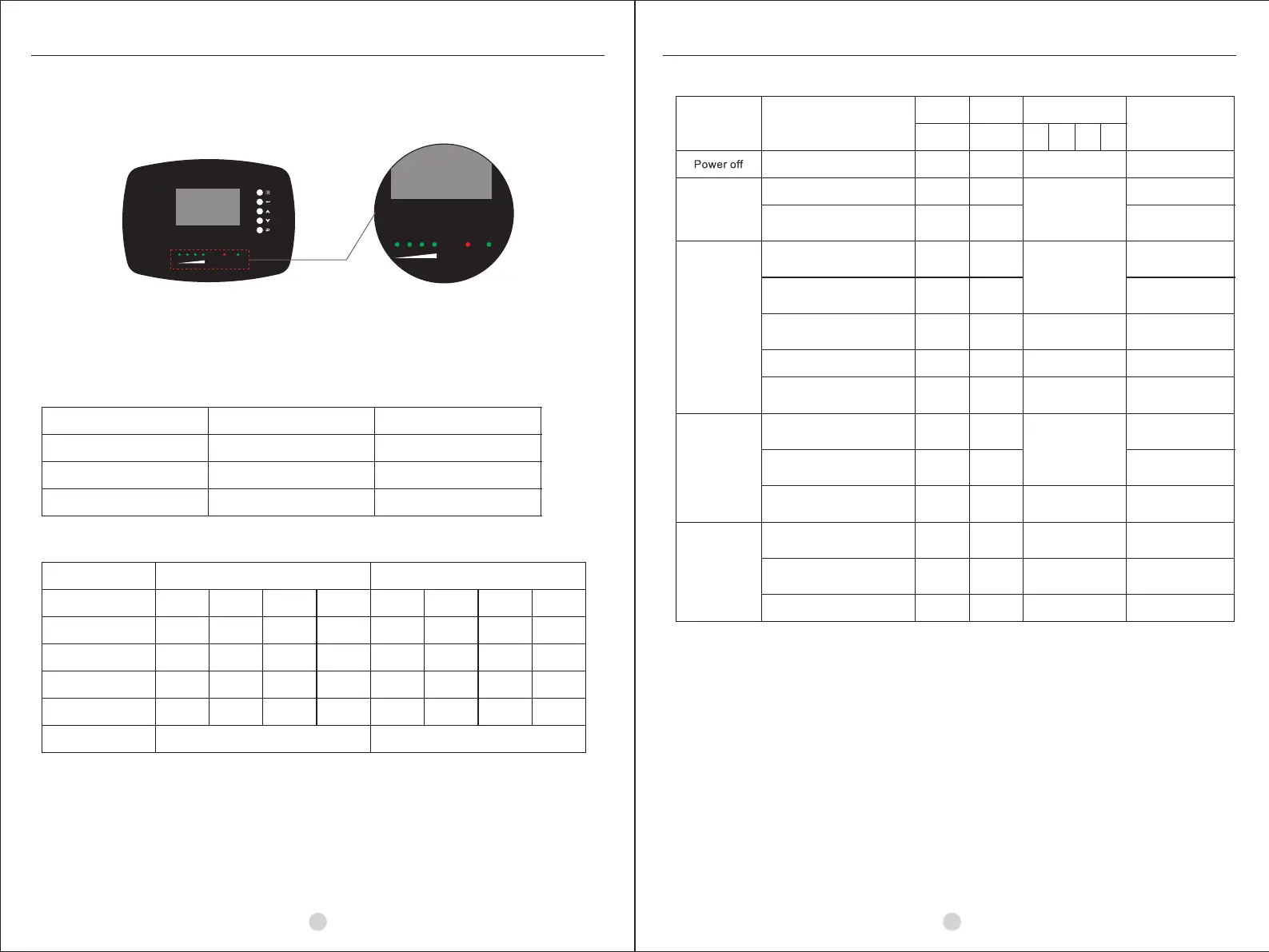
8.7 LED indication indicators
The BMS features 6 external LED indicator lights. 1. 4 white-green capacity indicator lights. 2. 1 red alarm
indicator light. 3. 1 withe-green operational indicator
LED flashing status description
Flash 1
Flash 2
Flash 3
Flashing status
ON OFF
0.25S
0.5S
0.5S
3.75S
0.5S
1.5S
SOC light display and capacity correspondence
SOC LED
0~25%
25~50%
50~75%
75~100%
RUN lights ●
Status
Charge
Discharge
L1 ●
Flash
ON
ON
ON
L2 ●
OFF
Flash
ON
ON
L3 ●
OFF
OFF
Flash
ON
L4 ●
OFF
OFF
OFF
Flash
ON
Flash 3
L1 ●
ON
ON
ON
ON
L2 ●
OFF
ON
ON
ON
L3 ●
OFF
OFF
ON
ON
L4 ●
OFF
OFF
OFF
ON
RUNALM
SOC
Operational status description
Standby
Charge
Discharge
Temperature
System Status
Protection/Alarm/Normal
RUN
ALM SOC LED
Description
Hibernation
Normal
Alarm
Normal
Overvoltage alarm
Overcurrent alarm
Overvoltage protection
Current-limited charging
Normal
Alarm
Overcurrent, short-circuit and
reverse connection protection
Charge alarm
Discharge alarm
Protection
●
OFF
Flash 1
Flash 3
ON
ON
ON
ON
ON
Flash 3
Flash 3
OFF
ON
Flash 3
OFF
●
OFF
OFF
Flash 3
OFF
OFF
Flash 3
OFF
OFF
OFF
Flash 3
ON
Flash 3
Flash 3
ON
● ● ● ●
OFF
OFF
Based on capacity
indication
Based on capacity
indication
ON
Based on capacity
indication
Based on capacity
indication
OFF
Based on capacity
indication
Based on capacity
indication
OFF
OFF
Standby
ALM and RUN lights
Flash 3
Maximum SOC LED
Flash 2
Maximum SOC LED
Flash 2
Maximum SOC LED
Flash 2
Maximum SOC LED
Flash 2
Based on capacity
indication
ALM and RUN lights
Flash 3
Maximum SOC LED
Flash 2
ALM and RUN lights
Flash 3
Note:
Alarms will activate for the following conditions: Low capacity, Excessive voltage differentia, Low cell voltage, Low
pack voltage, Charging overcurrent, Discharge overcurrent, High cell temperature, Low cell temperature, High
ambient temperature, Low ambient temperature, High MOS temperature.



 To Next Page
 Loading...