EasyManua.ls Logo

sunjoe SJPPH48 - User Manual

sunjoe SJPPH48
12 pages
Print Icon
To Next Page IconTo Next Page
Loading...
© 2021 by Snow Joe
®
, LLC
All rights reserved. Original instructions.
SAVE THESE INSTRUCTIONS
1
A Division of Snow Joe
®
, LLC Model SJPPH48 Form No. SJ-SJPPH48-880E-M
R
OPERATOR’S MANUAL
OUTDOOR PROPANE HEATER
48000 BTU MAX | QUICK-START IGNITION
EN
IMPORTANT!
Safety Instructions
All Operators Must Read These
Instructions Before Use
Read all the instructions contained in this manual. Keep this
manual in a safe place, so that the information is available at
all times. If you give this patio heater to another person, make
sure to provide these operating instructions. Basic safety
precautions should always be followed when using the patio
heater.
Notice the personal safety alert symbol m used in this
manual to draw your attention to a WARNING given along
with the particular operating instruction. This means that
the operation requires special ATTENTION, CAUTION, and
AWARENESS.
INSTALLER: Leave this manual with the appliance.
CONSUMER: Retain this manual for future reference.
mFOR OUTDOOR USE ONLY
(outside any enclosure)
mDANGER! CARBON MONOXIDE HAZARD
This appliance can produce carbon monoxide which has no
odor. Using it in an enclosed space can kill you. Never use this
appliance in an enclosed space such as a camper, tent, car or
home.
mWARNING! Improper installation, adjustment,
alteration, service or maintenance can cause property
damage, injury or death. Read the installation, operating
and maintenance instructions thoroughly before installing or
servicing this equipment.
mDANGER! If you smell gas:
1. Shut o gas to the appliance.
2. Extinguish any open ame.
3. If odor continues, keep away from the appliance and
immediately call your gas supplier or re department.
mWARNING! If the information in this manual is
not followed exactly, a re or explosion may result causing
property damage, personal injury, or loss of life.
mWARNING! Do not store or use gasoline or other
ammable vapors and liquids in the vicinity of this or any other
appliance. An LP-cylinder not connected for use shall not be
stored in the vicinity of this or any other appliance.
mWARNING!
1. The installation must conform with local codes or, in the
absence of local codes, with the National Fuel Gas Code,
ANSI Z223.1/NFPA 54, NFPA58 Natural Gas and Propane
Installation Code, CSA B149.1, or Propane Storage and
Handling Code, B149.2
2. The heater, when installed, must be electrically grounded
in accordance with local codes or, in the absence of local
codes, with the National Electrical Code, ANSI/NFPA 70,
or the Canadian Electrical Code, CSA C22.1.
3. Prior to use, check if any part is damaged, such as hoses,
regulators, pilot or burner. If any of the parts are damaged,
do not use the heater. Please contact the Snow Joe
®
+
Sun Joe
®
customer service center at 1-866-SNOWJOE
(1-866-766-9563).
4. All leak tests should be done with a soapy solution.
NEVER USE AN OPEN FLAME TO CHECK FOR
LEAKAGE.
5. Children and adults should be alerted to the hazards of
high surface temperatures and should stay away to avoid
burns or clothing ignition.
6. Young children should be carefully supervised when they
are in the area of the heater.
7. Clothing or other ammable materials should not be hung
from the heater, or placed on or near the heater.
8. Any guard or other protective device removed for
servicing the heater must be replaced prior to operating
the heater.
9. Installation and repair should be done by a qualied
service person. The heater should be inspected before
use and at least annually by a qualied service person.
10. Frequently clean this appliance. It is imperative that
the control compartment, burners and circulating air
passageways of the heater be kept clean.
11. Keep the appliance area clear and free from combustible
materials, gasoline and other ammable vapors and
liquids.
12. Do not obstruct the ow of combustion and ventilation air.
13. Keep the ventilation opening(s) of the cylinder enclosure
free and clear from debris.
Question and Answer IconNeed help?

Do you have a question about the sunjoe SJPPH48 and is the answer not in the manual?

Summary

Safety Instructions

Operator Safety Instructions

Instructions for all operators to read before using the patio heater.

General Safety Warnings

Key warnings including outdoor use, CO hazard, and gas leaks.

Know Your Outdoor Patio Heater

Parts Identification

Illustrates and lists all the parts of the outdoor patio heater.

Hardware Pack Contents

Lists and identifies the hardware components included in the assembly pack.

Technical Data

Assembly

Tools and Preparation

Lists required tools and initial steps for assembly, including unpacking.

Wheel Assembly Attachment

Detailed steps for attaching the wheel assembly to the cylinder tank base.

Lower Pole and Bar Table Assembly

Instructions for attaching the lower pole to the bar table and securing with bolts.

Reflector Assembly

Attaching Reflector Panels

Steps to attach reflector panels together and to the heater structure.

Securing Reflector Studs

Instructions for attaching reflector studs to the burner assembly.

Pole and Burner Connection

Connecting Burner Assembly to Upper Pole

Procedure for connecting the burner assembly to the upper pole with bolts.

Joining Upper and Lower Poles

Steps to connect the upper and lower pole assemblies using screws.

Cylinder Tank Base Filling

Instructions for filling the cylinder tank base with sand for stability.

Using the Propane Tank

Propane Tank Safety Guidelines

Essential safety information for handling and connecting propane cylinders.

Connecting the Propane Cylinder

Step-by-step process for connecting the propane hose to the cylinder.

Leakage Test Procedure

Instructions on how to perform a safety leakage test on connections.

Operation Procedures

Pre-Operation Checks and Gas Supply

Ensuring safe conditions and proper gas supply before ignition.

Lighting the Heater

Detailed steps for safely igniting the patio heater's burner.

Flame Characteristics and Tips

Interpreting Flame Characteristics

Guidance on identifying normal vs. abnormal flame behavior.

Operational Tips and Safety

Advice on initial use, fumes, cooling, and heater damage.

Extinguishing the Heater

Proper methods for turning off and extinguishing the patio heater.

Maintenance and Cleaning

General Maintenance and Inspections

Routine checks for safety, burner flames, and potential blockages.

Cleaning the Heater

Instructions for cleaning exterior surfaces and components.

Annual Propane Hose Leakage Test

Procedure for annually testing propane hose connections for leaks.

Transport and Storage

Storage Between Uses

Guidelines for safely storing the heater when not in use.

Transporting the Heater

Steps for moving the heater between different locations.

Long-Term Storage Procedures

Instructions for storing the heater and cylinder for extended periods.

Support and Model Information

Contact details for support and location of model/serial numbers.

Troubleshooting

Heater Cannot Be Ignited

Common causes and solutions for ignition failure.

Ignition and Click Sound Issues

Troubleshooting problems with ignition staying on or lack of click sound.

Summary

Safety Instructions

Operator Safety Instructions

Instructions for all operators to read before using the patio heater.

General Safety Warnings

Key warnings including outdoor use, CO hazard, and gas leaks.

Know Your Outdoor Patio Heater

Parts Identification

Illustrates and lists all the parts of the outdoor patio heater.

Hardware Pack Contents

Lists and identifies the hardware components included in the assembly pack.

Technical Data

Assembly

Tools and Preparation

Lists required tools and initial steps for assembly, including unpacking.

Wheel Assembly Attachment

Detailed steps for attaching the wheel assembly to the cylinder tank base.

Lower Pole and Bar Table Assembly

Instructions for attaching the lower pole to the bar table and securing with bolts.

Reflector Assembly

Attaching Reflector Panels

Steps to attach reflector panels together and to the heater structure.

Securing Reflector Studs

Instructions for attaching reflector studs to the burner assembly.

Pole and Burner Connection

Connecting Burner Assembly to Upper Pole

Procedure for connecting the burner assembly to the upper pole with bolts.

Joining Upper and Lower Poles

Steps to connect the upper and lower pole assemblies using screws.

Cylinder Tank Base Filling

Instructions for filling the cylinder tank base with sand for stability.

Using the Propane Tank

Propane Tank Safety Guidelines

Essential safety information for handling and connecting propane cylinders.

Connecting the Propane Cylinder

Step-by-step process for connecting the propane hose to the cylinder.

Leakage Test Procedure

Instructions on how to perform a safety leakage test on connections.

Operation Procedures

Pre-Operation Checks and Gas Supply

Ensuring safe conditions and proper gas supply before ignition.

Lighting the Heater

Detailed steps for safely igniting the patio heater's burner.

Flame Characteristics and Tips

Interpreting Flame Characteristics

Guidance on identifying normal vs. abnormal flame behavior.

Operational Tips and Safety

Advice on initial use, fumes, cooling, and heater damage.

Extinguishing the Heater

Proper methods for turning off and extinguishing the patio heater.

Maintenance and Cleaning

General Maintenance and Inspections

Routine checks for safety, burner flames, and potential blockages.

Cleaning the Heater

Instructions for cleaning exterior surfaces and components.

Annual Propane Hose Leakage Test

Procedure for annually testing propane hose connections for leaks.

Transport and Storage

Storage Between Uses

Guidelines for safely storing the heater when not in use.

Transporting the Heater

Steps for moving the heater between different locations.

Long-Term Storage Procedures

Instructions for storing the heater and cylinder for extended periods.

Support and Model Information

Contact details for support and location of model/serial numbers.

Troubleshooting

Heater Cannot Be Ignited

Common causes and solutions for ignition failure.

Ignition and Click Sound Issues

Troubleshooting problems with ignition staying on or lack of click sound.

Overview

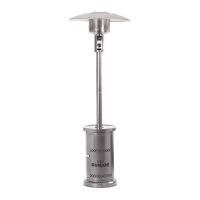
This document describes the Sun Joe SJPPH48 Outdoor Propane Heater, a device designed for heating outdoor patios, decks, spas, pools, and open work areas. It utilizes liquid propane gas and features quick-start ignition.

Function Description

The Sun Joe SJPPH48 is an outdoor patio heater that provides adjustable heat output. It is designed for use in well-ventilated outdoor spaces and should not be used in enclosed areas such as buildings, garages, campers, tents, cars, or homes due to the risk of carbon monoxide hazard. The heater operates by burning liquid propane gas, producing radiant heat that warms the surrounding area. It includes a burner assembly, an emitter screen, and a heat reflector to direct the warmth. The device is equipped with a lighting knob for ignition and temperature adjustment, allowing users to select between low and high heat settings. A cylinder enclosure houses the propane tank, and a securing wire helps keep the tank in place. For stability, the base can be filled with sand. The heater is designed with safety features such as a leakage test procedure and warnings against improper installation, use, or maintenance.

Important Technical Specifications

  • Heater Fuel Type: Liquid propane gas
  • Adjustable Heat Output: 25,000 BTU - 48,000 BTU
  • Coverage Area: 250 sq. ft. | 9 ft. radius (23.3 m² | 2.7 m radius)
  • Runtime Max (50% load per standard 20 lbs tank): High setting: 4 hrs, Low setting: 7 hrs
  • Dimension: 32.85 in.(D) x 90.6 in.(H) (83 cm x 230 cm)
  • Propane Hose Length: 4.6 ft (1.4 m)
  • Injector Diameter: 0.846 in. (2.15 mm)
  • Manifold Pressure: 11 in. W.C.
  • Max Gas Supply: 250 PSI (1723.7 kPa)
  • Min Gas Supply for Input Adjustment: 5 PSI (35 kPa)
  • Net Weight: 28.7 lbs (13 kg)
  • Propane Cylinder Requirement: 20 lbs (9 kg) LP-gas supply cylinder (not included). The cylinder must be constructed and marked in accordance with the Specifications for LP-gas cylinders of the U.S. Department of Transportation (DOT) or the Standard for Cylinders, Spheres and Tubes for Transportation of Dangerous Goods and Commission, CAN/CSA-B339. It must also be provided with a listed overfilling prevention device and a compatible cylinder connection device.

Usage Features

The heater is designed for straightforward operation with several key features:

  • Quick-Start Ignition: The lighting knob allows for easy ignition of the burner. Users push in and turn the knob counterclockwise to the LOW position to light the burner. If needed, the knob can be kept depressed and turned until the burner lights, accompanied by an audible click.
  • Adjustable Temperature: Once lit, the temperature can be adjusted by rotating the lighting knob. Turning it counterclockwise to the "HIGH" position provides maximum heat, while turning it clockwise to the "LOW" position reduces the temperature.
  • Outdoor Use Only: The heater is strictly for outdoor use in well-ventilated spaces, with specific guidelines for partial enclosures (e.g., no more than two side walls with an overhead cover, or three side walls if 30% or more of the horizontal periphery is permanently open).
  • Propane Tank Management: The heater requires a 20 lb (9 kg) LP-gas supply cylinder. The manual provides detailed instructions for connecting the propane tank, ensuring it is securely placed within the cylinder enclosure and connected to the hose regulator.
  • Leakage Test: A crucial safety feature, the leakage test must be performed before initial use, after parts replacement, and at least annually. This involves applying a soapy solution to connections and checking for bubbles, indicating a leak.
  • Stability: The cylinder tank base can be filled with sand (purchased separately) to enhance stability, preventing accidental tipping.
  • Safety Warnings: The manual emphasizes numerous safety precautions, including keeping flammable materials away, ensuring proper ventilation, supervising children, and avoiding contact with hot surfaces. It also warns against using a damaged propane cylinder or an open flame to check for leaks.
  • Extinguishing: To turn off the heater, the lighting knob is pushed in and turned counterclockwise to the "OFF" position. The propane cylinder valve should then be closed when the appliance is not in use.

Maintenance Features

Regular maintenance is essential for the safe and efficient operation and longevity of the Sun Joe SJPPH48 heater:
  • Regular Cleaning: The heater should be cleaned regularly, but only when it is completely extinguished and cooled down. Exterior surfaces can be cleaned with warm soapy water. Flammable or corrosive cleaning agents should never be used. It is important to keep the area around the heater dry, especially the gas control system.
  • Annual Inspection: The heater should be inspected before each use and at least annually by a qualified service person. This inspection should include checking the hose assembly for abrasion, cuts, or wear, and the burner assembly for cracks or worn sections.
  • Clearance of Combustible Materials: The appliance area must be kept clear and free from combustible materials, gasoline, and other flammable vapors and liquids.
  • Unobstructed Airflow: It is imperative to keep the control compartment, burners, and circulating air passageways clean and free from obstructions. The ventilation opening(s) of the cylinder enclosure must also be kept clear of debris.
  • Spider and Insect Control: Spiders and insects tend to nest inside the heater, which can cause damage and render it unsafe. The unit should be inspected at least once a year for their presence.
  • Hose Assembly Replacement: If the hose assembly shows signs of leakage or damage, it must be replaced with a manufacturer-specified replacement hose assembly prior to operation.
  • Carbon Deposit Removal: If carbon deposits are observed on the reflector or emitter screen, they should be cleaned with warm soapy water to prevent fire hazards.
  • Storage: For short-term storage between uses, the heater should be turned off, the propane cylinder valve closed, and stored upright in an area sheltered from inclement weather. For long-term storage, the propane cylinder should be disconnected and removed, then stored in a secure, well-ventilated outdoor location where the temperature will not exceed 125 °F. The heater itself should be covered to protect exterior surfaces and prevent dust buildup in air passages.
  • Corrosion Check: If used in a salt-air environment (e.g., near an ocean), corrosion can occur faster. Users should frequently check for corroded areas and repair them promptly.

sunjoe SJPPH48 Specifications

General IconGeneral
Brandsunjoe
ModelSJPPH48
CategoryHeater
LanguageEnglish

Related product manuals