0
50
100
150
200
250
300
350
W
H
ITE
B
EEC
H
FAL
SE
AC
AC
I
A
O
A
K
ASH
BEEC
H
BIRCH
LA
RCH
PINE
PO
PLAR
ALDE
R
W
I
L
L
OW
SI
L
V
ER
FI
R
S
PU
R
CE
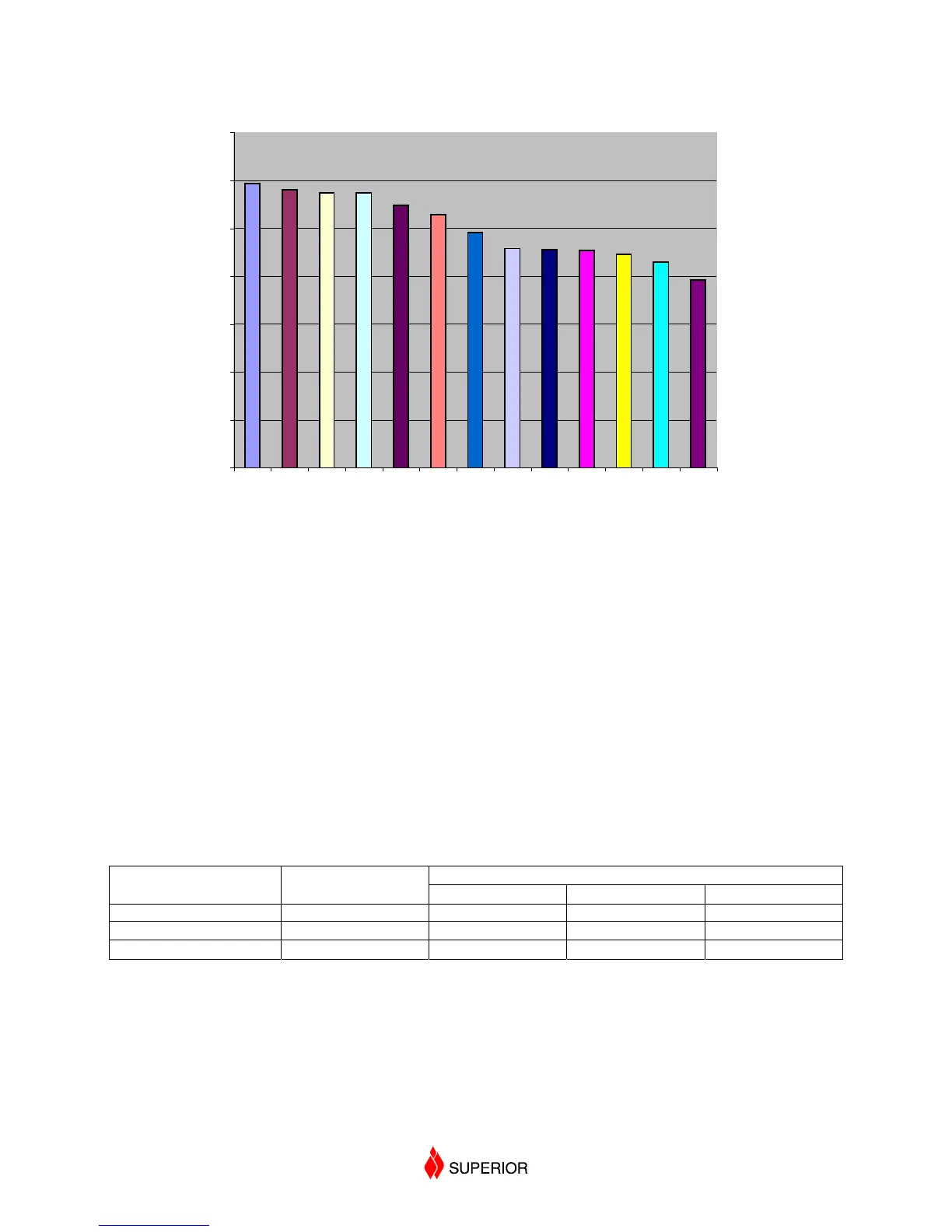
Types of timber
Calorie rating
(KWh/dm³ w=20%)
Indicative values to the nearest cubic decimetre for wood of equal shape with a humidity level (w) of about
20%
As far as the above woods are concerned it is recommended that broadleaf hardwoods (beech, birch, oak etc.)
are burnt, bearing in mind the information given in paragraph 7.1.
Above all it is recommended that you do not burn: waste paper; paper briquettes; rubbish; wood that has been
painted or faced with plastic laminates; plywood or chipboard; fibreboard; wood treated with protective substances;
packaging – because these could damage the stove and smoke stack.
The dampness of the wood has a substantial effect on the quality of combustion, because water in the wood lowers
the combustion temperature. As can be seen in the following table, the calorific value of the output diminishes as
the water content increases.
This can not only cause higher levels of smoke emission but is also a sign of inefficient use of fuel because of the
reduced power output. Furthermore, parts of the appliance and the flue pipes can be damaged by the
condensation caused. Therefore burn dry wood only.
HEATING POWER OF THE WOOD (Beech)
Moisture content (W) Seasoning time
kWh/kg kcal/kg
kWh/dm
3
20 After 2 years 4 3400 2.9
30 After 1 years 3.4
2900 2.8
40 After 6 months 2.8
2410 2.7
Indicative values
38


 To Next Page