VLANs
6-3
6.1.2.1 Dynamic VLANs (GVRP)
Other than allowing a port to be part of more than one VLAN, most of the advantages of tagged
VLANs come from allowing the network equipment to configure the VLANs automatically. The VLANs
configure themselves by exchanging GARP
1
VLAN registration protocol (GVRP) messages. All GVRP-
configured VLANs must be use tagged packets.
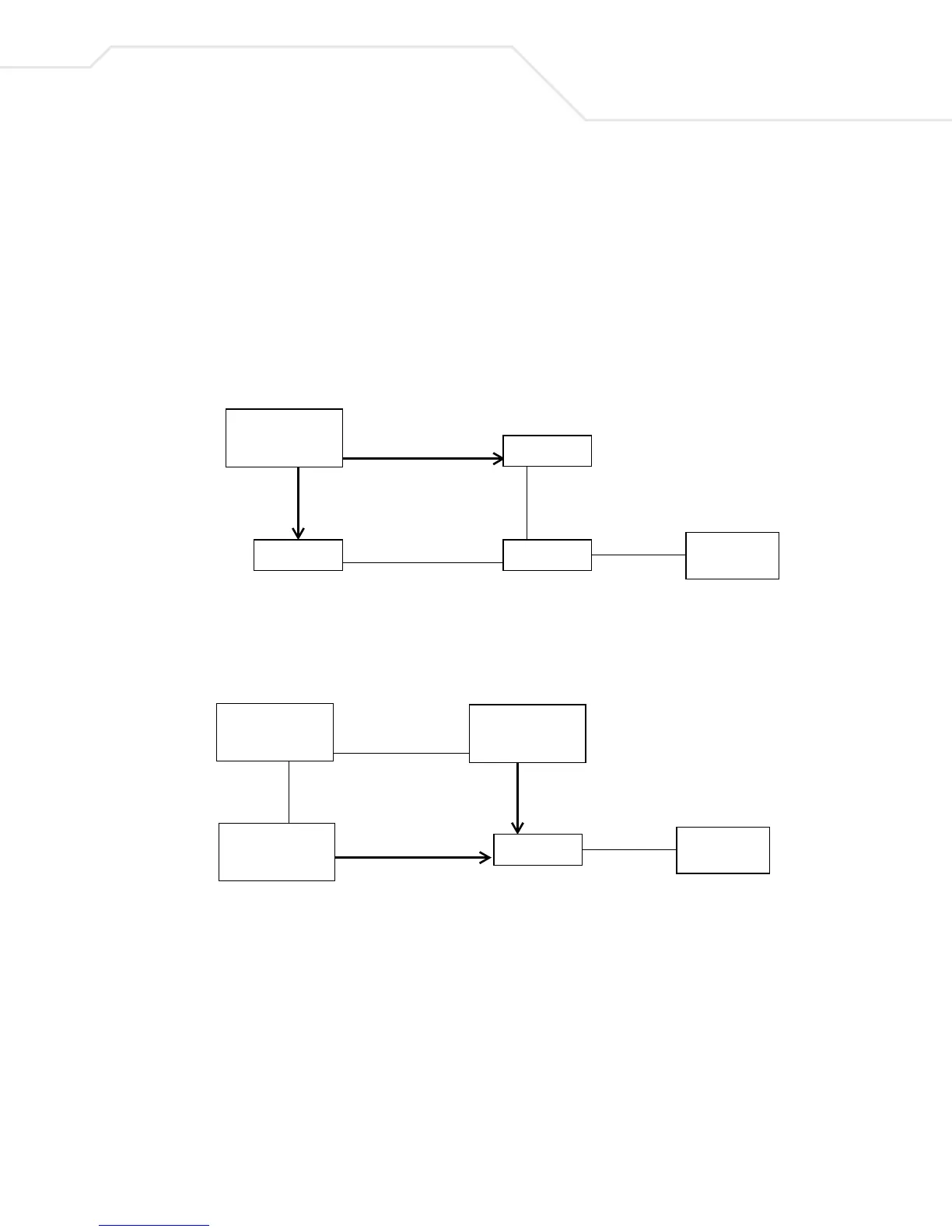
When a GVRP-capable switch is started, it sends GVRP packets out all ports which are enabled for
dynamic VLANs. These packets identify, by VLAN number, all the VLANs on that switch.
When the next layer of switches get this packet, they join the VLAN on the first eligible port to receive
the GVRP packet. Those switches then send GVRP packets out all ports other than the ports that have
already joined the VLAN.
Those switches then send out GVRP messages on all of their eligible ports as well. When the
message reaches an end-station with a 802.1Q-enabled network interface that has been configured
to be part of that VLAN, or if the message reaches a switch that has been manually configured for a
port to an end-station to be part of that VLAN, then that port will also join the VLAN.
1. GARP: General Attribute Registration Protocol. GVRP is a use of the more general GARP.
Switch DSwitch C
Switch B
Join VLAN 10?
Switch A
VLAN 10
Join VLAN 10?
End-Station
Switch DSwitch C
Switch B
Join VLAN 10?
Switch A
VLAN 10
Join VLAN 10?
End-Station
Switch B
VLAN 10
Switch C
VLAN 10


 To Next Page
 Loading...

