Cooking Guide
Temperature Settings
1. High - Intended for pre-heating of the appliance, searing steaks
and other cuts of meat, rotisserie cooking and for burning food
residue from the interior of the appliance.
2. Medium - Intended for most grilling, baking and roasting.
3. Low - Intended for cooking fish and other lean foods and for all
smoke cooking.
Fig f3
Direct Versus Indirect Cooking
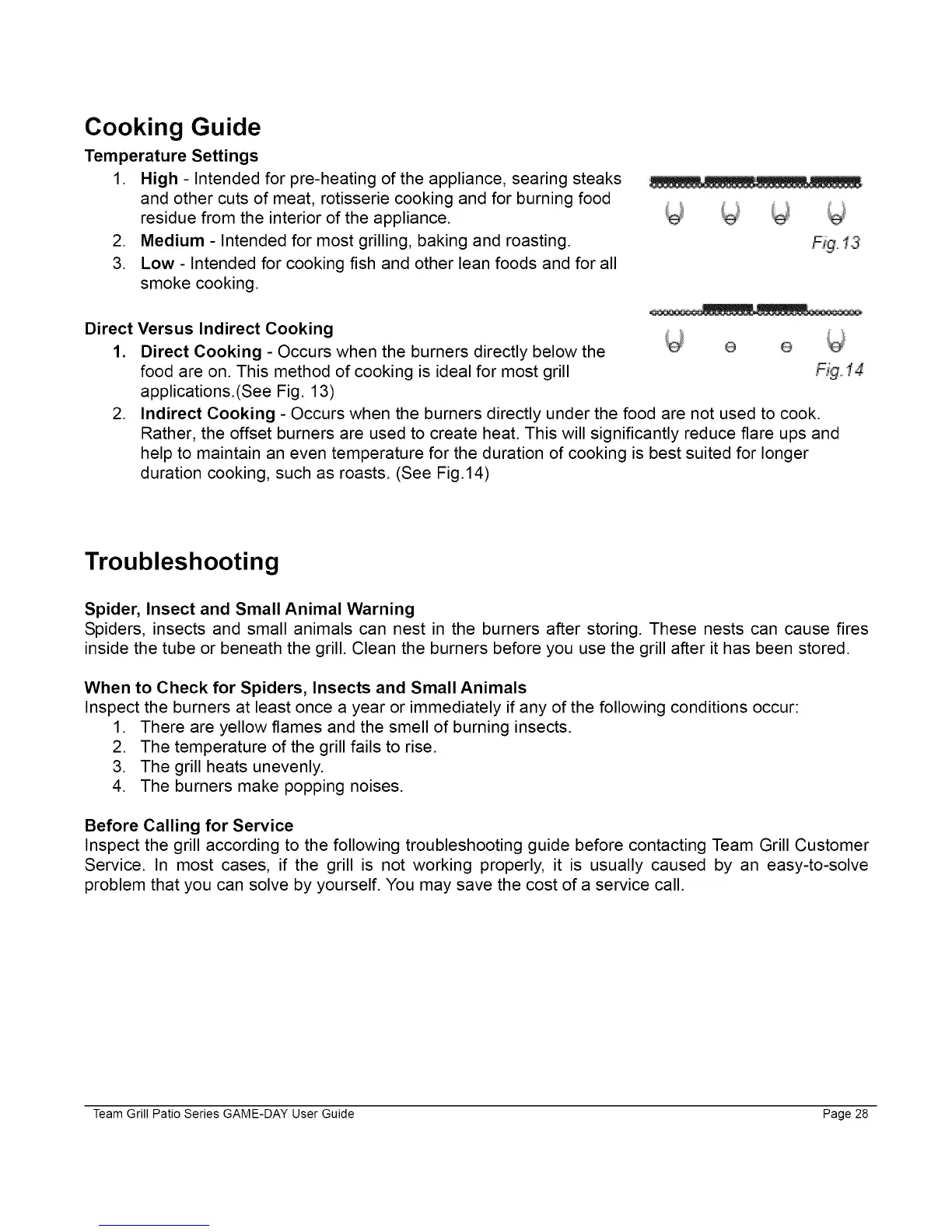
1. Direct Cooking - Occurs when the burners directly below the ®
food are on. This method of cooking is ideal for most grill F_.f4
applications.(See Fig. 13)
Indirect Cooking - Occurs when the burners directly under the food are not used to cook.
Rather, the offset burners are used to create heat. This will significantly reduce flare ups and
help to maintain an even temperature for the duration of cooking is best suited for longer
duration cooking, such as roasts. (See Fig.14)
.
Troubleshooting
Spider, Insect and Small Animal Warning
Spiders, insects and small animals can nest in the burners after storing. These nests can cause fires
inside the tube or beneath the grill. Clean the burners before you use the grill after it has been stored.
When to Check for Spiders, Insects and Small Animals
Inspect the burners at least once a year or immediately if any of the following conditions occur:
1. There are yellow flames and the smell of burning insects.
2. The temperature of the grill fails to rise.
3. The grill heats unevenly.
4. The burners make popping noises.
Before Calling for Service
Inspect the grill according to the following troubleshooting guide before contacting Team Grill Customer
Service. In most cases, if the grill is not working properly, it is usually caused by an easy-to-solve
problem that you can solve by yourself. You may save the cost of a service call.
Team Grill Patio Series GAME-DAY User Guide Page 28



 To Next Page