6. GROUND HANDLING
6.1. TOWING
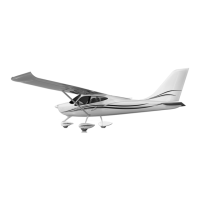
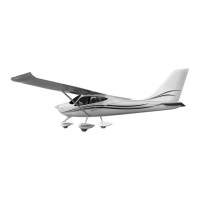
The aircraft is most easily and safely maneuvered by hand by pushing on wing
struts near attachments or by pulling it by its propeller near the axle. A tow bar
can be fixed onto nose gear fork. Aircraft may be steered by turning rudder or,
for steep turns, by pushing lightly on tail cone to lift nose wheel.
6.2. PARKING AND TIE-DOWN
General
Under normal weather conditions, the airplane may be parked and headed in a di-
rection that will facilitate servicing without regard to prevailing winds. Ensure
that it is sufficiently protected against adverse weather conditions and present no
danger to other aircraft.
Procedure
1. Position airplane on levelled surface, headed into the prevailing wind, if practical.
2. Engage parking brake
3. Secure pilot control stick by wrapping the seat belt around it
Do not engage the parking brakes at low ambient
temperature, when an accumulation of moisture may
cause the brakes to freeze, or when they become hot
from severe use. In this case use wheel chocks.
In case of long time parking or overnight parking, it is recommended to moor the
a/c as shown on Para.6.3.
Mooring is strongly recommended when the wind is more than 15
knots and the a/c is completely refuelled.


 To Next Page