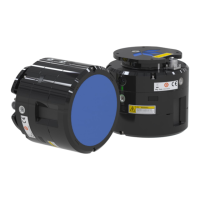
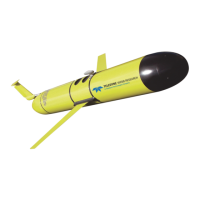
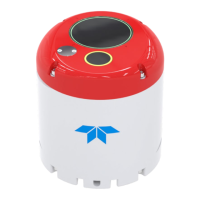
The document describes the LongRanger/QuarterMaster Acoustic Doppler Current Profiler (ADCP), a system designed for measuring water currents. This guide focuses on its deployment, including preparation, connection, testing, and data recovery.
Function Description:
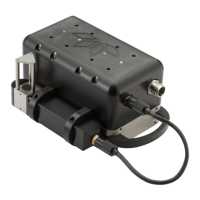
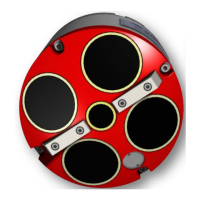
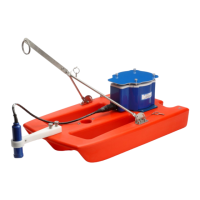
The LongRanger/QuarterMaster ADCP is a sophisticated instrument used for measuring water currents. It includes a transducer, a memory card (for Sentinel models), a dummy plug, and a protective cap. The system is designed for self-contained operation, with batteries shipped inside the ADCP but not connected, requiring user connection and sealing before deployment. It can also be powered by an AC adapter for testing or when batteries are not connected. The ADCP records data, which can then be downloaded and processed using specialized software.
Important Technical Specifications:
The manual references various part numbers and descriptions for the LongRanger/QuarterMaster system and its accessories kit.
- System Models: WHLS75, WHLM75 (LongRanger) and WHS150, WHM150 (QuarterMaster) are the main system models.
- Shipping Cases: MRDI1006 (75 kHz) and MRDI1019 (150 kHz) shipping cases are available, along with a 707-7003-00 shipping pallet.
- Cables: A 717-3030-xxx I/O cable is used for serial communications.
- Power: A 717-3014-00 AC Power Adapter provides +48 VDC, allowing the ADCP to run without batteries. The system also uses 450 Wh battery packs (not connected when shipped).
- Converters: A 737-3010-00 RS-422 to RS-232 Converter is provided for direct-reading applications.
- Batteries: Alkaline Battery Packs (757K6023-00) are included for self-contained systems. Battery pack installation guides (817-6034-00) are also provided.
- Memory: One memory card (977-6013-00) is installed inside the system, with two PCMCIA memory card slots available for all ADCPs.
- Software: The system includes TRDI Toolz, WinSC/PlanADCP, WinADCP, and Velocity software.
- Documentation: Deployment Guide (957-6288-00), Getting Started (957-6287-00), and download instructions (757K6153-00) are part of the documentation kit.
- Spare Parts: A kit (757K6044-xx) contains tools, O-rings, and close-up hardware.
- Battery Connection Torque: The end-cap bolts should be tightened to 5.6 Newton-meters (50 pound-inches).
- Compass Calibration Tilt: A 35-mm block provides an 11-degree tilt for calibration. Rotations are performed at approximately 5 degrees per second.
Usage Features:
- Deployment Preparation: The guide outlines steps for preparing the ADCP, including checking parts, installing documentation and software, registering Velocity software, installing batteries, and ensuring the system is properly closed.
- Software Installation: Documentation and software are downloaded from Teledyne Marine portals. TRDI Toolz is required for setup and testing, while Velocity is used for post-processing data.
- Velocity Software Activation: An activation code is provided to unlock the Velocity software, with a 30-day trial code included with the system.
- Battery Connection: Detailed instructions are provided for connecting the battery packs, including removing the end-cap, connecting power cables, and reinstalling the end-cap with specific torque values. A lanyard prevents damage to the internal I/O cable during this process.
- Connecting to the ADCP: The TRDI Toolz software is used to establish serial communication with the ADCP. Users select the COM Port and Baud Rate, then click "Connect." A "Soft Break" command wakes up the system, displaying a wakeup banner in the terminal window. If the baud rate is unknown, the "Tools, Find ADCP" feature can be used.
- Pre-Deployment Checks: TRDI Toolz facilitates pre-deployment tests and setting the ADCP's real-time clock.
- Setting ADCP Clock: The PC time can be synchronized with the ADCP's internal clock using "Tools, PC Time to ADCP."
- Testing Sensors: The "PC2" direct command is used to display sensor values (Heading, Pitch, Roll, Attitude Temp, Ambient Temp, Pressure). Users are instructed to rotate and tilt the system to verify sensor accuracy. If the heading is off by more than 2 degrees, compass calibration is recommended. If the depth sensor is not zero, it should be zeroed.
- Zeroing Pressure Sensor: The "AZ" direct command is used to zero the pressure sensor at the deployment site.
- Calibrating Compass: Compass calibration is crucial after battery replacement due to changes in magnetic signature. The "AR" command returns the compass to factory calibration, and "AF" initiates the calibration procedure, offering options for removing hard iron error and soft iron error. The procedure involves tilting and rotating the ADCP slowly.
- Deploying the ADCP (Sending Commands):
- TRDI Toolz is used to send multiple commands to configure the ADCP.
- The "Script Editor" allows users to open and send command files (created with PlanADCP) to the ADCP.
- The "Send to current" or "Send to all" options allow sending script files to connected ADCPs.
- The "Layout" menu can show or hide the Ensemble Display and Terminal windows, providing situational data like Ensemble Time, Temperature, Heading, Pitch, and Roll.
- Data Recovery:
- Downloading Data Files: TRDI Toolz's "Tools, Recover Recorder" feature uses "r?" and "m?" commands to verify recorder type, then "RY" or "MY" commands to upload data via YMODEM protocol. Data is stored as binary files.
- Erasing Data: After recovery, the "RE ErAsE" command can be used to erase the recorder, but this action is irreversible.
- Opening Data Files with Velocity: Velocity software is used to open *.pd0 files. Opening a *.pd0 file creates matching *.pdv and *.pju files. Users can drag files onto the Velocity desktop icon, use the "Open a data file" button, or the "Open" menu button.
- PDDecoder Library: Teledyne Marine provides an open-source PDDecoder library in C language for decoding PDo data formats, available on GitHub.
Maintenance Features:
- Battery Connection and Sealing: Users are instructed to connect the battery and seal the ADCP before deployment.
- End-Cap Examination: The end-cap assembly nuts, bolts, and washers should be examined for corrosion and replaced if necessary.
- Battery Disconnection for Testing: For testing purposes, the battery can be disconnected to save power. If connected, the AC power adapter can override battery voltage to conserve power.
- Sensor Troubleshooting: If a sensor fails during testing, users are advised to contact TRDI Field Service.
- Compass Calibration: A compass calibration should be conducted at each measurement location and whenever mounting fixtures or ancillary equipment (like batteries) are changed or rearranged. If calibration is unsuccessful, users can return to factory calibration using the "AR" command.
- Troubleshooting Guidance: The LongRanger/QuarterMaster Operation Manual, Chapter 6, provides information on troubleshooting built-in test failures or communication issues.
- Returning Systems for Service: Chapter 7 of the Operation Manual details how to obtain a Return Material Authorization (RMA) number for returning the ADCP to TRDI for service.

 Need help?
 General

 To Next Page