
 Need help?
Do you have a question about the Teltonika TAT100 and is the answer not in the manual?
Guide to inserting SIM card and powering on the TAT100 device.
Steps for connecting the TAT100 device to a Windows PC.
Instructions for installing necessary USB drivers on Windows.
Overview of configuring the device using Windows software.
Key considerations and tips for device configuration.
Explanation of different device tracking modes and settings.
Guidance on physically installing and mounting the TAT100 device.
Method for configuring device settings via SMS commands.
Essential safety precautions for operating the TAT100 device.
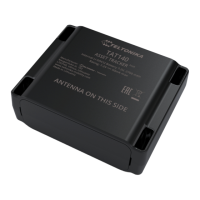
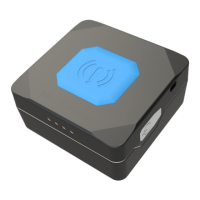
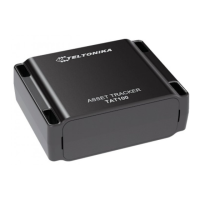
The TAT100 is an asset tracking device designed to provide additional protection against the theft of valuable goods. Its versatility allows for a wide range of applications, from tracking tools to monitoring containers. This device is engineered for ease of use, with straightforward setup and configuration processes, making it accessible for various users and scenarios.
The primary function of the TAT100 is to provide reliable asset tracking. It achieves this by acquiring positioning data and transmitting it to a configured server. The device supports various tracking scenarios, including periodic and scheduled modes, allowing users to tailor its operation to specific needs. In periodic mode, the device obtains positioning data at fixed intervals, configurable from 360 to 259200 seconds. This mode is ideal for continuous monitoring where regular updates are required. The scheduler mode, on the other hand, enables the device to send positioning data up to six times on set days, based on a fixed schedule. This is particularly useful for applications where tracking is only needed at specific times or days, optimizing battery life.
The TAT100 is equipped with GNSS (Global Navigation Satellite System) capabilities, ensuring accurate location data acquisition. For data transmission, it utilizes GPRS (General Packet Radio Service), allowing it to communicate with a server over mobile networks. The device's configuration can be managed through a dedicated Teltonika Configurator software, which runs on Microsoft Windows OS and requires the MS .NET Framework. This software provides a comprehensive interface to adjust various parameters, including network settings, tracking modes, and data acquisition parameters.
Setting up the TAT100 involves a few simple steps. First, the device's cover needs to be removed to access the Micro-SIM card slot and the ON/OFF switch. It's crucial to insert the Micro-SIM card correctly, ensuring the cut-off corner points forward to the slot and the chip faces the USB port. Before insertion, the PIN request on the SIM card should be disabled to avoid configuration issues. Once the SIM card is in place, the device can be turned on by flipping the switch to ON.
For initial configuration or adjustments, the TAT100 connects to a computer via a Micro-USB cable. USB drivers must be installed on the computer for proper communication. These drivers can be downloaded from the Teltonika website. After driver installation, the Teltonika Configurator software is used to manage the device settings. The configurator allows users to load existing configurations from the device or a file, save new configurations to the device or a file, update firmware, read records, reboot the device, and reset it to default settings.
Key configuration areas within the software include GPRS settings, where APN (Access Point Name), server domain, and server port are configured, and Tracking settings, which define data acquiring parameters. It is highly recommended to test the network connection from the device to the server before finalizing the configuration. This involves setting the APN, server domain, and server port, saving the configuration, and then initiating a "Test Connection." If the connection fails, it could indicate issues such as an improperly inserted SIM card, incorrect APN/domain/port values, disabled GPRS functionality by the mobile provider, lack of GSM coverage, or an unreachable server.
The device also supports quick SMS configuration, allowing users to send specific SMS commands to set parameters like APN, APN username, APN password, server domain, server port, and data sending protocol. However, it's important to note that SMS messages can only be delivered when the device wakes up from Sleep Mode to send location data. During Sleep Mode, the SMS carrier holds the message delivery, and Teltonika cannot guarantee immediate receipt. Therefore, using the configurator for critical settings is often preferred.
Mounting recommendations are provided to ensure optimal performance. The GNSS antenna should ideally face upwards to the sky, and the device should be installed in a location where its line of sight to the sky is not obstructed. This maximizes the chances of acquiring a strong GNSS signal for accurate positioning.
The TAT100 is designed with user maintenance in mind, primarily through its configurator software. Firmware updates can be performed via the configurator, ensuring the device runs the latest software version with potential improvements and bug fixes. The ability to load and save configurations allows users to back up their settings or deploy the same configuration across multiple devices efficiently.
For troubleshooting, the configurator provides various "Status info" tabs that display information about GNSS, GSM, I/O, and Maintenance. This detailed information can help diagnose issues related to connectivity, signal strength, and device operation. The "Reset configuration" option allows users to revert the device to its default factory settings, which can be useful for resolving complex configuration problems or preparing the device for a new deployment.
Battery management is also a consideration. While testing the device, it is advised to disconnect the USB cable to prevent the battery from running out of power, as continuous use while connected to the USB cable can lead to faster battery drain. The device's default tracking period settings (On Move/On Stop) are set to 28800 seconds (8 hours) to optimize battery life. Frequent tracking periods will reduce battery lifetime, so users should balance tracking frequency with desired battery endurance.
Safety information emphasizes operating the device in suitable conditions, complying with road safety regulations, and being aware of potential interference with other electronic equipment. It also highlights the importance of using only original batteries to prevent explosions and protecting batteries from moisture and high temperatures. Batteries are integrated and should not be changed or charged by the user. When disconnecting from a computer, the micro USB cable should be unplugged safely. For any mechanical damage or persistent malfunctions, it is recommended to transport the device in shock-resistant packaging and contact a qualified specialist, local seller, or UAB Teltonika manager for assistance.
 General
| Device Type | GPS Tracker |
|---|---|
| Dimensions | 90 x 60 x 25 mm |
| Weight | 130 g |
| Connectivity | 2G, NB-IoT, LTE Cat-M1 |
| GNSS | GPS, GLONASS, Galileo, BeiDou |
| Tracking sensitivity | -165 dBM |
| 2G bands | 850/900/1800/1900 MHz |
| Power supply | 9-30 V DC |
| Ingress Protection Rating | IP65 |
| GPS Update Rate | 1 Hz |
| GPS Accuracy | 2.5 m |
| Cellular | LTE Cat M1 / NB-IoT / GSM |
| NB-IoT bands | B1, B3, B5, B8, B20 |
| LTE Cat-M1 bands | B1, B3, B5, B8, B20 |
| Data transfer (LTE Cat-M1) | 375 kbps |
| Data transfer (GPRS) | 85.6 kbps |
| Data support | TCP, UDP |
| SIM | Nano SIM |
| Memory | 128 MB |
| GPS Module | u-blox |
| Communication Interface | RS232 |


 To Next Page