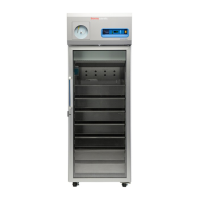
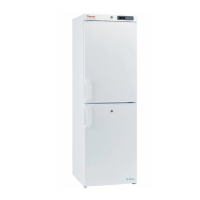
The Thermo Scientific MR05 Series Undercounter Laboratory Refrigerators are designed for general purpose laboratory use, providing reliable temperature control for storing non-flammable general laboratory products. These units are not intended for use as medical devices or for in vitro diagnostic cases, nor are they approved for the storage of blood, blood products, or flammable materials.
Function Description
The MR05 series refrigerators are complete packaged units, ready to operate once plugged into an electrical source. They feature a control system that maintains a preset cabinet temperature, typically 4°C, with an optional 5°C setpoint available. The temperature is displayed digitally with 1°C resolution, allowing for precise monitoring. The refrigeration system utilizes CFC-free refrigerant and CFC-free foamed-in-place urethane insulation, contributing to environmental responsibility and efficient thermal retention. Quiet, hermetically sealed refrigeration compressors ensure reliable and unobtrusive operation.
The defrosting process is primarily automatic, accomplished by air circulation during off-cycle periods. Under normal conditions, temperature warm-up during defrost is virtually unnoticeable, though an occasional 2°C warm-up may occur with heavy usage or extreme ambient conditions.
Usage Features
The MR05 refrigerators are designed for indoor use only and are optimized for performance in a 20°C operating environment. Installation in unheated areas may require a low-temperature compressor protection kit for satisfactory operation. The cabinet is designed to pass through a standard 30-inch door opening, facilitating placement in various laboratory settings.
For optimal performance, the cabinet should be moved into its desired location and ensured that the bottom is evenly supported. Thin shims can be used to equalize weight distribution and prevent rocking or vibration when the condensing unit operates. It is crucial to ensure the front grill is unobstructed to allow for proper airflow.
The unit is shipped in a ready-to-operate condition, meaning adjustment of operating temperatures or setpoints is generally not necessary and could adversely affect performance. After installation, the unit should be operated for several hours to allow the cabinet to reach normal operating temperatures before any products are stored.
For temperature sensing cables, rear access ports should be utilized instead of the front door gasket to maintain seal integrity. The door is equipped with keyed locks for security.
The controller operations include various settings and parameters that can be adjusted, though it is recommended to consult a qualified service technician for any questions regarding settings to avoid changing unit performance. The controller allows for viewing of the target set point, initiating a manual defrost, and accessing programming modes for advanced adjustments. It also provides error messages and alarms for various conditions such as room temperature probe failures, evaporator probe failures, and compressor issues, aiding in troubleshooting.
Maintenance Features
Regular maintenance is essential for the longevity and optimal performance of the MR05 refrigerator. The cabinet interior should be cleaned frequently, with any spilled liquid wiped off immediately. A mild detergent and lukewarm water or a solution of bicarbonate of soda (1 tablespoon per gallon of water) is recommended for cleaning the interior and exterior surfaces, which should then be rinsed and thoroughly dried. Shelves and/or drawers should be removed for thorough scrubbing, and door gaskets should be cleaned periodically with water.
The unit cooler fan operates continuously when the door is closed and does not require lubrication. The cooling coil automatically defrosts during the condensing unit's off cycle, eliminating the need for manual defrosting.
The condensing unit does not require oil or other lubrication. However, the finned condenser can become clogged with lint or dust and should be kept clean. A vacuum cleaner or a small test tube brush can be used for this purpose annually. Failure to keep the condenser fins free of dirt and lint can hamper operation and potentially damage the refrigeration system.
An annual inspection of the mechanical refrigeration equipment by a qualified service provider or factory direct technician is recommended. If the refrigeration system is opened for any reason, extreme care must be taken to prevent moisture-bearing air from entering, and a new drier should be installed in the lines when the system is closed.
The condensate evaporator pan, located behind the compressor fan and base grill, should be cleaned at least once a year to ensure proper drainage and prevent buildup.
The manual also provides detailed instructions for hinge and latch adjustments, which may be necessary if the door does not align properly or the latch does not seat correctly. These adjustments help maintain a proper gasket seal, crucial for temperature stability. In case of door gasket replacement, the manual outlines the steps to remove the old gasket, clean the mounting track, and install a new one, ensuring a tight seal.
Troubleshooting charts are included to assist in diagnosing and resolving common issues, such as the compressor not starting, humming, or running continuously, high or low discharge pressure, and ice accumulation. These charts provide possible causes and corrective steps, guiding users or technicians through the diagnostic process.



 To Next Page
 General