20
• Check sealants around all roof and body seams and windows. Reseal if necessary.
• Lubricate all exterior locks, hinges, and latches.
• Wash and wax exterior. Inspect body for scratches or other damage. Touch up or
repair as necessary. Flush underside of the motorhome thoroughly.
• Check all the chassis uid levels including engine oil, coolant, power steering uid,
brake uid, transmission, rear axle oil and washer uid. Top off if necessary.
• Check all exterior lights; clearance, brake, turn, and reverse should be fully
functional.
Your motorhome should be ready for a new traveling season. Your dealer can check
your preparation and correct any defects or make any necessary adjustments.
These items are the absolute minimum requirements necessary for pre-travel.
Your motorhome is designed to carry the loads dened by the Gross Axle Weight
Rating (GAWR - the value specied by the chassis manufacturer as the load carrying
capacity of a single axle system, as measured at the tire/ground interface.) The Gross
Vehicle Weight Rating (GVWR - the maximum permissible loaded weight of the
motorhome) is shown on the vehicle information sticker posted near the driver’s side
front window or inside the driver’s side door jam. These ratings are for a fully loaded
vehicle including passengers and normal belongings
The Thor Motor Coach Motorhome WEIGHT SPECIFICATIONS yellow label
concisely states the occupant and cargo carrying capacity of your motorhome ( per the
requirements of 49 CFR part 571.120 as issued by the National Highway Trafc Safety
Administration - NHTSA).
The yellow Motorhome OCCUPANT AND CARGO CARRYING CAPACITY weight
label is afxed to the interior side of the forward-most door of your motorhome on the
passenger side This label indicated how much weight you can safely carry within the
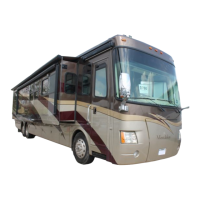
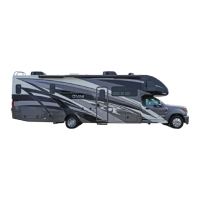
vehicle and is afxed to the entrance door, directly below the window screen for Class
A units and on the front door jamb for Class C units.
WEIGHTS
Planning and Preparation
Capacity
EXCEEDING THE GAWR OR GVWR OF YOUR
Motorhome CAN CAUSE UNDESIRABLE HANDLING
CHARACTERISTICS and may even create a safety
hazard. Modification of your vehicle to carry additional
equipment or vehicles is not recommended and may
void your warranty.
Note:
Be sure the weight of passengers, equipment and supplies does
not cause your motorhome to exceed axle loads and overall
vehicle loads for which it was designed. If in doubt, weigh the
vehicle at a public scale. Keep in mind the number of safety
belts in a unit are there for the convenience and use of the
owner. Carrying the number of people equal to the number of
seat belts may exceed the weight ratings. A motorhome has the
potential to be overloaded and removal or redistribution of weight
may be necessary from time to time to stay within weight ratings.
Your motorhome includes a "Weight Information Label." This
label provides specific weight information for your motorhome
as a guideline so that you can determine the load carrying
capabilities.
Federal Weight Label



 To Next Page