INSTALLATION AND USER MANUAL
- 13 -
4.4 Lead-out from the energizer
The lead-out cable/wire, which can be installed overhead or underground, carries the electric
current from the Energizer to the fence. In order to maintain the full level of power, the lead-out
cable/wire should have as little resistance as possible.
Connecting the lead-out cable from the Energizer to the fence
The Electric Fence Energizer comes with a short length, low resistance lead-out cable which can be
connected as follows:
Unscrew the RED cap on the Energizer unit
Insert the rod of the RED lead-out cable through the hole of the screw
Replace the RED cap, tighten to secure the rod in place
Attach the RED clip at the other end of the cable, to the FENCE WIRE
Longer length lead-out cable/wire
Should you require a longer length lead-out cable/wire than the one supplied then you must
consider the following:
Choose lead-out cable/wire with low resistance i.e. the larger the diameter, the lower the
resistance
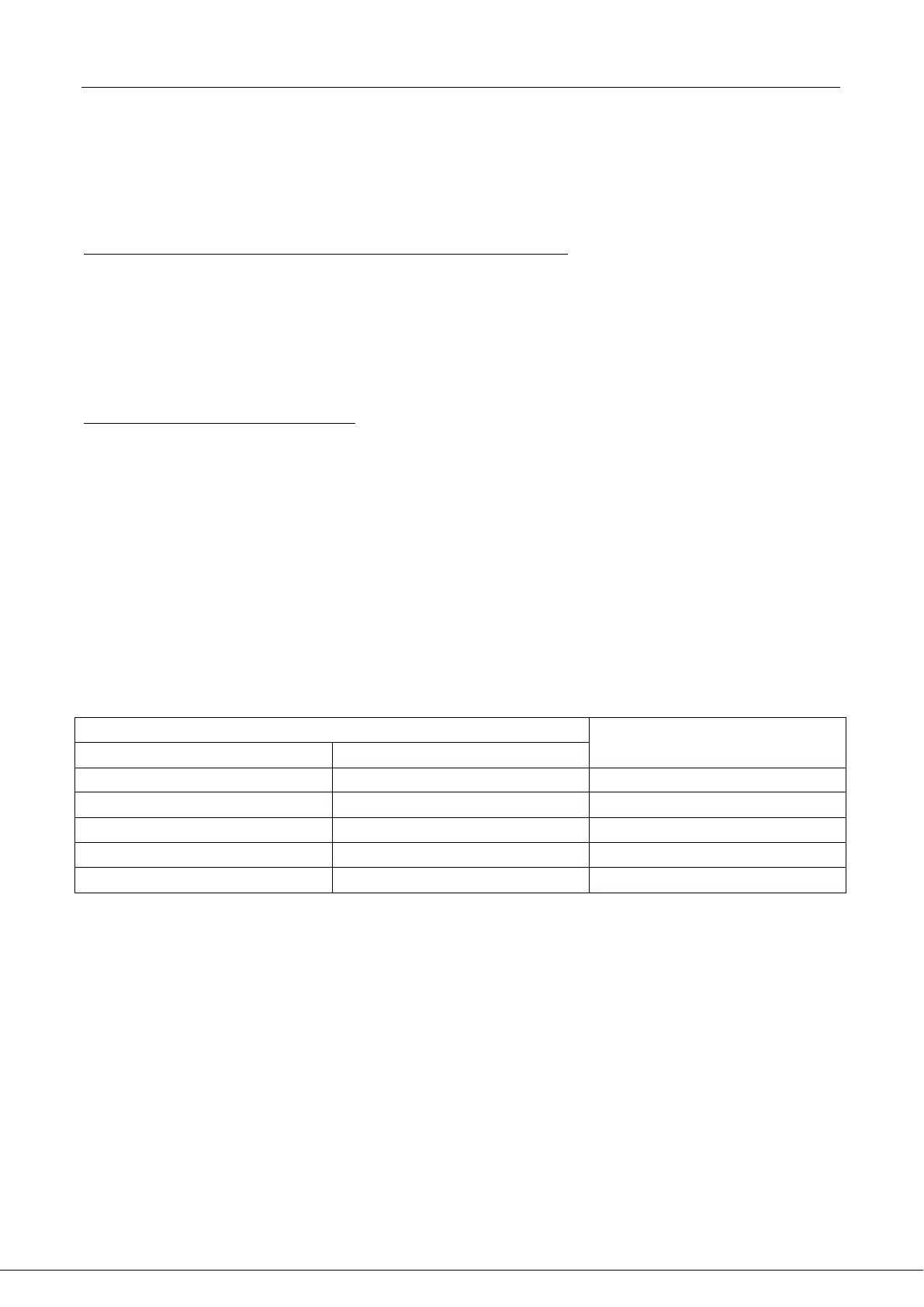
Table shows that a 2.5 mm or 12 gauge (g) wire has 2½ times the resistance than 4.0 mm or 8 g
wire. Remember, the lower the resistance, the better
Longer length lead-out cable/wire increases resistance leading to voltage loss
DO NOT use household electrical cable. It is intended for low voltage use only
NEVER use copper wire. Where copper joins galvanized wire, electrolysis occurs, destroying the
wire
NEVER use barbed wire
Use insulated cable, particularly if there is a possibility of contact with any earthing point
Wire size Resistance of wire (ohms/km)
Gauge(g) Wire diameter(mm)
8 g 4.0 mm 14 ohms/km
10 g 3.15 mm 22 ohms/km
12.5 g 2.5 mm 35 ohms/km
14 g 2.0 mm 54 ohms/km
16 g 1.6 mm 85 ohms/km
Table 3: DC resistance in ohms of a single galvanized steel fence wire over 1 km
Other helpful hints:
If running lead-out cable underground, feed it through a piece of plastic hose or pipe before
burying. This not only gives the lead-out cable protection but acts as a warning to anyone who may
dig in the area in the future
DO NOT install lead-out wire close to the ground where potential “leakage” through vegetation
will result in voltage loss
Keep stray wires well away from the lead-out cable/wire


 To Next Page