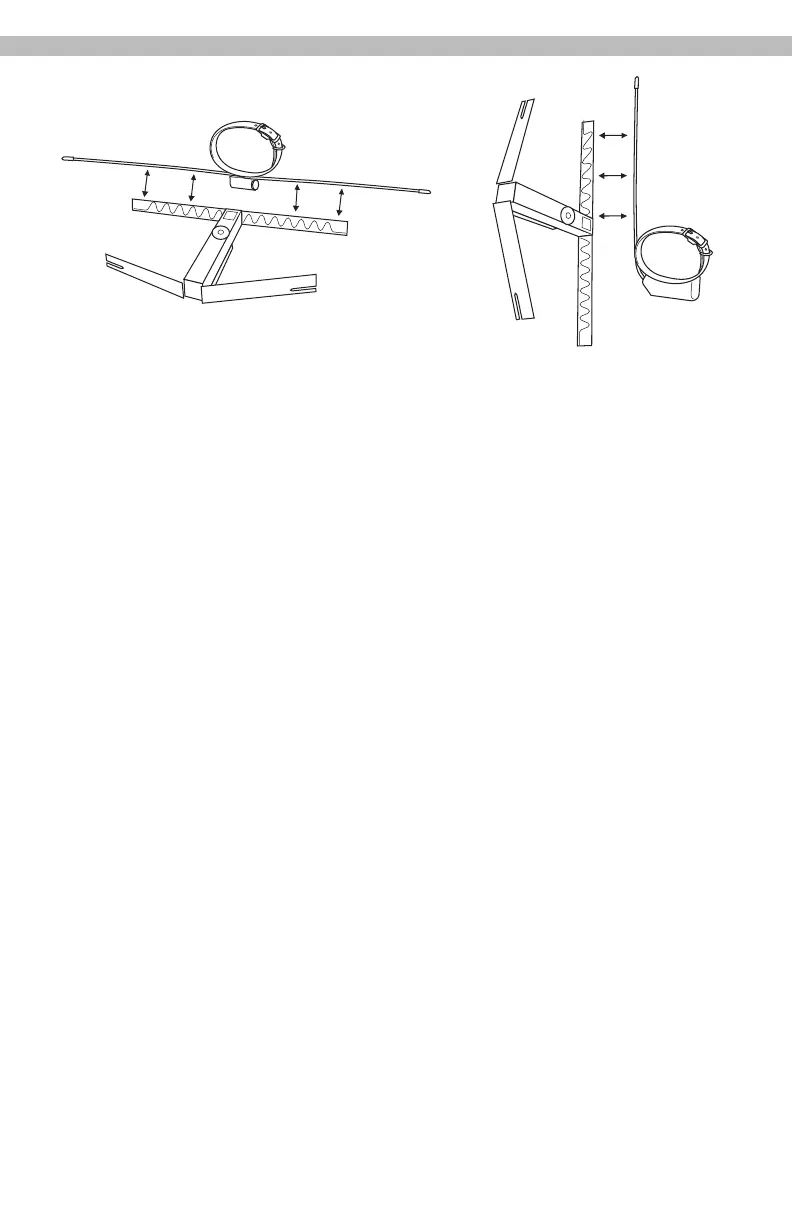
on the transmitter parallel to the ground. Then turn on the
receiver and test the signal strength with the antennas parallel
and perpendicular to the antenna on the transmitter. Knowing
the optimal orientation of the receiver can aid in radio-location.
Overhead Utilities
Power lines are excellent re-radiators of radio waves and can
complicate radio-location. Like signal bounce, it is all very man-
ageable once you understand the limitations of tracking near
power lines especially high voltage transmission lines.
Use in and around a vehicle
The receiver can be operated from a motor vehicle, however,
many older vehicles produce considerable interference and
make signal reception difficult (particularly a weak signal) when
the engine is running. When using the receiver without an exter-
nal antenna it is best to shut off the vehicle and move at least
20 feet away. Be cautious of reflected signals off the vehicle. It
might be necessary to take readings from different points from
around the vehicle to get a good bearing.
Location of transmitter
There is a reason why TV and radio transmitters are located on
hilltops and towers - it provides maximum range for the signal.
Conversely, the closer to the ground the transmitter is situated,
the shorter the effective receiving range. Locating an object that
has fallen into a well or is flat on the ground is more difficult
given the reduced effective range of the signal.
15


 To Next Page