
 Need help?
Do you have a question about the TRENDnet TEW-638APB and is the answer not in the manual?
Detecting the device on the network and logging into the setup wizard.
Selecting and configuring the Access Point mode and network settings.
Configuring the wireless network name (SSID) and security settings.
Utilizing WPS for simplified wireless client connection.
Setting up encryption methods like WEP, WPA, or WPA2.
Detecting the device and logging into the setup for AP Client mode.
Configuring wireless settings such as SSID for AP Client mode.
Configuring wireless security protocols like WEP or WPA/WPA2 for AP Client.
Steps to access the device's configuration menu via a web browser.
Configuring the operating mode of the TEW-638APB (Access Point, AP Client).
Details on using the device as an Access Point, including WDS.
Using the device as a wireless adapter for other Ethernet devices.
Basic wireless settings for Access Point mode, including SSID and channel.
Selecting the AP Client mode to use the device as a wireless adapter.
Selecting the appropriate wireless mode for optimal performance.
 General
| Frequency band | 2.412 - 2.472 GHz |
|---|---|
| Channels quantity | 13 channels |
| Networking standards | IEEE 802.11b, IEEE 802.11e, IEEE 802.11g, IEEE 802.11n, IEEE 802.2, IEEE 802.3u |
| Receiver sensitivity | 802.11n: -68dBm (typical) @ MCS15/HT20, -66dBm (typical) @ MCSI15/HT40 802.11g: -72dBm (typical) @ 54Mbps 802.11b: -84dBm (typical) @ 11mpbs |
| Ethernet LAN data rates | 10, 100 Mbit/s |
| Maximum data transfer rate | 300 Mbit/s |
| Quality of Service (QoS) support | Yes |
| Indoor range | 100m |
| Outdoor range | 300m |
| Wireless range | 300 m |
| Networking features | Fast Ethernet |
| Operating temperature (T-T) | 32 - 104 °F |
| Compliance industry standards | IEEE 802.3, IEEE 802.3u |
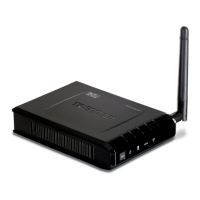
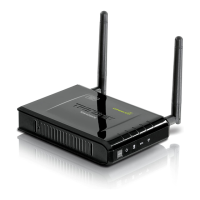
| Antenna features | Detachable antenna |
| Antennas quantity | 2 |
| Antenna gain level (max) | 2 dBi |
| Internal | No |
| Cable length | 0.6 m |
| Certification | RoHS |
| LED indicators | LAN, Power, WLAN |
| WAN connection | Ethernet (RJ-45) |
| Security algorithms | 128-bit WEP, 64-bit WEP, 802.1x RADIUS, WPA, WPA-PSK, WPA2, WPA2-PSK |
| Storage temperature (T-T) | -20 - 60 °C |
| Operating relative humidity (H-H) | 5 - 95 % |
| Power supply type | DC |
| Power requirements | 12V/0.5A |
| Cables included | LAN (RJ-45) |
| Minimum system requirements | CD-ROM |
| Compatible operating systems | Windows 2000/XP/Vista Windows 2003 Server |
| Harmonized System (HS) code | 85176990 |
 Weight and Dimensions
| Weight | 145 g |
|---|---|
| Dimensions (WxDxH) | 26 x 120 x 88 mm |


 To Next Page
