Page | 15
ONLINE: TRINITYAPPLIANCES.COM.AU
4.3 CAUTIONS
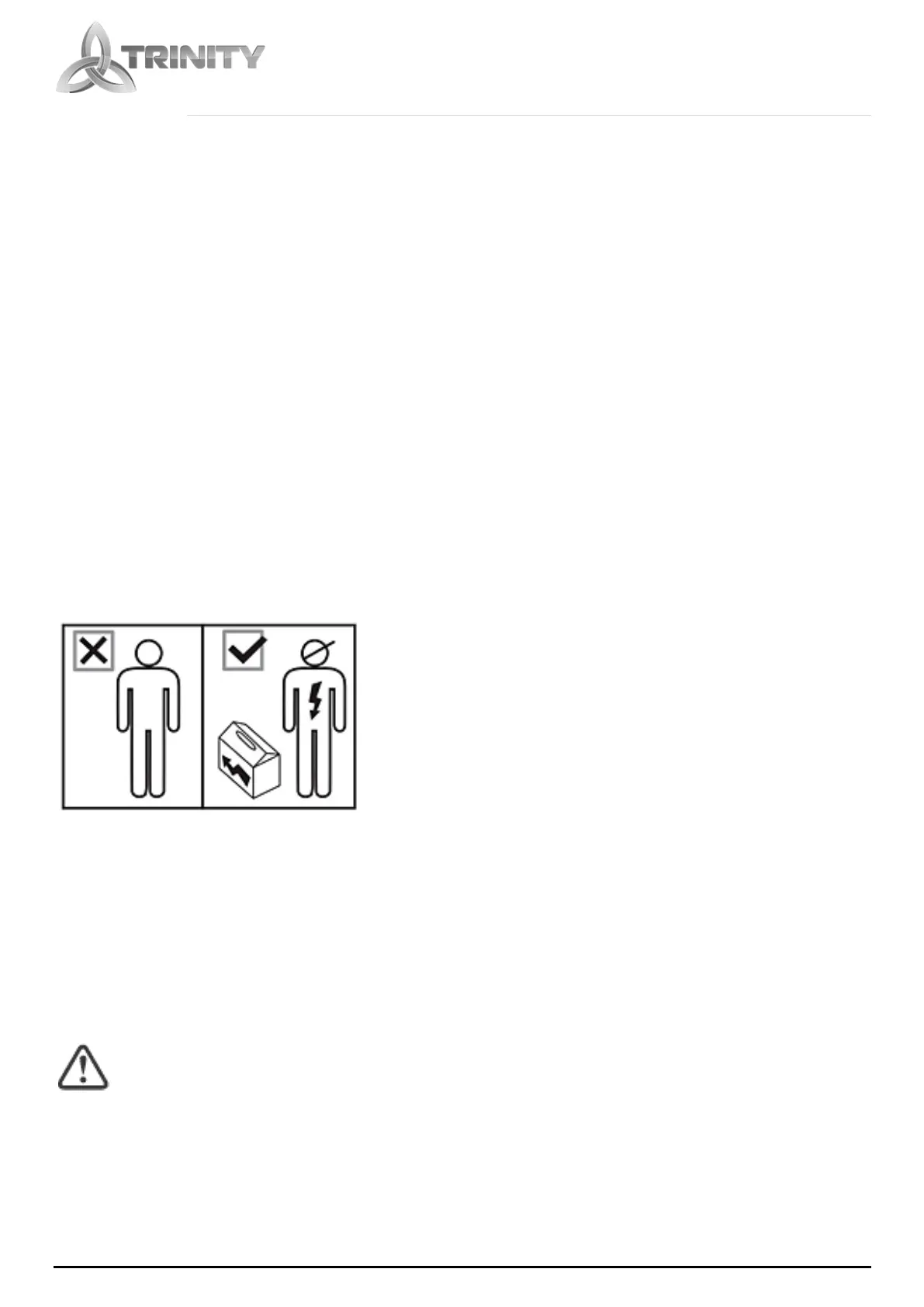
1. The ceramic cooktop must be installed by qualified licensed personnel or
technicians.
2. The ceramic cooktop must not be mounted to cooling equipment, dishwashers and
rotary dryers.
3. The ceramic cooktop must be installed in a way that the better heat radiation can
be ensured to enhance its reliability.
4. The wall and induced heating zone above the work surface shall withstand heat.
5. To avoid any damage, the benchtop and adhesive must be resistant to heat.
6. A steam cleaner is not to be used.
7. This ceramic hob can be connected only to a supply with system impedance no
more than 0.427 ohm. In case if necessary, please consult your supply authority for
system impedance information.
4.4 CONNECTING THE HOB TO THE MAIN POWER SUPPLY
The installation work must be carried out by a qualified
licensed electrician. Before connecting the main
supply, ensure that the mains voltage corresponds to
the voltage on the rating plate inside the cooktop.
Before connecting the hob to the mains power supply, check
that:
The domestic wiring system is suitable for the power drawn by the hob.
The voltage corresponds to the value given in the rating plate.
The power supply cable sections can withstand the load specified on the rating plate.
To connect the hob to the mains power supply, do not use adapters, reducers, or branching devices, as
they can cause overheating and fire.
The power supply cable must not touch any hot parts and must be positioned so that its temperature will not
exceed 75°C at any point.
Check whether the domestic wiring system is suitable without alterations. Any alterations must only
be made by a qualified electrician.
If the cable is damaged or needs replacing, the operation must be carried out by the
after-sale agent with dedicated tools to avoid any accidents.



 To Next Page