Need help?
Do you have a question about the Universal Atomic 4 and is the answer not in the manual?
Key guidelines for engine operation, including running time and ventilation.
Details warranty coverage for defects in material or workmanship for one year.
Manufacturer reserves the right to make product improvements at any time.
Steps for registering the engine warranty within 24 hours of receipt.
Lists services and equipment not covered under the warranty terms.
Prior authorization needed for complete engine assembly or major component replacement.
Important checks and preparations before starting the engine for the first time.
Step-by-step guide for starting the engine, including choke and throttle operation.
Standard settings for throttle stop screw and idling needle valve.
General advice on diagnosing and adjusting carburetor issues.
Procedure for adjusting idle speed and mixture using the idling needle valve.
How to adjust mixture for intermediate and high speeds using main jet adjustment.
Steps for starting the engine, including throttle and choke operation.
Importance of correct float setting for fuel level and factory settings.
Explanation of the fuel supply system components and fuel flow regulation.
Description of the idle system components and how they control the idle mixture.
How the high speed system controls fuel mixture at part and wide open throttle.
Function and operation of the semi-automatic choke valve.
Details on float system operation, measurement, and adjustment.
Role of the automatic by-pass temperature control and its effect on condensation.
Comprehensive checklist for engine overhaul and preparation for spring use.
Steps for preparing the engine for winter storage, including fogging and draining.
Checks for fuel supply issues, blockages, and water in the fuel system.
Diagnosing and fixing issues related to flooding or incorrect mixture.
Method for detecting air leaks in the intake manifold.
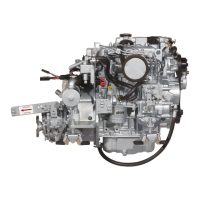
The Universal Atomic Four engine is a compact yet powerful marine engine designed for reliable operation in various boating conditions. It is a vertical, 4-cycle, L-head engine, built to provide dependable service when properly maintained and operated.
The Universal Atomic Four engine serves as the primary power source for small boats, particularly sailboats. Its design emphasizes efficiency and durability, making it suitable for both infrequent use and regular cruising. The engine's core function is to convert fuel into mechanical energy to propel the boat. It features a comprehensive fuel supply system, an idle system for low-speed operation, a high-speed system for cruising, and a choke system for starting. The electrical system provides ignition and power for accessories, while the water cooling system maintains optimal operating temperatures.
To ensure proper operation, especially during colder months or infrequent use, several key practices are recommended. Before starting, it's crucial to ventilate the engine compartment to remove any fuel fumes. The fuel supply should be checked, and all fuel lines must be tight to prevent leaks. All electrical connections should be secure, with the ground terminal attached to the engine block. The water pump requires lubrication with water pump grease.
When starting the engine, the clutch lever should be in neutral. The fuel pump bowl needs to be filled using the hand primer. The throttle lever should be set to ¼ open, and the choke rod pulled out completely. After turning on the ignition and starting the engine, the choke lever should be gradually pushed in until the choke valve is fully open. The engine should then be run at an idling speed of 600 to 1000 RPM.
During operation, it's vital to monitor oil pressure, which should be between 45 to 55 pounds when cold. After about 10 minutes of running, the oil level should be checked and topped up if necessary. The cooling system must be verified by checking water discharge from the exhaust pipe, and the temperature gauge should show a gradual increase to 140-160 degrees. If oil pressure, water flow, or operating temperature are not normal, the engine should be stopped immediately to identify and correct the problem. When shifting into forward or reverse, the engine should be running at 600-1000 RPM.
For optimal performance, it is not advisable to run the engine for only short periods. It should be operated for a minimum of 30 minutes to reach normal operating temperature. Occasionally running the engine at full load for at least 5 minutes helps keep it clean of moisture and carbon accumulations.
The carburetor features specific adjustments for idle, low, and high speeds. The throttle stop screw and idling needle valve control idle speed and mixture, while the main jet and well vent manage intermediate and high-speed mixtures. These adjustments should only be made after the engine is thoroughly warmed up and other potential causes of trouble have been investigated.
Regular maintenance is crucial for the longevity and reliable performance of the Universal Atomic Four engine. Oil changes should be performed frequently as recommended in the owner's manual, as contaminated oil can lead to inadequate lubrication.
For winter storage, specific steps are required to prevent damage from freezing and corrosion. The engine should be "fogged" by pouring oil into the carburetor while running at about 800 RPM, then stalling it by rapidly pouring in the remaining oil. Additional oil should be added to each cylinder through the spark plug holes. The oil pan and lubrication system should be drained of old oil and refilled with new, clean oil to act as a rust preventive. Drain plugs and pipe caps from the cylinder block and manifold should be removed and left off to ensure complete drainage of water. The water pump should also be carefully drained and dried. The battery should be removed and stored, and other electrical parts protected from moisture. All gasoline should be drained from the fuel system, and the carburetor air intake sealed to prevent moisture entry. Exposed metal parts should be coated with grease or rust preventive compound.
For spring service, all nuts and bolts should be tightened to proper torque, and drain plugs and caps replaced. Manifold bolts should be checked for tightness. The water pump's drain cock should be closed, the drain plug replaced, and the pump lubricated. The lubrication system should be refilled with the specified quantity of oil. Spark plugs should be removed, and oil poured into the cylinders to lubricate walls and rings, then the engine turned over without spark plugs. Valves and tappets should be checked and lubricated. The distributor needs to be cleaned, lubricated, and its points set. Spark plugs should be cleaned and re-gapped, or replaced if burned or broken. Damaged or brittle ignition wires should be replaced. The starter pinion should be cleaned and lubricated, and bearings lubricated. Battery terminals should be cleaned, fastened securely, and coated with vaseline or grease before attaching cables. The fuel system should be checked for cleanliness and tightness, and the flame arrestor cleaned. Finally, the engine should be turned over by hand to ensure all bearings are free, and the propeller shaft alignment checked if the boat is in water. The stuffing box should be tightened just enough to prevent leakage.
 General
| Number of Cylinders | 4 |
|---|---|
| Firing Order | 1-3-4-2 |
| Horsepower | 30 HP at 3500 RPM |
| Cooling System | Freshwater or raw water cooled |
| Fuel System | Carbureted |
| Ignition System | Distributor |


 To Next Page