201
Thermo E+ 120/200/320 2 Technical Data
2 Technical Data
Unless limiting values are defined, the technical data
should be understood with tolerances of ±10% common
for heaters at an ambient temperature of +20°C, and at
nominal voltage.
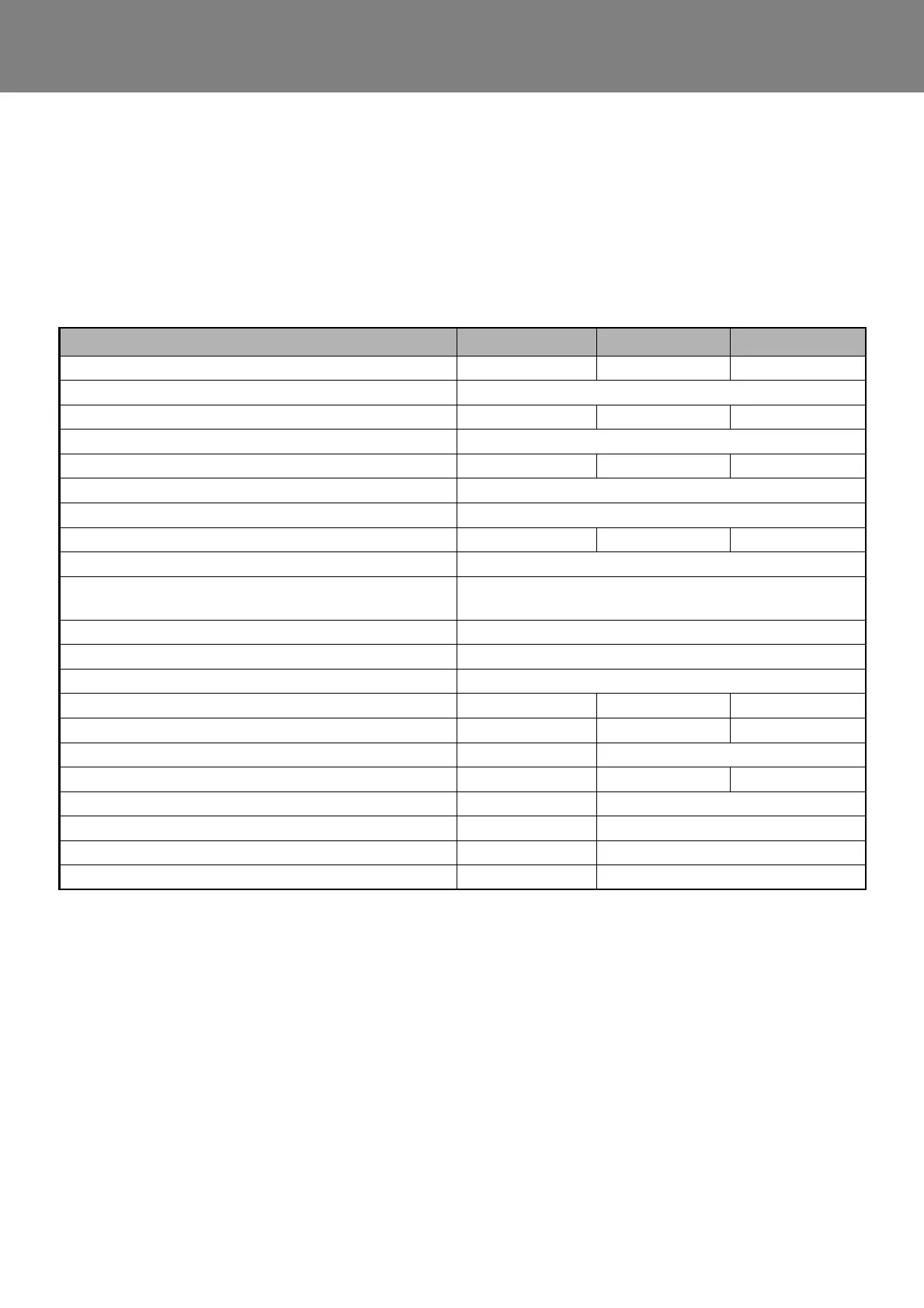
Table 201 Technical Data
2.1 Electrical components
All components of the heater as well as the circulation
pump and the timer are available in two versions which
are designed for either 24 or 12 Volt nominal voltage. The
voltage for the temperature sensor is regulated by the
control unit.
NOTE:
Circulating pumps must be assigned to the heaters
according to the nominal voltage and flow resistance in
the coolant cycle.
Heater Thermo E+ 120 Thermo E+ 200 Thermo E+ 320
ECE Type Approval Number E1 122R 00 0539 0540 0541
Kind of construction High pressure atomizer
Heating flow (at ambient temperature of 20°C) kW 12 20 32
Fuel see para. 2.2
Fuel consumption
1
kg/h 1.2 2.0 3.2
Rated voltage V = 12 / 24
Operating voltage range V = 10…15 / 20.5 ... 30
Rated power consumption at 12/24 V
2
W45 55 110
Switching thresholds °C 72 / 82
Permitted temperature of sucked
combustion air
3
°C -40…65 / 85
Permitted ambient temperature during operation °C -40…85
Permitted storage temperature °C -40...90
Max. operating overpressure in coolant cycle bar 2.0
Capacity of the heat exchanger l 1.4 1.8 1.8
Minimum coolant flow rate
4
l/h 1200 2400 2700
Minimum capacity of the coolant cycle l 10 25
CO
2
in exhaust gas at rated voltage
5
Vol % 10.6
9.5 10.0
Heater dimensions with splash guard, LxWxH mm 438x249x224 593x249x224
Weight kg 13.5 17.3
Diameter coolant connection mm 25 38
Diameter exhaust gas connection mm 38 70
1)
at rated conditions (rated voltage, winter Diesel, 15 °C)
2)
without circulating pump and heating element
3)
When permanently above 65°C, a reduced service life is assumed (a combustion air intake temperature of 65°C should not be exceeded)
4)
Minimum water flow at coolant temperatures above 50°C
Below 50°C a lower water flow is permitted, if the occurence of vapor bubbles due to local overheating safely can be excluded.
5)
For further CO
2
values vs. voltage, see Cha. 7.


 To Next Page