• Ne pas utiliser l’échangeur d’air pendant le sablage des joints de gypse ou lors de travaux
importants de rénovation. La poussière générée par ces activités peut endommager l’appareil.
• Ne pas utiliser l’échangeur d’air pendant tous travaux de vernissage. De plus, si votre appareil
est situé à l’entretoit, nous recommandons de boucher la grille d’aspiration d’air vicié et la grille
de distribution d’air frais. Les vapeurs de vernis peuvent endommager l’appareil.
• Pour les échangeurs d’air installés à l’entretoit, il est important de NE PAS METTRE
L’UNITÉ EN ARRÊT durant l’hiver. Ceci afin d’eviter les risques de condensation à l’intérieur
de l’appareil et à l’intérieur des conduits.
SYMPTÔMES CAUSES SOLUTIONS
• Air trop sec Mauvais ajustement du
sélecteur d’humidité
Ajustez le contrôle selon les
directives de la section 3
• Condensation
dans les fenêtres
Mauvais ajustement du
sélecteur d’humidité
Référez-vous aux directives de
la section 3 et laissez à l’appareil
un temps pour répondre
Démarrez votre système de
chauffage principal
Trop de bois de chauffage
dans la maison
Entreposez le bois à l’extérieur
L’air ne peut circuler près
des fenêtres
Ne fermez pas complètement les
rideaux, toiles ou autres
Fenêtre trop froide
• L’air à la grille
de distribution
est trop froid
Trop d’échange d’air
avec l’extérieur
Remettez l’anneau blanc dans la
bouche d’aspiration d’air frais
(voir section 7.4 )
6. DÉPANNAGE
5. MISE EN GARDE
5
6
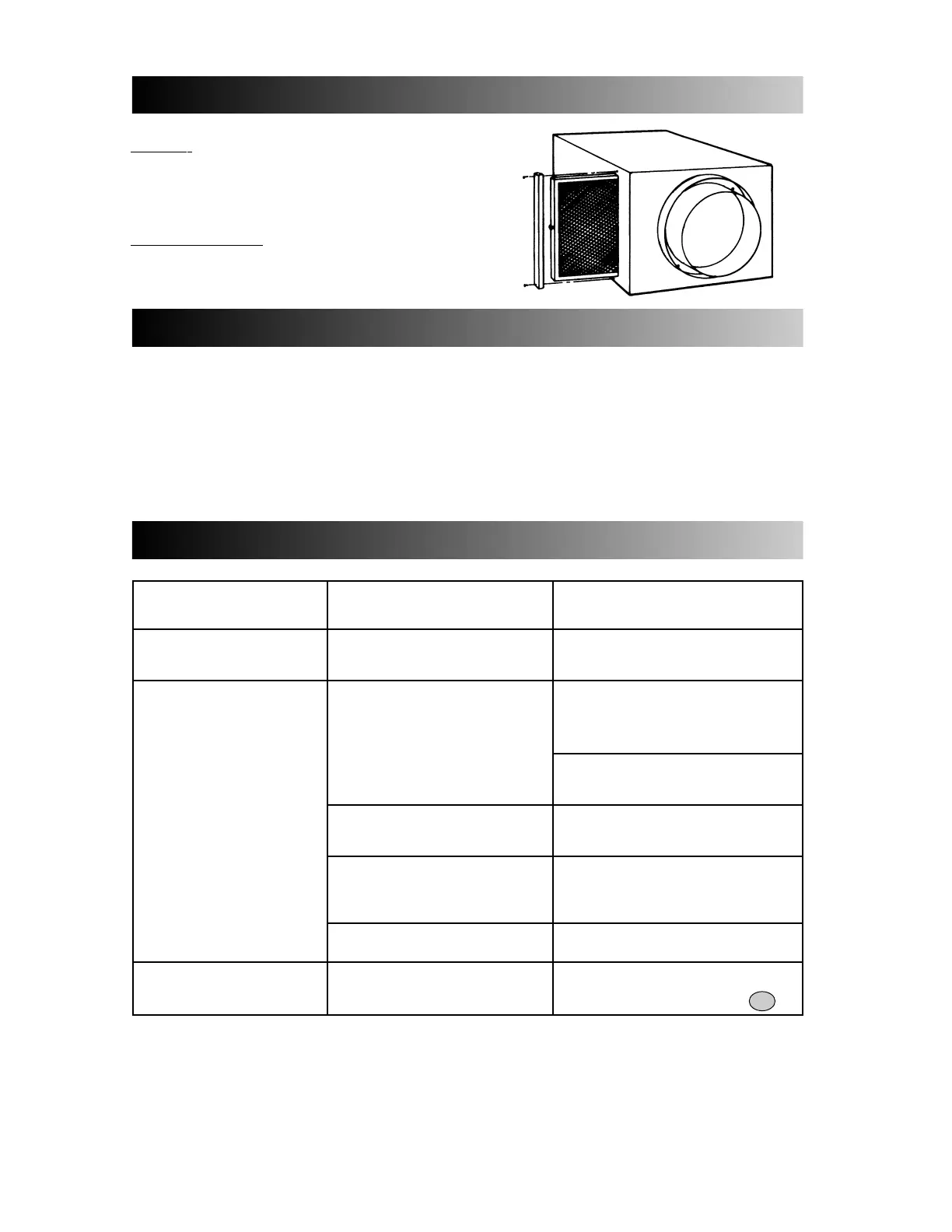
Air filter: We recommend that it be cleaned
every
three months
. First, use a vacuum cleaner to remove
the accumulated dust. Then wash it in warm soapy
water.
Exterior openings: Clean the exterior intake and
exhaust screens at least
once a year
, preferably in
autumn.
• Do not use your ventilation system when renovating a house or when sanding gypsum. This
type of dust may damage the unit.
• Do not use your ventilation system when varnishing. Furthermore, if your unit is installed in the
attic, we highly insist that you block the stale air intake and fresh air registers. The varnish
vapors may damage the unit.
• If your unit is installed in the attic, you should not turn it “OFF” during the winter time in
order to avoid condensation inside the unit and inside the ducts.
SYMPTOMS CAUSES SOLUTIONS
• Air too dry Humidity level incorrectly
selected
Select humidity level
according to section 3
• Persistant
condensation
Humidity level
incorrectly selected
Select humidity level
according to section 3 and
give the unit time to respond
Turn on the central heating
system
Too much firewood in the
house
Store the wood outside
Air cannot circulate close to
windows
Do not completely close
curtains, blinds, etc
Window frame too cold
• Air from distribution
register too cold
Too much air exchange with
the exterior
Install the white ring in the fresh
air intake port (section 7.4 )
6. TROUBLESHOOTING
5. WARNING
4. MAINTENANCE
5
6


 To Next Page
 Loading...