Page 28
Installation and Operation Manual - HE275CF
ENGLISH
6.5 Exhaust System
Wood smoke can condense inside the chimney, forming a inflammable deposit called creosote. If
creosote builds up in the system, it can ignite when a hot fire is burned in the insert. A very hot fire
can progress to the top of the chimney. Severe chimney fires can damage even the best chimneys.
Smouldering, smoky fires can quickly cause a thick layer of creosote to form. When the insert is
operated properly, the exhaust from the chimney is mostly clear and creosote builds up more slowly.
«Creosote - Formation and Need to Removal
When wood is burned slowly, it produces tar and other organic vapors, which combine with
expelled moisture to form creosote. The creosote vapors condense in the relatively cooler
chimney flue of a slow-burning fire. As a result, creosote residue accumulates on the flue
lining. When ignited this creosote makes an extremely hot fire. The chimney connector and
chimney should be inspected at least once every two months during the heating season to
determine if a creosote buildup has occurred. If creosote has accumulated (⅛" [3mm] or
more it should be removed to reduce the risk of a chimney fire.
6.5.1 Cleaning frequency
It is not possible to predict how much or how quickly creosote will form in the chimney. It is
important, therefore, to check the build-up in the chimney monthly until the rate of creosote
formation is determined. Even if creosote forms slowly in the system, the chimney should be
cleaned and inspected at least once each year. Establish a routine for the fuel, wood burner and
firing technique. Check daily for creosote build-up until experience shows how often you need
to clean to be safe. Be aware that the hotter the fire, the less creosote is deposited and weekly
cleaning may be necessary in mild weather even though monthly cleaning may be enough in the
coldest months. Contact your local municipal or provincial fire authority for information on how
to handle a chimney fire. Have a clearly understood plan to handle a chimney fire.
6.5.2 Sweeping the Chimney
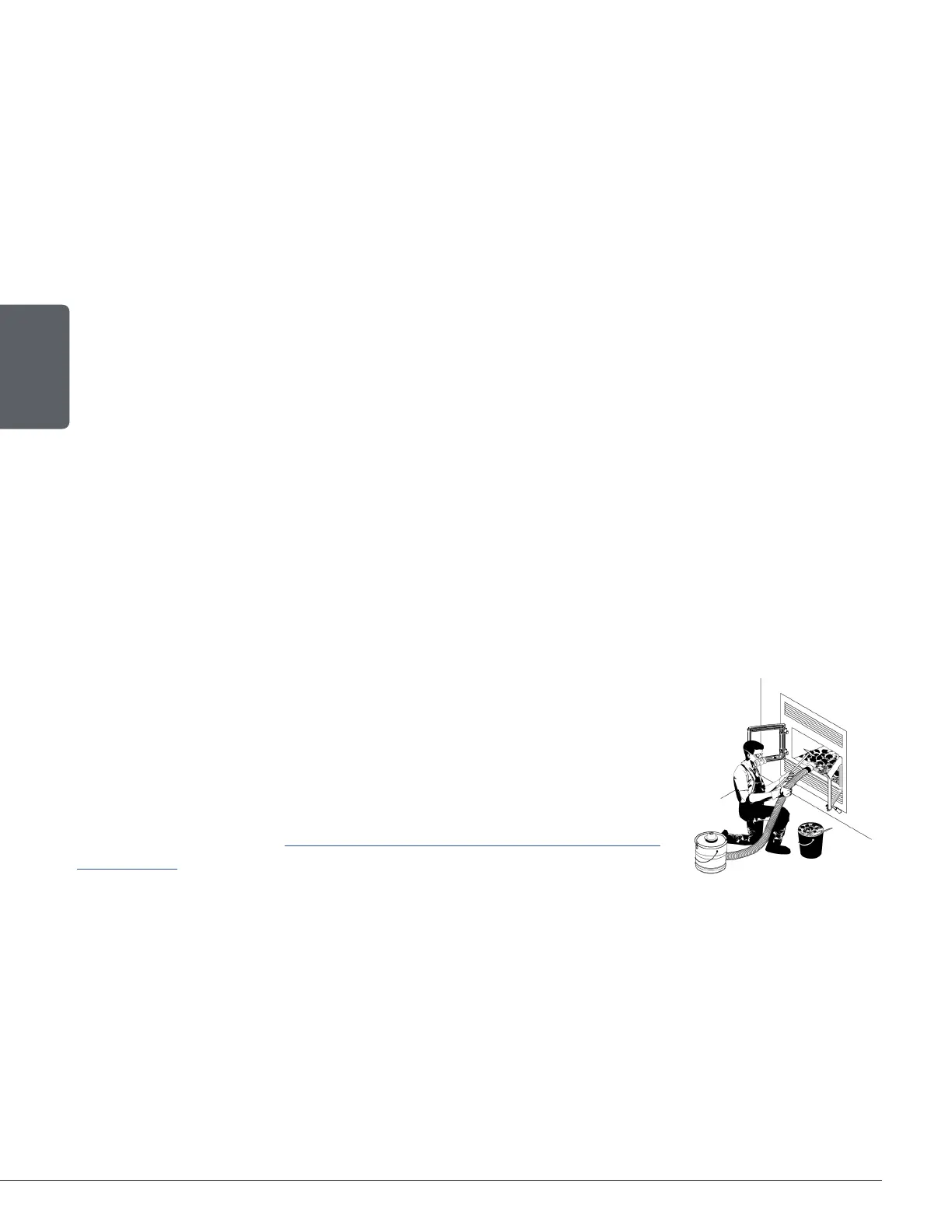
Chimney sweeping can be a difficult and dangerous job. People
with no chimney sweeping experience will often prefer to hire a
professional chimney sweep to inspect and clean the system for the
first time. After seeing the cleaning process, some will choose to do
it themselves. The chimney should be checked regularly for creosote
buildup. Inspection and cleaning of the chimney can be facilitated by
removing the baffle. See «Appendix 7: Secondary Air Tubes and Baffle
Installation» for more details.
6.5.3 Chimney Fire
Regular chimney maintenance and inspection can prevent chimney fires. If you have a chimney
fire, follow these steps:
1. Close the fireplace door and the air intake control;
2. Alert the occupants of the house of the possible danger;
3. If you require assistance, alert the fire department;
4. If possible, use a dry chemical fire extinguisher, baking soda or sand to control the fire. Do not
use water as it may cause a dangerous steam explosion;
Do not use the appliance again until the fireplace and its chimney have been inspected by a
qualified chimney sweep or a fire department inspector.


 To Next Page