EasyManua.ls Logo

VESDA VLQ-100 - User Manual

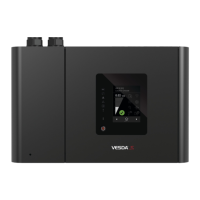
VESDA VLQ-100
50 pages
Print Icon
To Next Page IconTo Next Page
Loading...
VESDA VLQ
Product Guide
VLQ-100
February 2014
Document: 26104_03
Part Number: 30320

Questions and Answers

  • T
    Trevor JacksonAug 16, 2025
    What to do if VESDA VLQ-100 Smoke Alarm indicates low airflow?
    • A
      Anthony ReevesAug 17, 2025
      If the VESDA Smoke Alarm indicates low airflow, it means the airflow through one or both sample pipes has exceeded the acceptable low flow limit. Check the sampling holes and pipe for obstruction or partial blockage. Examine the environment for changes that may affect airflow. If a cause cannot be found, normalize the detector.
  • C
    casey91Aug 22, 2025
    What to do if VESDA VLQ-100 Smoke Alarm filter life expired?
    • C
      Cynthia ReedAug 22, 2025
      If the VESDA Smoke Alarm indicates that the filter life has expired, replace the filter and reset the filter use percentage value.
  • S
    Samantha HallAug 25, 2025
    What to do if VESDA Smoke Alarm displays 'filter not fitted or fitted incorrectly'?
    • D
      Denise JohnsonAug 26, 2025
      If the VESDA Smoke Alarm displays 'filter not fitted or fitted incorrectly', check the filter is fitted correctly or insert a new filter.
  • W
    William Jones MDAug 27, 2025
    What to do if VESDA VLQ-100 Smoke Alarm airflow normalization failed?
    • D
      Destiny LarsonAug 28, 2025
      If the VESDA Smoke Alarm's airflow normalization failed, it means that the detector has been unable to establish a reference level for normal airflow. Check the sample holes, pipe, and connection to the unit for obstruction and integrity. Make corrections as required, restart the unit, wait 10 minutes, then normalize again.
  • J
    Joann BrownAug 30, 2025
    What to do if VESDA VLQ-100 Smoke Alarm shows 24V input power supply fault?
    • M
      Mrs. Natalie MontoyaAug 30, 2025
      If the VESDA Smoke Alarm shows a 24V input power supply fault, it means the 24V input voltage is lower than 18V or higher than 30V. Check the PSU voltage across the 0V and +24V terminals on the rear of the unit with a multimeter to ensure it is constant and between 18 - 30V DC. Adjust or replace the PSU as required.
  • P
    Pamela WoodSep 2, 2025
    What to do if VESDA VLQ-100 Smoke Alarm autolearn smoke failed?
    • R
      Rose MorseSep 2, 2025
      If the VESDA Smoke Alarm's autolearn smoke feature failed, it means that the detector has been unable to establish suitable alarm thresholds during Autolearn Smoke. Re-activate when the area is smoke-free, or set suitable Pre-Alarm and Fire thresholds manually using the onboard DIP switches or the Xtralis QSC software.
  • T
    turnerjeffreySep 4, 2025
    What to do if VESDA Smoke Alarm monitored General Purpose Input line is open or short circuit?
    • W
      wmcclainSep 4, 2025
      If the VESDA Smoke Alarm indicates that the monitored General Purpose Input line is open or short circuit, check that the 47K EOL resistor is fitted to the GPI terminals on the back of the unit. Examine the monitored device (if fitted).
  • N
    nicholsonbrianSep 7, 2025
    What to do if VESDA Smoke Alarm reports external device failure?
    • W
      waltersrichardSep 7, 2025
      If the VESDA Smoke Alarm reports an external device failure, check that the EOL resistor is fitted and examine the monitored device (if fitted).
  • C
    Christopher RobinsonSep 10, 2025
    What to do if VESDA Smoke Alarm display panel button is stuck?
    • C
      Christopher ClarkSep 12, 2025
      If a button on the VESDA Smoke Alarm's display panel is stuck, attempt to release the button and check that the detector housing and front panel are correctly fitted and aligned.
  • A
    arellanocassandraSep 10, 2025
    What to do if VESDA VLQ-100 Smoke Alarm shows high airflow?
    • B
      Benjamin BooneSep 12, 2025
      If the VESDA Smoke Alarm displays a high airflow warning, it indicates that the airflow through one or both sample pipes has exceeded the acceptable high flow limit. Check the sample pipes for damage or breaks. Examine the environment for changes that may affect airflow. If a cause cannot be found, normalize the detector.

Summary

Document Overview and Safety

Disclaimer and Copyright

Legal notices regarding intellectual property and document usage.

General Warning and Liability

Critical safety warnings and liability limitations for product use.

Product Introduction

Introduction to VESDA VLQ

Overview of the VESDA VLQ aspirating smoke detector and its applications.

Product Features

Key Features of VESDA VLQ

Details the core features and capabilities of the VESDA VLQ detector.

Product Information and Specifications

How the VESDA VLQ Works

Explains the air sampling and detection process of the VLQ detector.

Detector Overview and Controls

Details the physical components, front panel indicators, and control buttons.

Technical Specifications

Lists detailed specifications including power, dimensions, and performance parameters.

Ordering Information and Dimensions

Provides part numbers for ordering and detailed physical dimensions.

Air Sampling Pipe Network

Installation Considerations

Guidelines for installing the sampling pipe network correctly.

Pipe Inlets and Exhaust

Information on connecting sampling pipes and exhaust air flow.

Air Sampling Configurations

Recommended configurations for pipe and sampling hole placement.

Installation Guide

Mounting Procedures

Describes various methods for mounting the VESDA VLQ detector.

Wiring and Connections

Details wiring terminals, relays, GPI, and FACP connections.

Power Supply and Battery

Guidance on selecting and sizing backup batteries for power supply.

Pre-Operation Checks

Installation checklist, powering up, and preliminary system checks.

Configuration

Logging On and Setting Time

Procedures for logging into the detector and setting the system time.

DIP Switch Configuration

Explains the function and settings of the onboard DIP switches.

Commissioning

AutoLearn Smoke Process

Details the AutoLearn smoke feature for setting alarm thresholds.

Commissioning Smoke Test

Procedure for verifying the pipe network integrity with a smoke test.

Xtralis QSC Software

Software Installation and Operation

Guide to installing, connecting, and using the QSC software functions.

Configuration and Device Information

Details configurable parameters and device status information via QSC.

Maintenance and Troubleshooting

Maintenance Schedule

Outlines the regular maintenance checks and their frequency.

Filter Replacement Procedure

Step-by-step guide for replacing the detector filter.

Fault Codes and Resolutions

Lists common fault codes and their possible solutions.

VESDA VLQ-100 Specifications

General IconGeneral
ModelVESDA VLQ-100
TypeAspirating Smoke Detector
Number of Sampling Holes/PointsUp to 40
Number of Pipes1
Power Supply24 VDC
IP RatingIP30
Detection MethodLaser-based
Sensitivity Range0.005% - 20% obscuration/m
Alarm LevelsAlert, Action, Fire 1, Fire 2
Communication Protocol/InterfaceModbus
Operating Temperature0°C to 39°C (32°F to 102°F)
Operating Humidity10% to 95% RH (non-condensing)
Fault Relays1
Relay Outputs1 fault
Pipe LengthUp to 100 m (328 ft)
Weight2.5 kg
Alarm Relays3 configurable relays

Related product manuals