26
Component Testing
Compressor Description Test Procedure
From condenser refrigerant
flows into capillary and then
to evaporator before
returning to compressor
through suction line.
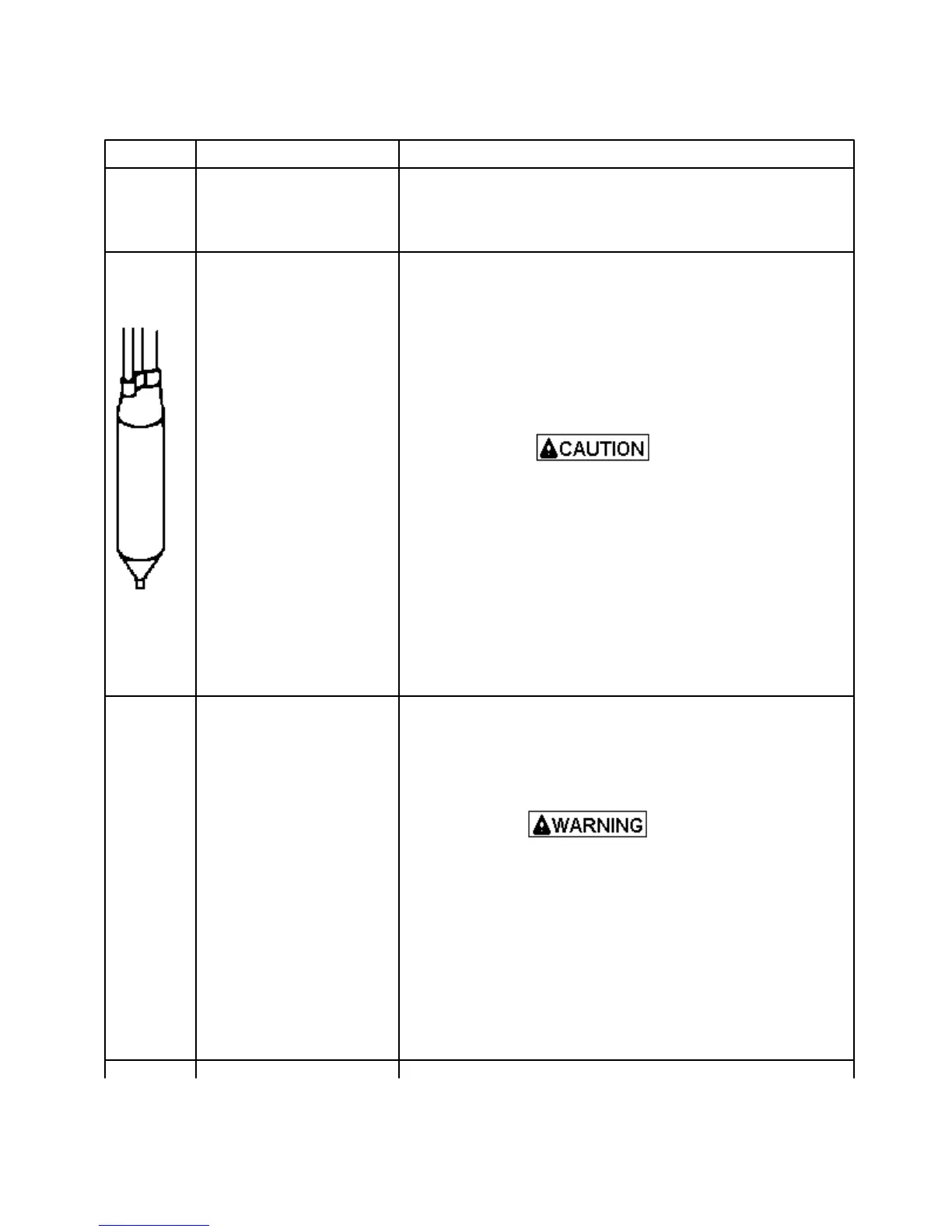
Drier Drier is placed at post Drier must be changed every time the system is opened for testing
condenser loop outlet and or compressor replacement.
passes liquefied refrigerant NOTE: Drier used in R12 sealed system is not interchangeable
to capillary. with drier used in R134a sealed system.
Desiccant (20) 8x12 4AXH-
7 M.S. Grams. Before opening refrigeration system, recover HFC 134a refrigerant
for safe disposal.
1. Score capillary tube close to drier and break.
2. Reform inlet tube to drier allowing enough space for large tube
cutter.
To avoid death or severe personal injury, cut drier at correct location.
Cutting drier at incorrect location will allow desiccant beads to
Scatter. If spilled, completely clean area of beads
3. Cut circumference of drier 1 ¼” below condenser inlet tube joint
to drier.
4. Remove drier.
5. Apply heat trap paste on post condenser tubes to protect
grommets from high heat.
6. Unbraze remaining part of drier. Remove drier from system.
7. Discard drier in safe place. Do not leave drier with customer
If refrigerator is under warranty, old drier must accompany
warranty claim.
Evaporator Inner volume of evaporator Test for leaks in evaporator with electronic leak detector or with
allows liquefied refrigerant soap solution. Compressor oil is circulated with refrigerant, check
discharged from capillary for oil when checking for leaks.
to expand into refrigerant gas. NOTE: Follow all procedures for recovering R134a
Refrigerant for safe disposal when opening system.
Expansion cools evaporate For Minute Leaks.
tube and fin temperature to
approximately -20°F
transferring heat from freezer To avoid severe personal injury or death from eruption of high
section to refrigerator. pressure gasses, observe the following:
Passing through suction line 1. Protect against a sudden eruption if high pressures are required
to compressor, the refrigerant for leak checking.
picks up superheat (a relation- 2. Do not use high pressure compressed gasses in refrigeration
ship between pressure and systems without a reliable pressure regulator and pressure
temperature that assures relief valve in the line.
complete vaporization of
liquid refrigerant) as result of
capillary in suction line.



 To Next Page