EasyManua.ls Logo

Viking VCSB481 - User Manual

Viking VCSB481
33 pages
Print Icon
To Next Page IconTo Next Page
Loading...
SERVICE NOTEBOOK
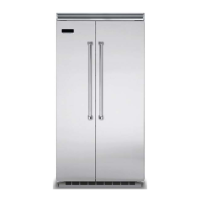
BUILT-IN REFRIGERATOR
VCSB481 / VCSB482
VIKING RANGE CORPORATION, PO DRAWER 956, GREENWOOD, MS. 38930-USA

Questions and Answers

  • R
    Ricky RothAug 16, 2025
    Why is my Viking VCSB481 not making ice or has low ice production?
    • B
      Brett RileyAug 16, 2025
      There could be several reasons for low ice production in your Viking refrigerator. A warm freezer may be the cause, requiring you to adjust the freezer control or repair the refrigerator. Other potential causes include a broken locking tab on the vertical cam, a shorted or burned module shut-off switch and contacts, a stalled or stripped motor, or a contaminated module. Each of these issues suggests replacing the ice maker. An open or missing thermostat may also be the reason; in this case, replace or install the thermostat and apply alumilastic. If there's no power to the ice maker harness, trace the power to determine the discontinuity. Jammed cubes can also be the reason, so un-jam the cubes and check the fill tube cup assembly.
  • E
    Evan PriceAug 19, 2025
    What to do if there's no power to the water valve in my Viking VCSB481 Refrigerator?
    • A
      ashley70Aug 19, 2025
      If there's no power to the water valve in your Viking refrigerator, determine the discontinuity by tracing the power.
  • R
    Rhonda WuAug 22, 2025
    What to do if my Viking Refrigerator has low water pressure affecting ice production?
    • T
      Tina SinghAug 22, 2025
      If your Viking refrigerator has low water pressure, short the “T” and “H” test points for 10 seconds, then remove the jumpers. Catch water in a glass. Increase water pressure to 20-120 psi (1.4-8.2 bar), aiming for 140cc’s.
  • B
    benjaminschmidtAug 28, 2025
    Why is my Viking Refrigerator producing excessive ice?
    • M
      Morgan AlvarezAug 28, 2025
      Excessive ice production in your Viking refrigerator can be attributed to a few reasons. If the shut-off arm is not in the actuator, replace it. A deformed shut-off arm should also be replaced. Alternatively, a broken shut-off lever or lever bypassing the vertical cam, or a broken module actuator will require you to replace the ice maker.
  • M
    Michael ClineAug 31, 2025
    How to fix a frozen fill tube in Viking Refrigerator?
    • J
      James DelgadoAug 31, 2025
      If the fill tube in your Viking refrigerator is frozen, replace the water valve.
  • J
    joannabakerSep 3, 2025
    What to do if the water line to my Viking VCSB481's ice maker is kinked?
    • M
      meghanboydSep 3, 2025
      If the water line to your Viking refrigerator's ice maker is kinked, un-kink the line and check it for weak sections.
  • C
    chadburnsSep 6, 2025
    What to do if the water line to the ice maker of my Viking VCSB481 is obstructed?
    • D
      Dr. Alexandra MillerSep 7, 2025
      If the water line to the ice maker or refrigerator is obstructed, clear the water line.
  • J
    jacksonjonathanSep 9, 2025
    How to fix a clogged water valve in a Viking VCSB481 Refrigerator?
    • L
      Linda MartinSep 9, 2025
      If the water valve in your Viking refrigerator is clogged, replace the water valve.
  • C
    Christopher HenrySep 12, 2025
    What to do if the shut-off arm is raised in my Viking Refrigerator?
    • M
      Mark CarterSep 12, 2025
      If the shut-off arm is raised in your Viking refrigerator, lower the shut-off arm to begin the ice production cycle.
  • D
    Debra BaxterNov 24, 2025
    What to do if my Viking VCSB481 Refrigerator is flooding or has ice in the bucket or freezer?
    • K
      Kristin JohnsonNov 24, 2025
      If your Viking refrigerator is flooding or has ice in the bucket or freezer, several factors could be responsible. The thermostat might be out of calibration, suggesting a replacement of the ice maker. A jammed cube stalled in the water-fill cycle can also cause this issue; remove the cube and determine the reason for the stall. Other potential causes include a leaky water valve or excessive water fill volume, both suggesting a replacement of the water valve. A motor stalled in the water-fill cycle or a contaminated module would require replacing the ice maker. Ensure the refrigerator or ice maker is level. Excessive water pressure can also cause flooding, so decrease the water pressure to 20-120 psi (1.4-8.2 bar). Other reasons could be shorted and burned module shut-off switch and contac...

Summary

Technical Information

Specifications

Details on refrigerator model, capacity, electrical, refrigerant, dimensions, and height range.

No Load Performance

Performance metrics under no-load conditions, including run time and cycles.

Temperature Relationship Test Chart

Chart detailing temperature relationships with various test parameters.

Refrigerant Flow

Cabinet Air Flow

Machine Compartment Air Flow

Component Specifications

Switches and Sensors

Specifications for various switches (refrigerator light, power, freezer light, showroom) and thermistors.

Thermostat and Water Valve

Details on thermostat operation and water valve specifications and functions.

Component Specifications: Capacitors, Compressors, Drier

Capacitors, Compressors, and Heaters

Specifications for compressor run capacitor, compressor type, and evaporator heater.

Drier Specification

Information on the drier, including desiccant type and replacement recommendations.

Component Specifications: Motors, Overload, Switches

Motors and Overload Protection

Specifications for condenser and evaporator motors, overload protector, and relays.

Switches and Keyboard Interface

Details on auger switch, refrigerator light switch (left hinge), and the switch keyboard layout.

Display Panel Keyboard

Keyboard Pad Functions

Details on entry tone, command accepted tone, and functions of specific pads like Display On, Freezer Temp, Ref Temp, Higher/Lower Temp, MAX REF/FRZ, ALARM OFF, Display OFF.

Display On and Temperature Setting Pads

Explains activating the control panel, turning off Power Up Alarm, and using temperature setting pads for adjustments.

Display Panel Operation and System Switches

Lower Temp Pad and Max Settings

Details on using Lower Temp Pad, Max Frz Pad, and Max Ref Pad for temperature and run time adjustments.

Alarm Off, Hidden Button, and System Switches

Functions of Alarm Off, Hidden Button for Program Mode, and location of Power/Showroom switches.

System Alarms and Indicators

Explanation of Power Up Alarm, Door Open Alarm, High Temperature Alarm, and Thermistor Alarm.

Electronic Functional Description: Thermistors and Control

Thermistor Alarm and Temperature Control Operation

Details on thermistor alarms, temperature control operation logic, and resistance vs. temperature characteristics.

Factory Set Temperatures and Resistance Chart

Table showing factory set freezer and refrigerator temperatures and corresponding resistance values.

Adaptive Defrost Operation

Defrost Cycle and Terminator Logic

Explains adaptive defrost, defrost terminator, CRTD values, and dwell times for fan and compressor.

Hidden Button Mode CRTD Conditions

Conditions required to activate Hidden Button Mode CRTD and its interruption by door openings.

PROGRAM MODE Access and Operation

Accessing Program Modes A and B

Steps to access Program Mode A for temperature reading and toggle to Program Mode B for other functions.

EEPRM Control Memory and Temperature Display

Information on EEPRM memory and how to read thermistor temperatures using indicator lights.

PROGRAM MODE: Mode A and B Functions

Freezer;Refrigerator Thermistor Display and Mode B Overview

Displaying thermistor temperatures and overview of programmable functions in Mode B.

Mode B: Keyboard, Alarms, and Time Settings

Adjusting keyboard functions, door alarm delay, and max run time durations for Ref and Frz.

Mode B: Temperature Offset and Defrost Selection

Calibrating temperature offsets and selecting defrost modes (adaptive vs. conventional).

Mode B: Forced Defrost and Pull Down

Instructions for initiating forced defrost and compressor pull down sequences.

PROGRAM MODE and Electronic Testing

Exiting Program Mode and Electronic Testing

Procedures for exiting Program Mode and initiating electronic testing procedures.

Forced Defrost, Compressor Start, and Thermistor Tests

How to perform forced defrost, forced compressor start, and open thermistor detection tests.

Electronic Functional Description: Control Components

High Voltage Board Input and Defrost Heater Control

Description of high voltage input, defrost heater operation, and defrost terminator circuit.

Motor Control and Fan Operation

Explanation of how the compressor, condenser fan, and evaporator fan motors are controlled.

DC Fan Output and Resistor Functions

Details on DC fan output voltage and the function of compressor, evaporator fan, and defrost resistors.

Electronic Functional Description: Wiring Diagram

Wiring Schematic Overview

A comprehensive wiring diagram illustrating the interconnections of various components and boards.

Freezer Compartment Theory of Operation

Refrigeration Compartment Theory of Operation

Refrigerator and Freezer Compartment Theory of Operation

Adaptive Defrost Theory of Operation

Full Wiring Diagram

Ice Maker Operation and Specifications

Ice Maker Testing Procedures

Step-by-step instructions for testing power, bimetal thermostat, and motor functionality.

Ice Maker Assembly and Disassembly

Ice Maker Module Checks and Disassembly

Procedures for module ohmmeter/voltage checks and disassembly of cover, shut-off arm, and module.

Ice Maker Fill Cup Removal

Instructions for removing the ice maker fill cup.

Ice Maker Adjustments and Components

Ejector Blades, Control Box Access, and Water Fill Valve

Procedure for removing ejector blades, accessing control box, and adjusting water fill valve.

Ice Maker Service Procedures

Thermostat Replacement and Wiring Harness Removal

Instructions for replacing the ice maker thermostat and removing the wiring harness.

Ice Maker Water Valve and Harness

Ice Maker Water Valve Functionality

Details on the water valve solenoid, strainer, flow washer, and fill specifications.

Ice Maker Wire Harness and Thermal Fuse

Information about the ice maker wiring harness, thermal fuse, and potential production issues.

Ice Maker Troubleshooting: No or Low Ice Production

Ice Maker Troubleshooting: Ejector Position Issues

Ice Maker Troubleshooting: Ejection and Production Issues

Ice Maker Troubleshooting: Flooding and Ice in Bucket

Ice Maker Wiring Diagram and Parts Layout

Viking VCSB481 Specifications

General IconGeneral
BrandViking
ModelVCSB481
CategoryRefrigerator
TypeSide-by-Side
ColorStainless Steel
FinishStainless Steel
Ice MakerYes
Water DispenserYes
Energy Star CertifiedYes
LightingLED
Temperature ControlDigital
Width48 in
Door StyleSide by Side

Related product manuals