
 Need help?
Do you have a question about the Viking VSF303 and is the answer not in the manual?
Lists key features and capabilities of the VSF303 flame detector.
Crucial safety warnings for hazardous environments and operation.
Important cautions regarding parts, maintenance, and safety.
General advice and points to note for safe operation.
Specifies limitations for use according to the EN 54-part 10 standard.
Details on the detector's certified enclosure for hazardous areas.
Instructions for physically installing and positioning the detector.
Guide for connecting the detector's electrical wiring.
Wiring and configuration for the 0-20mA analog output.
Wiring details for the detector's relay outputs.
Diagram showing internal wiring and connections.
Checklist for ensuring proper mechanical and electrical installation.
Requirements and considerations for the detector's power supply.
Guidelines for choosing appropriate cables for installation.
Specifics related to DC power supply and cable lengths.
Best practices for locating and positioning the detector for optimal performance.
Factors influencing and methods for determining detection coverage.
Guidance on avoiding false alarms from flare stacks.
Factors affecting detector sensitivity due to contamination.
Specific mounting advice for enclosed spaces.
Factors influencing detector response sensitivity.
Configuration options for alarm delay settings.
General guidance for maintenance and commissioning tasks.
Methods and procedures for testing detector functionality.
Steps for safely removing the detector's electronic module.
Procedure for installing a new electronic module.
Best practices for diagnosing detector faults.
Explanation of LED status codes for diagnostics.
Troubleshooting guide for power supply issues.
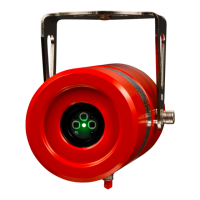
Basic information about the VSF303 detector model.
Electrical parameters and ratings of the detector.
Physical dimensions, weight, and material details.
Operating temperature, humidity, and storage conditions.
List of certifications and approvals obtained.
Performance parameters like range, response time, and sensitivity.
Part numbers and configurations for ordering the detector.
List of available accessories and spare parts.
Guidelines for performing proof testing on the device.
 General
| Brand | Viking |
|---|---|
| Model | VSF303 |
| Category | Security Sensors |
| Language | English |

 To Next Page