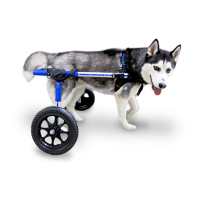
This manual describes the Walkin' Wheels® Small Wheelchair, a mobility aid designed for pets with rear leg weakness or paralysis, and optionally, front leg weakness. The wheelchair aims to help pets regain mobility, exercise, and improve their quality of life.
Function Description
The Walkin' Wheels® Small Wheelchair provides support for a pet's hindquarters, allowing them to walk, run, and play despite mobility challenges. It's designed to take the weight off the rear legs while still enabling the pet to use their legs to maintain muscle mass. For pets with front leg weakness or weakness in all four legs, an optional Front Wheel Attachment can be added to provide full support, transforming it into a quad wheelchair. The device is intended for use under the care of a veterinarian and is suitable for rehabilitation.
Usage Features
The wheelchair is highly adjustable to ensure a proper and comfortable fit for various small pets. Key adjustments include:
- Length: The extenders, which are the side bars of the frame, can be adjusted using snap buttons. They should run parallel to the ground through the center of the pet's body and end at the shoulder blade. For pets with a Corgi or Dachshund build, the side bars may tilt downward in the front due to their rear legs being longer than their front legs.
- Width: The width connector allows adjustment to ensure there's 1/2" to 1" space between the pet's body (typically the chest, as it's the widest part) and the wheelchair frame. The standard 4" width connector extends to 6.5", and a 7" connector is available for wider dogs (7"-9").
- Height: The height is adjusted by inserting the struts into the wheelchair legs. For pets with some use of their back legs, the height should be set so all four toe pads of both rear paws are just touching the ground. For paralyzed or very weak legs, stirrups can be used to hold the feet off the ground, or Walkin'® Pet Boots can protect them. The legs can be set in either a HIGH or LOW position, with the LOW setting being the typical default. To change the leg position, the knuckle needs to be loosened, and the leg repositioned on the higher setting, making it 2" taller.
- Leg Rings: These support the pet's hindquarters. They should hang no lower than 3" below the frame, forming a supportive cradle. When the pet is in the leg rings, the wheelchair knuckle should be centered with the hip joint, and the rings should resemble two "Cs" with a center connector. The leg rings clip onto the wheelchair frame via black plastic harness clips that fit over the shoulder socket screws. To release, a thumb is used to pull downward on the round circle. The Velcro® center connector on the leg rings can be moved to avoid pressure on the pet's genitals and should be wrapped loosely to allow space between the rings. Excess Velcro® strapping can be crisscrossed over the rump or Velcroed together to form handles.
- Front Harness: The front harness is put on the pet first. The extenders from the wheelchair clip into D-rings on the front harness, which should be positioned just behind the shoulder blades. The harness features three black comfort sleeves that can be removed for sizing adjustments. The pet's head goes between the black straps, and a red strap goes behind the front legs and clips into the side of the harness. Male prongs on the harness clip into the wheelchair. All three straps should be snug. Comfort sleeves can be cut in half for smaller pets, and excess straps can be tucked in without fraying.
- Stirrups: Optional for pets with dragging or knuckling paws. They attach to silver metal loops at the back of the wheelchair. The rubber tubes on the stirrups should be above the pet's hock, and a push lock adjusts for a snug fit. The pet's leg should be several inches off the ground. Both stirrups should be used to prevent unbalance. It's crucial to release the stirrups first when taking the pet out of the wheelchair.
- Belly Belt (Optional): This provides additional support for pets with downward-bowing spines, overweight pets, or those with spinal/disc issues. One end has a tri-glide, and the other has Velcro® strapping. The tri-glide end loops onto the extender, and a rope from the belly belt attaches to a harness clip on the extender, securing it to the front harness to prevent sliding. The Velcro® side secures over the other extender and to the belly belt, positioning it in the middle of the pet's belly.
Assembling the Fully Supportive (Quad) Wheelchair:
For the optional Front Wheel Attachment, existing side extenders on the rear wheelchair are replaced with front wheel extenders. Socket Shoulder Screws are used on the outside of the wheelchair to attach the front leg rings. Struts and wheels (C1 or C2) are inserted into the legs, ensuring left and right sides match. Front leg rings are installed similarly to rear leg rings, with straps over the frame and clips on shoulder socket screws. The front leg rings may need to be lower than the rear ones to accommodate a deeper chest. Width is adjusted based on the pet's chest.
Training and Adaptation:
- Introduce the wheelchair calmly and slowly. Use positive reinforcement and treats.
- Allow the pet to get used to the harness first, then the leg ring support system, and finally the full wheelchair.
- When the pet is in the wheelchair, use food rewards to encourage forward movement, gradually stepping back to prompt them to walk towards you.
- Start with short (5-10 minute) sessions, several times a day, with rest periods in between.
- Keep the pet in a clear area on a short leash initially. If the pet gets frightened, disconnect the harness and try again later.
- Limit the time spent in the wheelchair until the pet is accustomed to it. Pets cannot lie down in the wheelchair but can urinate and defecate while in it.
Maintenance Features
- Cleaning: The wheelchair frame will not rust. If it gets dirty with dirt or sand, it can be hosed off. All components are removable for cleaning. Oiling is not necessary.
- Noise Reduction: Optional set screws can be used to tighten the wheelchair and reduce rattling noises. These screws also keep the wheelchair tight after adjustments. There are six designated places for these screws, indicated by red arrows in the manual. It's important to loosen or remove these screws before making adjustments.
- Replacement Parts: Replacement parts for wheels, harnesses, and other wear-and-tear items can be purchased from the manufacturer's website.
- Guarantee: The wheelchair frame is guaranteed for five years from the date of purchase against defects in material or workmanship. If the frame breaks under normal usage, it will be repaired or replaced at the manufacturer's option, with the owner responsible for shipping charges. The warranty is non-transferable and applies to the original owner.
- Return Policy: If fitting assistance cannot resolve a problem, returns are accepted within 30 days of arrival. A return authorization number (RA) is required, and the RA# must be written on the outside of the shipping box. A Return Form must also be filled out. Refurbishing fees may apply for scratches or wear.

 Need help?
 General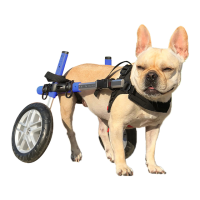

 To Next Page