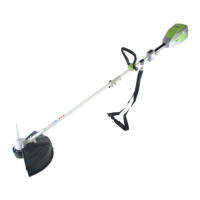
The WARRIOR® ECO POWER EQUIPMENT Model #WEP8011 is a 40V cordless grass and brush trimmer, designed for both weeding and cutting shrubs. This versatile battery-operated tool offers convenience and portability for various gardening tasks.
Technical Specifications:
- Type: Cordless battery-operated
- Voltage: 40Vdc
- String Cutting Width: 12" (for weeding) / 10" (for cutting shrubs)
- String Diameter: 0.08" (2.0mm)
- No Load Speed: 6000 RPM
- Weight (without battery): 5.06 lbs (2.3kg)
- Weight (with 2.5Ah battery): 6.6 lbs (3.0kg)
- Battery Pack: BP8301-2.5
- Charger: WEP8370BC
Function Description:
The WEP8011 serves two primary functions: grass trimming (weeding) and brush cutting (cutting shrubs). It features a string trimmer head for weeding and can be converted to a brush cutter with a 10" knife plate for thicker vegetation. The tool is powered by a 40V lithium-ion battery, providing cordless operation.
Usage Features:
The trimmer is designed for ease of use and control. It includes a rear handle and an auxiliary handle, allowing for a firm grip with both hands during operation. The rear handle should be held at a comfortable hip height.
- Starting and Stopping: To start the trimmer, insert a fully charged battery pack into the rear handle, depress the lock-out button (located beside the switch trigger), and then squeeze the switch trigger. To stop, simply release the switch trigger. The lock-out button resets each time the trigger is released, preventing accidental starting.
- Automatic Line Release: When the weeding rope is significantly worn, and weeding efficiency is low, the button on top of the trimmer head can be tapped on the ground while the machine is running to automatically release more line. This feature ensures continuous operation without manual line feeding.
- Trimming Tips: For best results, tilt the trimmer toward the area being cut. It cuts most effectively when moved from right to left, which helps to avoid throwing debris at the operator. Use only the tip of the string for cutting and avoid forcing the string head into uncut grass. Be aware that wire and picket fences, stone and brick walls, curbs, and wood can cause rapid string wear and breakage. Avoid contact with tree bark, wood moldings, siding, and fence posts, as the string can easily damage them.
- Brush Cutting: When cutting shrubs, if the vegetation is too thick and causes the machine to stop, clear any branches and leaves between the knife plate and the guard. Allow the machine to reach its highest speed before resuming cutting.
- Assembly: The product requires assembly upon unpacking. This includes tightening the trimmer head, attaching the guard, connecting the machine head to the handle, assembling the auxiliary handle, and installing the shoulder harness and wire rack. For brush cutting, the string trimmer head is removed, and a 10" knife plate, protection cover, pressure plate, and nut are installed in sequence.
Maintenance Features:
Regular maintenance is crucial for the longevity and safe operation of the WEP8011.
- Battery Charging: The battery pack is not shipped fully charged and should be fully charged before first use to ensure maximum run time. The charger (WEP8370BC) has LED indicators to communicate battery status: blinking green for charging, solid green for fully charged, solid red for standby, fast blinking red for battery too hot, and slow blinking red for charging fault. If the battery is warm or hot when inserted into the charger, the CHARGING LED may illuminate red; allow the battery to cool for up to 30 minutes before charging automatically resumes.
- Low Voltage Charging: If the battery has been stored with little to no charge for an extended period, the charger will enter recovery mode, which takes longer to fully charge but enhances battery life.
- Checking the Charge: If the battery pack does not charge properly, check the power outlet with another tool, ensure the outlet is not turned off, and verify that charger contacts are not shorted by debris. If the air temperature is outside the 45°F-104°F range, move the charger and battery pack to a room temperature location and allow it to adjust.
- Charger Mounting: The charger can be wall-mounted using two #8 screws (not included).
- Cleaning: Before any adjustment, inspection, or cleaning, remove the battery. Brush or blow dust and debris out of the air vents using compressed air or a vacuum, keeping them free of obstructions. Do not spray, wash, or immerse the air vents in water. Wipe the housing and plastic components with a moist, soft cloth. Avoid strong solvents or detergents, as they can damage plastic and cause shock hazards.
- Battery Pack Storage: Store the battery pack fully charged. Once the charger light turns solid green, remove the battery and disconnect the charger from the outlet. Do not store the battery pack on the tool.
- Charger Maintenance: Keep the charger clean and free of debris. Do not allow foreign material into the recessed cavity or onto the contacts. Wipe with a dry, soft cloth; do not use solvents or water. Unplug the charger when no battery pack is in it.
- Storing the Power Head: Clean all foreign material from the product. Store it in a well-ventilated place inaccessible to children, away from corrosive agents like garden chemicals and de-icing salts. Do not store the string trimmer or battery in direct sunlight, excessively warm places, or near a furnace, as this can shorten battery and tool life.
- Replacing Trimmer Line: To replace the trimmer line, firmly press the tabs on each side of the spool cover, remove the cover from the spool housing, clear any excess line or obstructions, clean the spool and housing, replace with new trimmer line, and align the tabs to securely snap the cover back into place.
- Environmentally Safe Battery Disposal: Lithium-Ion batteries contain toxic and corrosive materials and must be disposed of in a specified manner to prevent environmental contamination. Do not recharge or use cracked or broken battery packs. Do not attempt to repair them. Cover terminals with heavy-duty adhesive tape. Do not remove or destroy battery components, open the battery pack, or allow electrolyte to contact skin or eyes. Do not place batteries in regular household trash, incinerate them, or dispose of them in landfills. Take them to a certified recycling or disposal center.

 Need help?

 To Next Page
 General