20
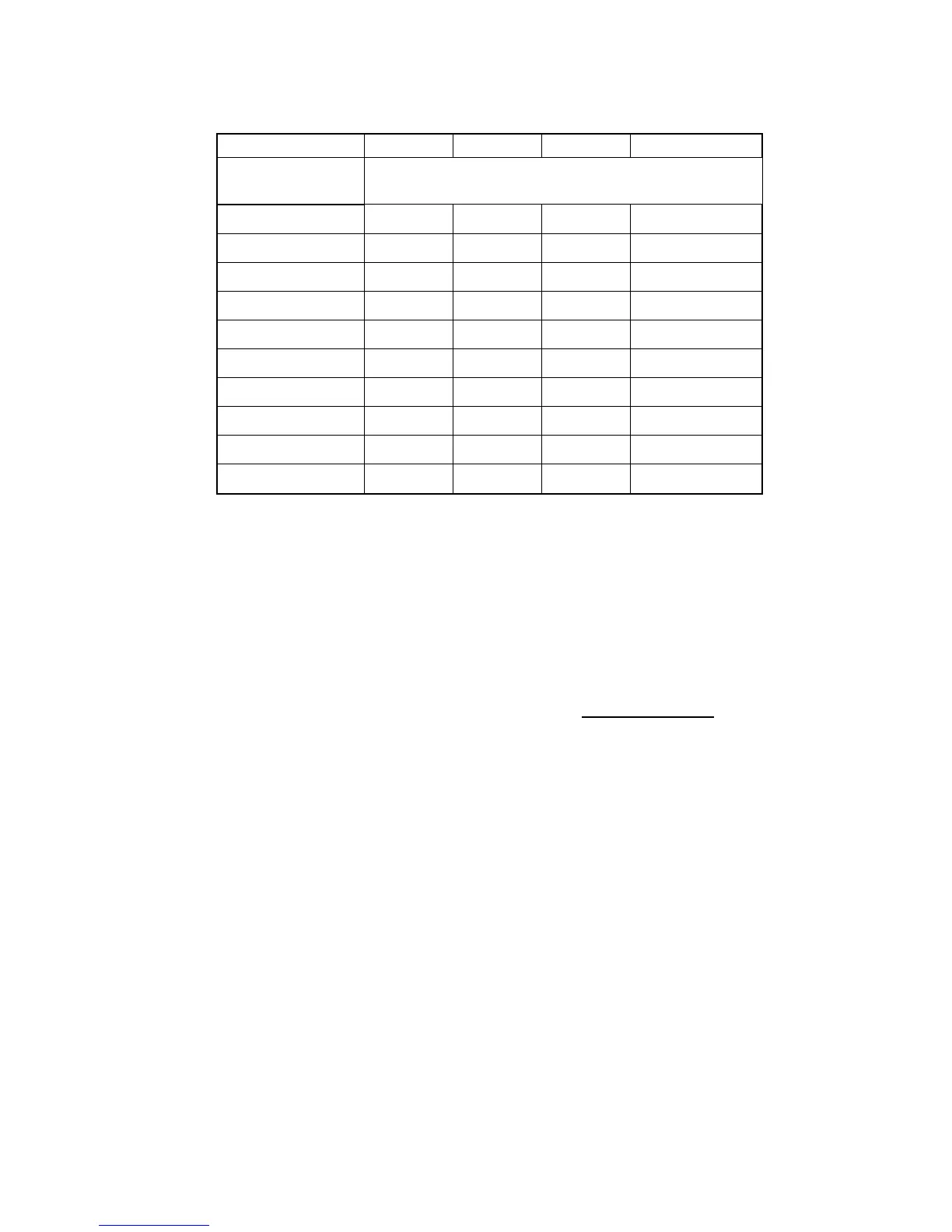
Table 3: Pipe Sizing Chart for LP (11” w.c.) with Copper Tubing
The following chart is based on 11” w.c. inlet pressure and a pressure drop of 0.5” w.c..
Maximum Capacity of Tube Size in Btu/hr
Maximum Capacity in Btu/hr
NOTE: Copper tubing shall comply with standard type K or L of ASTM B 88 or
ASTM B 280.
TESTING PIPING FOR LEAKS
Before turning gas under pressure into piping, all openings from which gas can escape should be closed.
Immediately after turning on gas, the system should be checked for leaks. This can be done by watching
the 1/2 cubic feet test dial and allowing 5 minutes to show any movement, or by soaping each pipe
connection and watching for bubbles. If a leak is found, make the necessary repairs and repeat the above
test. Defective pipes or fittings should be replaced and not repaired. Never use a flame or fire in any form
to locate gas leaks, use a soap solution.
After the piping and meter have been checked completely, purge the system of air. Do not bleed the air
into the appliance. Be sure to relight all the gas pilots on other appliances.
ELECTRICAL WIRING OF BURNER
The conversion burner is shipped completely wired. It is only necessary to supply the line voltage circuit,
thermostat and limit circuit. All wiring must conform with the National Electric Code or the code legally
authorized in the locality where the installation is being made. The burner, when installed, must be
electrically grounded in accordance with local codes or, in the absence of local codes, with the latest
edition of the National Electrical Code, ANSI/NFPA No. 70. See wiring diagrams in Figure 25, 26, 27, and
28 for reference on wiring, thermostat connection, and limit circuit. If an external electrical source is
utilized, the conversion burner, when installed, must be electrically grounded in accordance with local
codes or, in the absence of local codes, with the latest edition of the National Electrical Code ANSI/NFPA
No. 70.
For line voltage wiring to the burner, use solid copper conductor wire not lighter than #14 AWG. If a fused
disconnect is used, it should be fused for a minimum of 15 amps.
The burner ships with a jumper wire on the thermostat (T-T) terminals. Jumper needs to be removed for
remote thermostat control and the thermostat needs to be connected per wiring diagrams. T-T terminal is
an open/close switch for the burner and no voltage should be connected to it. For boilers it may be
necessary to leave the T-T terminal jumped as the aquastat may be providing the voltage to the burner


 To Next Page