
 Need help?
Do you have a question about the Weber genesis II E-610 GBS and is the answer not in the manual?
Instructions for performing an initial burn-off before using the grill for the first time.
Step-by-step instructions for igniting the grill using the electronic ignition system.
Details the key components of the GS4 grilling system for enhanced performance.
Highlights specific features of the Genesis II grill models.
Explains direct and indirect grilling methods with setup diagrams and usage recommendations.
Covers LPG basics, safe handling tips, and requirements for gas connections.
Step-by-step guide for installing the LPG cylinder and performing leak checks.
Troubleshooting steps for when burners fail to ignite or the grill does not light.
Procedure to check for gas flow by manually lighting a burner with a match.
Diagnostic steps for ignition system issues, including battery and wiring checks.
Addresses symptoms of uneven heating, low flame, or no ignition due to gas flow issues.
Diagnosing and addressing gas smells or hissing sounds from the cylinder valve.
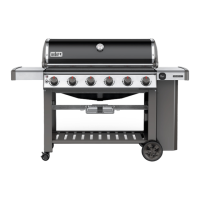
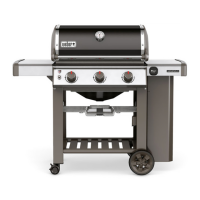
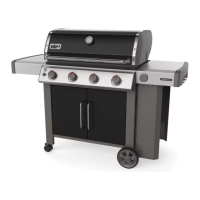
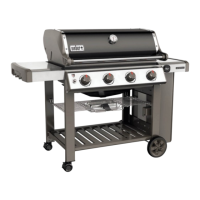
This document describes the Weber Genesis II gas grill, a high-performance outdoor cooking appliance designed for ease of use and exceptional grilling satisfaction. The grill is part of the Genesis II series, including models E-210 GBS, E-310 GBS, E-410 GBS, and E-610 GBS, and is fueled by Liquefied Petroleum Gas (LPG).
The Weber Genesis II grill is built around the innovative GS4 Grilling System, which comprises four key components: the INFINITY Ignition, High Performance Burners, FLAVORIZER BARS, and a Grease Management System. This integrated system ensures a reliable and enjoyable grilling experience from ignition to cleanup.
The INFINITY Ignition system is designed for consistent ignition, ensuring the burners light every time. This reliability allows users to quickly start grilling without hassle.
The High Performance Burners feature a unique, tapered shape that delivers a consistent gas flow from front to back. This design promotes ultimate heat distribution across the cooking grate, ensuring food grills evenly and consistently regardless of its placement.
FLAVORIZER BARS are angled to catch drippings from food. These drippings smoke and sizzle, imparting a distinctive smoky flavor to the food. Any drippings that are not vaporized by the FLAVORIZER BARS are funneled away from the burners, preventing flare-ups and directing grease into the management system.
The Grease Management System facilitates the removal of grease and significantly reduces the risk of flare-ups. Drippings are channeled away from the burners into a disposable drip tray, located within a catch pan beneath the cookbox. This system simplifies cleanup by allowing users to easily remove and replace the drip tray as needed.
The grill also features Side Tables with Integrated Tool Hooks, providing convenient space for platters, seasonings, and essential grilling tools. The left side table on two and three-burner models can be folded down for compact storage.
A Built-In Thermometer on the lid allows users to monitor the internal temperature of the grill, enabling precise heat adjustments for optimal cooking.
The GOURMET BBQ SYSTEM Cooking Grate includes a circular insert that can be removed to accommodate various accessories, transforming the grill into a versatile cooking station for items like griddles, poultry roasters, or pizza stones.
A TUCK-AWAY Warming Rack keeps food warm or toasts buns while the main meal cooks below. This rack can be folded down when not in use, maximizing grilling space and providing convenient in-grill storage.
The grill is iGRILL 3 Ready, meaning it is compatible with the iGRILL 3 digital Bluetooth thermometer (sold separately). This device monitors food temperatures in real-time and transmits data to a mobile device via the WEBER® iGRILL app, allowing users to track cooking progress with up to four thermometer probes.
Easy Access Gas Cylinder Storage positions the LPG cylinder on the outside of the grill, making it easy to access and remove while increasing storage space within the cart.
The Open Cart Design provides additional room and accessibility for grilling tools and other accessories.
The Weber Genesis II grill is designed for outdoor use only, in a well-ventilated area, away from combustible materials. It should not be used in enclosed spaces or beneath overhead combustible construction.
Before first use, an Initial Burn-Off is recommended, where the grill is heated on the highest setting with the lid closed for at least 20 minutes. This helps to burn off any manufacturing residues.
Preheating is crucial for successful grilling. The grill should always be preheated on the highest setting for 10 to 15 minutes, or until the lid thermometer reads 260°C (500°F). This prevents food from sticking and ensures proper searing.
The grill supports both Direct and Indirect Heat grilling methods. Direct heat is used for small, tender pieces of food that cook in less than 20 minutes, such as hamburgers, steaks, and chops, searing them to develop flavor and texture. Indirect heat is suitable for larger cuts of meat requiring 20 minutes or more, or delicate foods like roasts, whole poultry, and fish, where heat is applied from the sides of the cooking grate.
Ignition is performed using the electronic ignition system. Users open the lid, ensure all burner control knobs are in the off position, turn on the gas supply, then push and turn the leftmost burner control knob to the start/high position while pressing the electronic ignition button. The burner should ignite within four seconds. If not, the knob should be turned off, and users should wait five minutes before attempting to re-ignite.
Extinguishing the grill involves pushing in each burner control knob and turning it clockwise to the off position, then turning off the gas supply at the LPG cylinder.
Regular Meal-to-Meal Maintenance is essential to prevent grease fires and maintain performance. This includes checking for grease buildup in the slide-out grease tray and catch pan before each use. The disposable drip tray should be discarded and replaced when necessary.
The hose connecting the regulator to the LPG cylinder should be inspected routinely for any signs of cracking, abrasions, or cuts. A damaged hose should be replaced with a Weber-authorized replacement.
Cleaning the Cooking Grates after preheating is recommended using a stainless steel bristle grill brush to remove any leftover food debris, preventing sticking.
Cleaning the FLAVORIZER BARS involves scraping them with a plastic scraper and brushing with a stainless steel bristle grill brush if necessary. The bars should be removed and set aside for thorough cleaning.
Cleaning the Burners focuses on the ports and spider/insect screens. The burner ports should be cleaned with a stainless steel bristle grill brush, taking care not to damage the ignition electrode. The spider/insect screens on the ends of the burners should be cleaned with a soft bristle brush to ensure proper airflow.
Cleaning the Heat Deflectors involves scraping them with a plastic scraper and brushing with a stainless steel bristle grill brush to ensure even heat distribution.
Cleaning the Cookbox requires scraping debris off the sides and bottom into the opening that leads to the slide-out grease tray, preventing grease accumulation that could cause fires.
For Stainless Steel Surfaces, a non-toxic, non-abrasive stainless steel cleaner or polish should be used with a microfiber cloth, cleaning in the direction of the grain. Abrasive pastes should be avoided as they can scratch the surface.
Painted, Porcelain-Enameled Surfaces and Plastic Components should be cleaned with warm soapy water and paper towels or a cloth, followed by rinsing and thorough drying.
For grills in unique environments (e.g., coastal areas, near pools), more frequent cleaning of the exterior surfaces with warm soapy water, rinsing, and drying is recommended to prevent surface rust. Weekly application of a stainless steel cleaner may also be beneficial.
A Leak Check is necessary each time the LPG cylinder is refilled and reinstalled. This involves applying a soap and water solution to the regulator-to-cylinder connection and checking for bubbles when the gas supply is turned on. If bubbles appear, there is a leak, and the grill should not be operated. After checking for leaks, connections should be rinsed with water.
The manual also provides a Troubleshooting section for common issues like the grill not igniting or uneven heating, offering solutions such as checking gas flow, inspecting ignition system components, and cleaning burner parts.
 General
| Type | Grill |
|---|---|
| Total power | - W |
| Smoke function | - |
| Ignition system | Piezo |
| Electronic ignition | Yes |
| Adjustable thermostat | No |
| Number of cooking zones | 6 zone(s) |
| Form factor | Cart |
| Product color | Black |
| Cooking surface (W x D) | 1020 x 480 mm |
| Control type | Rotary |
| Number of wheels | 2 wheel(s) |
 Weight and Dimensions
| Depth | 1143 mm |
|---|---|
| Width | 1727.2 mm |
| Height | 736.6 mm |
| Weight | 89300 g |


 To Next Page
