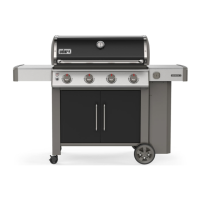
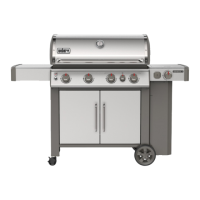
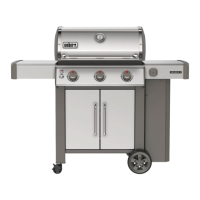
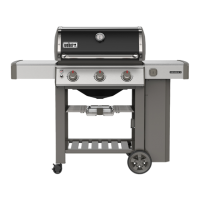
This document serves as the owner's manual for the Weber Genesis II gas grill, covering models E-310 GBS, S-310 GBS, E-410 GBS, and S-410 GBS. It provides comprehensive information on the grill's function, usage, and maintenance, emphasizing safety and optimal grilling performance.
Function Description
The Weber Genesis II gas grill is designed for outdoor barbecuing, offering a high-performance grilling system known as GS4. This system is engineered to provide consistent heat distribution and enhanced flavor. The grill operates on Liquefied Petroleum Gas (LPG) and is equipped with multiple burners, an electronic ignition system, and a grease management system. Its primary function is to cook food using direct or indirect heat, allowing for a variety of grilling techniques. The grill also features a built-in thermometer to monitor internal temperatures, aiding in precise cooking.
Usage Features
The Genesis II grill incorporates several features to enhance the user's grilling experience:
- GS4 Grilling System: This core system includes the Infinity Ignition, which guarantees ignition on the first attempt, and uniquely tapered burners that ensure consistent gas flow and even heat distribution across the cooking grates.
- FLAVORIZER BARS: These stainless steel bars are angled to catch drippings, which then smoke and sizzle, imparting a smoky flavor to the food and preventing flare-ups by funneling excess grease away from the burners.
- Built-In Thermometer: Located in the lid, this thermometer allows users to monitor the grill's internal temperature, enabling precise heat adjustments for optimal cooking.
- TUCK-AWAY Warming Rack: This versatile rack can be used to keep food warm, toast buns, or folded down for easy storage when not in use.
- GOURMET BBQ SYSTEM Cooking Grate: The cooking grate features a circular insert that can be removed and replaced with various GOURMET BBQ SYSTEM inserts, such as a griddle, poultry roaster, or pizza stone, expanding the grill's cooking capabilities.
- Side Tables with Integrated Tool Hooks: These convenient side tables provide space for platters, seasonings, and tools, with integrated hooks for organizing essential grilling utensils.
- Side Mounted Gas Tank: The LPG cylinder is mounted on the outside of the grill, making it easily accessible for installation, removal, and leak checking.
- Open Cart Design: The sleek open-cart design allows for easy accessibility to grilling tools and accessories stored beneath the cookbox.
- iGrill 3 Compatibility: The grill is compatible with the iGrill 3 app-connected thermometer (sold separately), which monitors food temperatures in real-time and displays them on a mobile device, ensuring perfect doneness.
- Direct and Indirect Heat Grilling: The manual details how to set up the grill for both direct heat (for small, tender foods that cook quickly) and indirect heat (for larger cuts of meat or delicate foods that require longer cooking times).
- Ignition System: The electronic ignition system allows for individual burner ignition, starting from left to right. Users push in and turn the control knob to the start/high position, then push and hold the electronic ignition button until the burner ignites.
- Preheating: The manual emphasizes the importance of preheating the grill on the highest setting for 10-15 minutes (or until the lid thermometer reads 260°C/500°F) before grilling to prevent food from sticking and ensure proper searing.
- Barbecuing Guide: A detailed guide provides recommended thicknesses, weights, and approximate total barbecue times for various types of red meat, pork, poultry, seafood, and vegetables, along with suggestions for direct or indirect heat methods.
Maintenance Features
Regular cleaning and maintenance are crucial for the longevity and safe operation of the Genesis II grill. The manual outlines a comprehensive maintenance plan:
- Meal-to-Meal Maintenance: This routine includes checking for grease build-up in the slide-out grease tray and disposable drip pan before each use. Excess grease should be removed to prevent grease fires.
- Hose Inspection: The gas supply hose should be routinely inspected for any signs of cracking, abrasions, or cuts. A damaged hose must be replaced immediately with a Weber-authorized replacement.
- Cleaning the Cooking Grates: After preheating, the cooking grates should be brushed with a stainless steel bristle grill brush to remove any food debris from previous use.
- Cleaning the FLAVORIZER BARS: The FLAVORIZER BARS should be scraped with a plastic scraper and, if necessary, brushed with a stainless steel bristle grill brush to remove drippings and residue.
- Cleaning the Burners: This involves cleaning the burner ports with a stainless steel bristle grill brush, being careful not to damage the ignition electrode. The spider/insect screens on the ends of the burners should also be cleaned with a soft bristle brush to ensure proper airflow.
- Cleaning the Heat Deflectors: Located under the burners, the heat deflectors should be scraped with a plastic scraper and brushed with a stainless steel bristle grill brush to maintain even heat distribution.
- Cleaning the Cookbox: Any grease accumulation or leftover food particles inside the cookbox should be scraped into the opening that leads to the slide-out grease tray.
- Cleaning the Lid: Carbonized grease flakes that accumulate on the inside of the lid should be brushed off with a stainless steel bristle grill brush. Wiping the lid with a paper towel while still warm can minimize further build-up.
- Cleaning Stainless Steel Surfaces: Stainless steel surfaces should be cleaned with a non-toxic, non-abrasive stainless steel cleaner or polish and a microfiber cloth, cleaning in the direction of the grain. Abrasive pastes, paper towels, or cleaners containing acid, mineral spirits, or xylene should be avoided.
- Cleaning Painted, Porcelain-Enameled, and Plastic Components: These surfaces should be cleaned with warm soapy water and paper towels or a cloth, then rinsed and dried thoroughly.
- Leak Checking: A leak check must be performed each time the LPG cylinder is refilled and reinstalled. This involves applying a soap and water solution to fittings and checking for bubbles, which indicate a gas leak. A flame should never be used for leak checking.
- Storage: The manual advises turning off the gas supply at the cylinder after use. LPG cylinders must be stored outdoors, out of reach of children, and not in enclosed spaces. The grill itself can be stored indoors only if the LPG cylinder is disconnected and removed.
- Pre-use Check after Storage: After a period of storage or non-use, the barbecue should be checked for gas leaks and burner obstructions before use.
The manual also includes important safety information, warnings, and cautions throughout, emphasizing the importance of outdoor use, proper assembly, and avoiding flammable materials near the grill. It also provides troubleshooting tips for common issues like burners failing to ignite or uneven heating, and advises contacting customer service for persistent problems or replacement parts.

 Need help?
 General
 Weight and Dimensions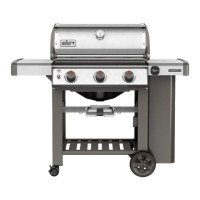

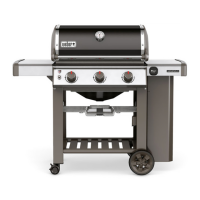
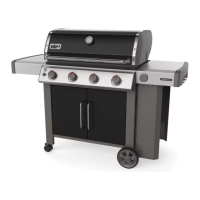

 To Next Page