
 Need help?
Do you have a question about the Weber Master-Touch E-5750 and is the answer not in the manual?
Critical risks and hazards associated with barbecue operation.
Essential precautions for safe and proper barbecue use.
Advisories to prevent minor issues or damage during operation.
Specific warnings related to certain features or actions.
Specifies the duration of coverage for different barbecue components.
Outlines limitations and exclusions of the voluntary warranty.
Details the porcelain-enamel coated steel bowl and lid.
Explains how vents control airflow and temperature.
Information on the material and design of the cooking grate.
Describes the grate for holding charcoal during cooking.
Details the ash removal and vent control mechanism.
Removable grate insert for various cooking accessories.
Integrated thermometer for monitoring cooking temperature.
Convenient feature for temporarily storing the barbecue lid.
Magnetic mount for iGRILL devices and probe storage.
Grate with liftable sections for easy access to fuel.
Enclosed system for efficient ash collection and removal.
Handle featuring integrated hooks for barbecue tools.
Handles that allow the cooking grate to hang from the bowl.
Specially shaped vents for optimized smoking airflow.
Comfort point on the lid damper for adjustment.
Guidelines for selecting a safe and suitable outdoor spot.
Advice on measuring the right amount of charcoal for cooking.
Procedure for initial heating to remove manufacturing residue.
Step-by-step instructions for setting up the barbecue for lighting.
Preparation steps for the direct heat cooking method.
Using a chimney starter for efficient and thorough charcoal lighting.
Alternative methods for lighting charcoal without a starter.
Preparation steps for the indirect heat cooking method.
Methods for lighting charcoal specifically for indirect cooking.
Technique for cooking small, tender foods directly over heat.
How to position charcoal for the direct heat method.
Technique for cooking larger cuts or delicate foods away from direct heat.
How to position charcoal for indirect heat or smoking.
Instructions and tips for smoking food using the barbecue.
Guide to different wood types and their flavour profiles for smoking.
Reference for cooking times for various foods using different methods.
Advice on best practices for barbecuing food.
Essential safety recommendations for handling food.
Importance of wearing heat-resistant gloves during operation.
Recommendation against using lighter fluid due to taste impartation.
Benefits and procedure for preheating the barbecue before cooking.
Advice on oiling food for better results than oiling the grate.
Tips for ensuring proper airflow by keeping vents clear.
Four key reasons why keeping the lid closed is beneficial.
Techniques for controlling and managing flames during cooking.
Factors affecting cooking times and temperature monitoring.
Considerations for barbecuing frozen versus fresh food.
Maintenance tips for optimal barbecue performance and longevity.
Advice on experimenting with wood types for smoking.
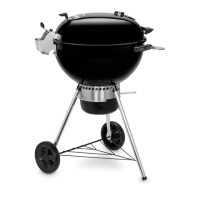
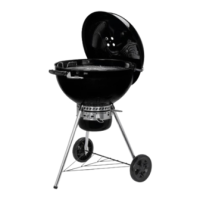
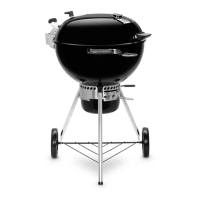
This document describes the Weber Master-Touch charcoal barbecue, a device designed for outdoor cooking in well-ventilated areas. It is not intended for indoor use or as a heater, as toxic fumes can accumulate and cause serious injury or death. The barbecue is designed to prevent flare-ups, hot and cold spots, and burnt food, aiming for excellent performance, control, and consistent cooking results.
The core of the Master-Touch barbecue is its bowl and lid, both made from baked-on porcelain-enamel coated steel. This construction ensures durability, preventing peeling or flaking, and provides convection cooking. The reflective surface radiates heat around the food, similar to an indoor oven, for even cooking.
Airflow is a critical factor in charcoal barbecuing, managed by the barbecue's dampers and vents. The more air allowed into the barbecue, the hotter the internal temperature will be until the fuel is maximized. During cooking, the internal temperature can be controlled by adjusting the lid and bowl dampers. For high internal temperatures, such as for direct method cooking, the bowl and lid vents should be fully open. For indirect cooking or smoking at lower temperatures, the dampers can be closed halfway. Closing them completely will cut off oxygen flow and eventually extinguish the coals.
The cooking grate is available in heavy-duty stainless steel (for models C-5755, SE E-5755) or heavy-duty plated steel (for models E-5750, C-5750), offering ample space for various meals. The charcoal grate, made of heavy-duty steel, is designed to withstand the heat of any charcoal fire without warping or burning through. It provides sufficient space for both direct and indirect cooking methods.
Cleaning is made easy with the ONE-TOUCH Cleaning System. By moving a handle back and forth, three blades in the bowl move ash from the bottom of the barbecue into the ash catcher. These same vents also function as a bowl damper, bringing oxygen to the fire or assisting in extinguishing it.
Depending on the specific model, the Master-Touch barbecue may include several special features. The GOURMET BBQ SYSTEM allows for a removable center area in the cooking grate, enabling the addition of specialized inserts like a sear grate, poultry roaster, or pizza stone (sold separately) for diverse cooking options. A durable, built-in lid thermometer allows for easy monitoring of the barbecue's temperature. The TUCK-AWAY lid holder provides a convenient way to move the lid to the side when checking food or adding charcoal. The iGRILL bracket offers a magnetic surface for placing iGRILL MINI or iGRILL 2 devices (sold separately) and provides storage for up to four probes. This bracket should be removed when not in use. The hinged cooking grate features areas on both sides that lift up, making it easy to add fuel. A high capacity ash catcher, fully enclosed, keeps ashes from blowing around and detaches easily for quick and clean ash removal. The handle includes built-in tool hooks for convenient storage of barbecue tools. Curved handles on the cooking grate allow it to hang from the side of the bowl. New bowl vents are shaped to provide the perfect amount of airflow for smoking and low-temperature barbecuing. A lid damper touch point diffuses heat from the lid damper for increased comfort.
Before lighting, it is crucial to select a proper location: outdoors in a well-ventilated area, away from garages, buildings, breezeways, or any other enclosed spaces. The barbecue should be on a secure, level surface, at least 1.5 meters (five feet) away from any combustible materials like wood decks or patios.
The amount of charcoal to use depends on the food being cooked. For small, tender pieces that cook in less than 20 minutes, the "Measuring & Adding Charcoal for Direct Heat" chart should be consulted. For larger joints of meat or delicate foods requiring 20 minutes or more, the "Measuring & Adding Charcoal for Indirect Heat" chart is recommended. A charcoal cup is supplied to measure the appropriate amount.
For the very first use, it is recommended to heat the barbecue with the lid on and the fuel kept red hot for at least 30 minutes to burn off any manufacturing residue.
To prepare the barbecue for lighting, first slide the lid into the TUCK-AWAY lid holder. Remove the GOURMET BBQ SYSTEM cooking grate (detachable center area first, then the full grate). Remove the charcoal (bottom) grate and clear any ashes or old charcoal from the bowl using the ONE-TOUCH cleaning system, moving the handle back and forth to deposit ash and debris into the ash catcher. The high capacity ash catcher can then be squeezed to release it for disposal. Open the bowl vents by moving the ONE-TOUCH damper blade handle to the fully open position, and replace the charcoal (bottom) grate. Finally, open the lid vents by moving the lid damper to the fully open position. Lighter fluid is not recommended due to potential chemical taste; lighter cubes (sold separately) are preferred. If lighter fluid is used, follow manufacturer instructions and never add it to a burning fire.
Charcoal can be lit using a chimney starter or without one. For a chimney starter, crumpled newspaper or lighter cubes are placed at the bottom, the starter is filled with charcoal, and the newspaper/cubes are lit through the bottom holes. The charcoal is fully lit when covered with white ash. Without a chimney starter, a pyramid of charcoal is built on the charcoal grate with lighter cubes inserted, which are then lit. Again, wait until the charcoal is fully lit and covered with white ash before cooking.
For direct barbecuing, once the charcoal is fully lit, it should be spread evenly across the charcoal grate using barbecue mitts or gloves and long-handle tongs. The ONE-TOUCH cleaning system handle and lid damper should be in the fully open position. After the charcoal has ashed over, replace the cooking grate, slide the lid closed for 10-15 minutes to preheat, then scrub the grate clean with a barbecue brush. Food is then placed on the grate, and the lid is closed. To extinguish charcoal after cooking, close the lid damper and bowl vents.
For indirect barbecuing or smoking, charcoal is positioned on opposite sides of the bowl, avoiding placement near lid/bowl handles or directly beneath the thermometer/lid damper. A drip pan can be placed between the charcoal. The ONE-TOUCH cleaning system handle and lid damper should be fully open. Once the charcoal has ashed over, replace the cooking grate with hinged sides above the charcoal. Preheat the grate for 10-15 minutes with the lid closed, then clean it with a barbecue brush. Food is placed in the center of the grate, above the drip pan if used, and the lid is closed. The lid should be positioned so the thermometer is not above direct heat. Adjust lid and bowl dampers to control temperature. To extinguish, close the lid damper and bowl vents. Smoking requires adding wood chunks or chips to the lit charcoal.
Maintenance involves regular cleaning to ensure proper airflow and better barbecuing. Accumulated ashes and old charcoal should be removed from the kettle bottom and ash catcher before each use, ensuring all charcoal is fully extinguished and the barbecue is cool. "Paint-like" flakes inside the lid are carbonized grease and smoke; these should be brushed off with a stainless steel bristle barbecue brush. Wiping the inside of the lid with a paper towel while still warm can minimize build-up. For harsh environments, the barbecue exterior should be wiped down with warm soapy water, rinsed, and thoroughly dried. Sharp objects or abrasive cleaners should not be used on the barbecue surfaces.
Tips for barbecuing success include always wearing heat-resistant gloves, avoiding lighter fluid in favor of chimney starters or lighter cubes, preheating the barbecue with the lid closed for 10-15 minutes to properly sear/brown food and prevent sticking, oiling the food (not the grate) for flavor and moisture, keeping the lid closed as much as possible to maintain heat, speed cooking, trap smokiness, and prevent flare-ups, and regularly clearing ashes to maintain airflow. If cooking in colder climates or at higher altitudes, cooking times will be longer, and strong winds can increase charcoal temperature. Frozen food will take longer to barbecue and may require more fuel.
For smoking, experimenting with different wood types (Hickory, Pecan, Mesquite, Alder, Maple, Cherry, Apple) and amounts is encouraged to find desired flavors. Wood chunks are recommended for longer smokes, while wood chips are better for shorter cooking times. Pre-soaking wood chips can extend smoke production. Avoid soft, resinous woods and any wood that has been treated or exposed to chemicals.
The manual also provides a cooking guide with approximate barbecuing times for various cuts of meat, poultry, seafood, and vegetables, specifying direct or indirect heat methods and recommended doneness. Cooking tips include turning food halfway through direct barbecuing, resting roasts and larger cuts after cooking, and adding hardwood chips or fresh herbs for smoke flavor. Food safety tips emphasize defrosting meat in the refrigerator, thorough hand washing, and avoiding cross-contamination between raw and cooked food.
 General
| Type | Charcoal Grill |
|---|---|
| Diameter | 57 cm |
| Fuel Type | Charcoal |
| Dimensions | 107 cm H x 65 cm W x 72 cm D |
| Weight | 17 kg |
| Grate Material | Plated Steel |
| Lid Thermometer | Yes |
| Lid Material | Porcelain-enameled steel |
| Bowl Material | Porcelain-enameled steel |
| Cooking Area | 2342 cm² |
| Features | Tuck-Away lid holder |
| Ash Catcher | Yes |
| Warranty | 10 years |
| Ventilation System | Aluminum dampers |






 To Next Page
