30
Troubleshooting procedure
• Check for proper voltage to the A421 Control.
1. To remove the cover, loosen the two captive cover screws.
2. Use an AC voltmeter to check the voltage between the COM and 120 V or 240 V terminals on line-voltage models
and the two 24 V terminals on low-voltage models. The voltage must be between:
- 20 VAC and 30 VAC for 24 VAC applications
- 102 VAC and 132 VAC for 120 VAC applications
- 177 VAC and 264 VAC for 208/240 VAC applications
3. If the voltage reading is not within the required range, check the power source and input power wires for
problems.
• Check for proper sensor operation.
1. Disconnect all power sources to the control.
2. Use an accurate thermometer to take a temperature reading at the sensor location.
3. Disconnect the sensor from the control.
4. Use an ohmmeter to measure the resistance across the two sensor leads while the sensor is at the temperature
taken in Step 2b.
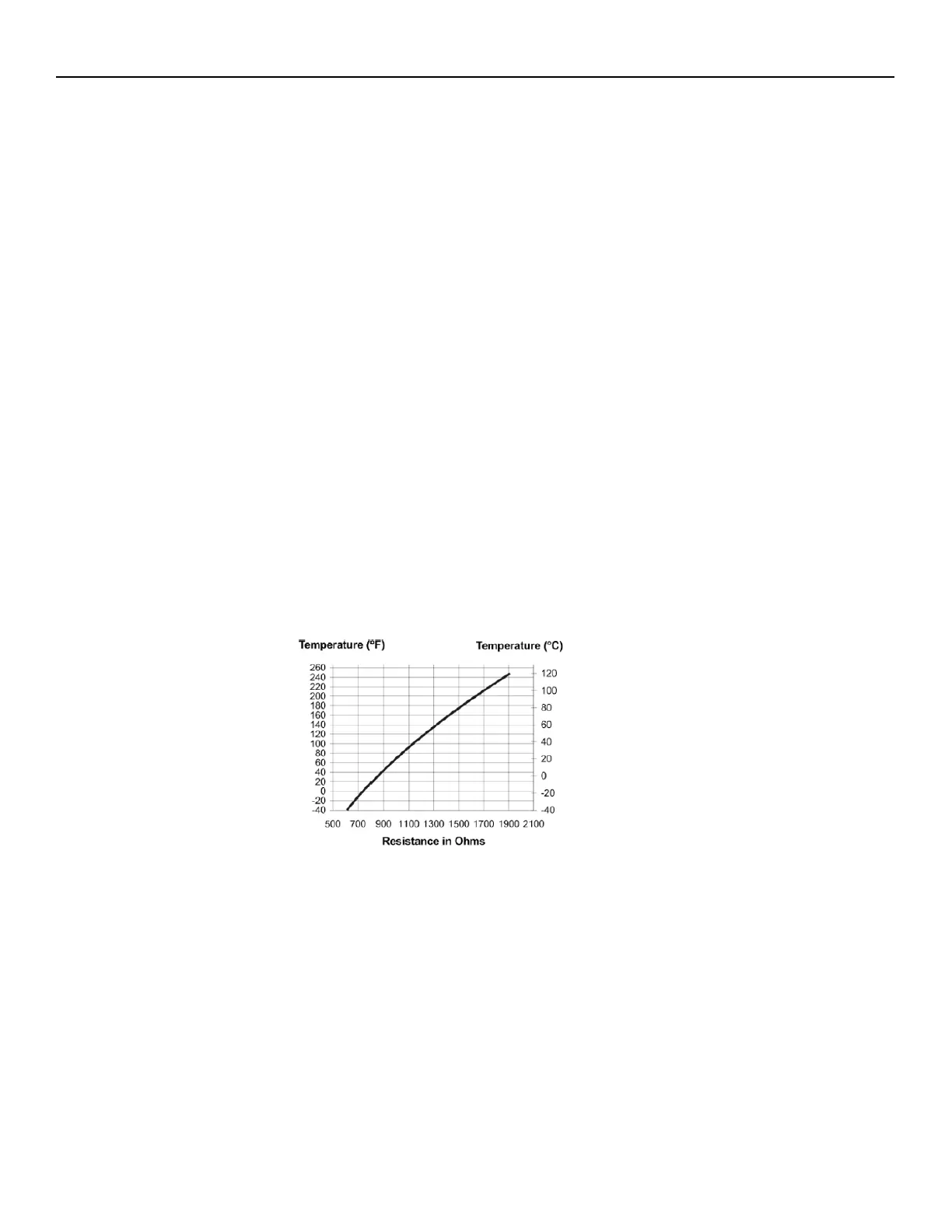
5. See Figure to verify that the measured temperature and resistance conform to established temperature and
resistance values.
6. If the measured values conform to the values in Figure, proceed to Step 3.
7. If the sensor’s measured resistance value is substantially different from the expected value for that temperature,
check the sensor wiring. If sensor wiring is correct, replace the sensor.
• Check the A421 for proper operation.
1. Disconnect the load from the output relay terminals.
2. Make sure that you install the Parameter Adjustments jumper so that you have unrestricted access to adjust
parameters.
3. Reconnect the sensor leads and supply power to the control.
4. Replace the cover.
5. Check the control settings for proper values.
6. Press MENU until On appears. Press MENU again to display the On value.
7. Press Down or Up to change the On temperature above and below the sensor temperature until the relay
energizes and de-energizes.


 To Next Page