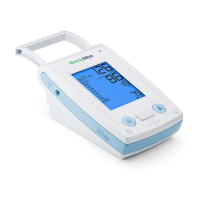
The Welch Allyn ABPM 6100 is an ambulatory blood pressure monitor designed for use by trained medical practitioners to record a patient's blood pressure over a 24-hour period. It is intended to gather trending information in non-critical settings and is not meant for real-time monitoring in emergency or critical care environments. The device uses the oscillometric method to measure blood pressure, sensing the cessation of pressure waves in the artery when occluded by the cuff. Heart rate can also be measured based on the frequency of pressure waves.
Function Description
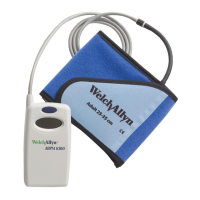
The ABPM 6100 monitor is a compact, portable device worn by the patient, typically in a belt or shoulder strap, and connected to a blood pressure cuff wrapped around the non-dominant arm. It inflates the cuff at pre-programmed intervals throughout the day to take blood pressure measurements. The primary control is a single Start/Stop button, and an LCD (liquid crystal display) provides easy-to-read information. The monitor interfaces with the Welch Allyn CardioPerfect Workstation Software, which allows for programming the unit before a study and retrieving data afterward. The software is crucial for setting study parameters, downloading data, and generating reports for analysis by a physician.
Usage Features
Before initiating a study, several preparatory steps are essential. Patients should be advised to wear loose-fitting clothing, avoid long-sleeved garments, and refrain from swimming, showering, or bathing during the monitoring period. They should also avoid operating heavy equipment or power tools, as vibrations can disrupt the monitor's function.
Proper cuff sizing is critical for accurate monitoring data. Each cuff has range marks to ensure correct fit around the patient's non-dominant arm. If the cuff edge falls within the range marks, the cuff is the correct size. Alternatively, a sizing table based on arm circumference can be used for proper cuff selection.
Cuff placement is equally important. The cuff should be snugly wrapped around the non-dominant arm, ensuring the air hose is not crimped or damaged. It can be worn over a thin shirt. An adhesive cuff anchor helps secure the cuff to the patient. For sleeve cuffs, the cuff is slid up the arm, with the color size indicator at the top and the ARTERY indicator over the brachial artery, midway between the elbow and shoulder.
Before the patient leaves the office, it's important to perform "office readings" to ensure the unit is functioning correctly and comfortably for the patient. The ABPM 6100 will not begin regular runs until at least one manually initiated reading has been taken. The Start/Stop button is used to "wake" the unit and initiate a manual reading. These readings should be recorded in the patient diary for later analysis. Patients should be instructed to remain motionless during readings and to avoid flexing muscles. They should also be advised not to remove the cuff, get the monitor wet, or use power tools during a reading.
The Start/Stop button also allows the patient to cancel a reading by pressing it during inflation, which will deflate the cuff. Patients should be advised to undress carefully at bedtime to avoid disconnecting the hose and that placing a pillow over the monitor during sleep can reduce electrostatic hum. All collected data is stored internally after deactivation.
After the monitoring period, the ABPM 6100 monitor is reconnected to a PC via the PC Interface Cable to read the stored data using the CardioPerfect Workstation Software. The software then allows for viewing the data and configuring reports. If the patient ID in the unit does not match the study, the software prompts the user to confirm which ID to use.
Maintenance Features
Routine preventative maintenance is recommended to ensure the safe and efficient operation of the ABPM 6100 monitor. This includes regularly inspecting the PC connection cable for cracks or exposed wires, visually inspecting the monitor for any signs of damage, and checking pneumatic tubing for cracks, fraying, or kinks. Any damaged components should prompt the unit to be sent to an authorized Welch Allyn service center. Users should not remove any covers or break the warranty seal.
For cleaning, the ABPM 6100 unit itself cannot be sterilized and should not be immersed in any fluid or cleaned with liquid detergents, cleaning agents, or solvents. It should only be cleaned with a soft, damp cloth to remove dirt and dust after each use. If the unit is accidentally immersed in liquid, it must be sent to an authorized service center.
The cuff can be cleaned and disinfected using a mild disinfectant spray (e.g., Cidezyme®, ENZOL®, or 10% bleach solution), followed by rinsing with distilled water and line drying, ensuring no liquid enters the bladder tubing. Alternatively, a mild disinfectant wipe (e.g., Sani-Cloth®) can be used to thoroughly wet the cuff surface. For a more thorough cleaning, the bladder can be removed, and the cuff shell machine washed warm (50 - 130° F, 10 - 54° C) with a mild detergent and then line dried.
Welch Allyn recommends an annual calibration check of the ABPM 6100 monitor. This involves a specific procedure to verify pressure accuracy against a known pressure standard. If the unit does not meet the required calibration, it should be returned to Welch Allyn for calibration or repair.


 To Next Page
 General