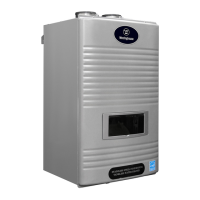
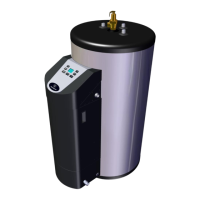
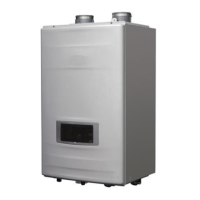
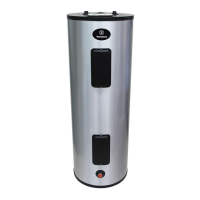
This document serves as a comprehensive Use and Care Manual for the Westinghouse Light Duty Commercial Premium Electric Water Heaters, designed for qualified installers and service technicians. It provides essential information for safe and efficient installation, operation, and maintenance of the water heater, emphasizing safety precautions and adherence to local codes and regulations.
Function Description
The Westinghouse Light Duty Commercial Premium Electric Water Heater is designed for indoor installations to provide hot water. It operates by heating water using electrical elements, controlled by thermostats that also incorporate a High Limit Control (ECO) for safety. The unit is intended for potable water systems and is not suitable for use as a pool heater. Its design allows for installation in various indoor settings, including closets, and on combustible flooring, provided adequate service clearances are maintained. The water heater is equipped with a temperature and pressure relief (T&P) valve, which is a critical safety component designed to protect against excessive pressures and temperatures within the system. The unit is also designed to be grounded for electrical safety.
Usage Features
The manual outlines several key usage features and considerations. For installation, the water heater must be placed upright on a level surface in a location where potential leaks or T&P valve discharge will not cause property damage. It is crucial to ensure ambient temperatures are maintained between 32°F (0°C) and 104°F (40°C) and to avoid continuously high humidity or proximity to flammable liquids. Proper plumbing is essential, including the installation of a shut-off or check valve on the cold water inlet line and the T&P valve in its designated opening. The hot and cold water fittings must be installed in the specified orientation to ensure proper operation and maintain warranty validity. The manual strongly recommends the use of an ASSE 1017 or ASSE 1070 rated mixing valve, especially in households with small children, disabled, or elderly persons, to prevent scalding by limiting the hot water discharge temperature. The water heater should be completely filled with water and air purged from the system before turning on the power to prevent damage to the heating elements from "dry-firing."
The water heater features dual elements, each controlled by a thermostat with an integrated High Limit Control (ECO). These thermostats are located above the heating elements and are designed to break the circuit if water temperature becomes excessively high, requiring a manual reset. Temperature adjustment is performed by turning a knob on the thermostat. The manual provides a table detailing approximate time/temperature relationships in scalds to guide users in setting a safe water temperature. It also emphasizes that the water heater is factory wired to a junction box for field wiring connections, and all electrical work must conform to local and national electrical codes, performed by a qualified licensed electrician. Grounding of the unit is mandatory for safety.
Maintenance Features
Regular maintenance is crucial for the safe and efficient operation and longevity of the water heater. The manual recommends annual inspections by a qualified service technician to ensure all equipment is operating safely and efficiently. Owners are encouraged to perform routine preventative maintenance as detailed in the manual. Monthly (or every two weeks in hard water locations), it is recommended to drain a few quarts of water from the heater to flush out sediment deposits, which helps lengthen the heater's service life. During this flushing operation, the power to the heater must be turned off to prevent damage to the heating elements.
Periodically (at least twice a year), the area around the water heater and related plumbing should be checked for leaks, and any flammable liquids or combustible materials should be removed. The T&P relief valve requires specific maintenance: it should be operated annually by lifting the lever to ensure waterways are clear, taking precautions to avoid personal injury from hot water discharge. If no water flows, the valve must be replaced. Furthermore, the T&P valve should be re-inspected and replaced if necessary by a licensed plumbing contractor at least once every three years to ensure it has not been affected by corrosive water conditions or tampered with.
For extended shut-off periods, especially in cold weather prone to freezing, the electric power should be turned off, the supply line shut-off valve closed, and the water heater drained to a safe drainage location. When hot water is needed again, the water supply should be restored, the tank filled, and power turned back on. The manual also addresses water chemistry requirements, advising professional analysis of water quality to prevent damage from chemical imbalance, lime scale build-up, or corrosive elements, which are not covered by warranty. If heating elements need replacement, it is critical to use only Westinghouse-approved elements of the same voltage, wattage, and construction, with an incoloy sheath and stainless steel hex plug. The manual provides a detailed procedure for heating element replacement, including draining the tank and ensuring proper sealing.


 To Next Page
 General