Need help?
Do you have a question about the WFCO WF-9800-AD Series and is the answer not in the manual?
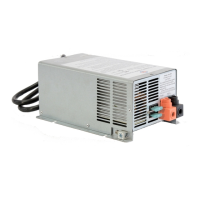
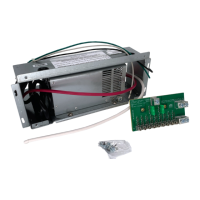
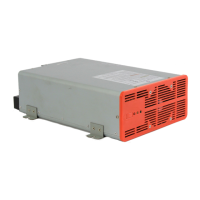
The WF-9800-AD Series is a deckmount converter-charger designed for recreational vehicles (RVs). Its primary function is to convert AC shore power into DC power to operate 12-volt RV appliances and to charge the RV's house battery. This series is equipped with an "Auto-detect" feature, which intelligently assesses the charging cycle of a battery, identifies its type (Lead Acid, AGM, or Lithium), and then selects the most appropriate charging program to ensure optimal performance and longevity for that specific battery.
For standard Lead Acid and AGM batteries, the WF-9800-AD Series employs a Three-Stage Smart Charging system. This system continuously monitors the battery voltage and regulates the charge through three distinct modes: Absorption, Bulk, and Float. The converter automatically switches between these modes based on the RV system voltage. In Absorption Mode, the converter typically provides a constant target output voltage of 13.6 VDC (nominal) to power branch circuits. It is current-limited, meaning if the output current reaches its maximum, the output voltage will drop to maintain the converter's maximum output current level. Bulk Mode is activated when the output current reaches its maximum, often due to a discharged battery. In this mode, the target output voltage shifts to 14.4 VDC, and a timer begins. The converter remains in Bulk Mode until the current draw drops to approximately five Amps or the timer reaches four hours, whichever comes first. After Bulk Mode, the target output voltage returns to 13.6 VDC for Absorption Mode. The third stage, Float Mode, provides a "trickle charge" to the battery after a prolonged period of stable current draw. In Float Mode, the voltage reduces from 13.6V to 13.2V, helping to preserve battery life while keeping it charged. Any significant change in DC current will cause the converter to exit Float Mode and return to Absorption or Bulk Mode as needed.
For Lithium batteries, the WF-9800-AD Series utilizes a Two-Stage Smart Charging system. This intelligent charger continuously measures the battery voltage output and regulates the charge using two modes of operation: Bulk and Absorption. Bulk Mode is designed to quickly restore energy to the battery and ensure the lithium cells remain balanced. It boosts the output voltage to 14.6 VDC, allowing maximum current flow. This stage can last from one to four hours, depending on the battery and load current. For a full battery, a minimum of one hour in Bulk Mode allows for cell balancing, while an empty battery can stay in Bulk Mode for up to four hours. If the application requires longer (e.g., for a larger battery bank), cycling the power will reset the timers. As the battery charges, the DC system voltage rises, and the converter's current output decreases. The converter exits Bulk Mode when the total amperage draw reaches a preset point within the one to four-hour timer. Absorption Mode, the default or normal operating mode for Lithium batteries, provides a safe operating voltage of 13.6 VDC for all RV loads. This voltage is maintained until the power to the converter is cycled, ensuring that RV lights and appliances are not subjected to undue stress.
The WF-9800-AD Series also incorporates several safety and protection features. Reverse Battery Hookup Protection is a crucial feature that prevents permanent damage to the converter if the RV battery is accidentally connected in reverse. Two reverse polarity fuses, located on the rear panel near the AC power cord, protect the converter circuitry and serve as the main connection between the converter-charger and the DC fuse board of a distribution center. These fuses must be replaced with ATC or ATO automotive type fuses of the correct amperage if they blow.
The converter-charger includes an Automatic Cooling Fan, which is controlled by the current (Amperage) load, not temperature. An on-board microprocessor increases fan speed as the total load increases and decreases it as the load decreases. This load-controlled fan design provides superior component cooling by preventing temperature spikes that could lead to premature component failure. Over-Temperature Protection is another safety mechanism; if the internal temperature exceeds a critical threshold, the unit will shut down to protect sensitive components from excessive heat. It will automatically restart once the internal temperature drops. Electronic Current Limiting ensures that if the output current surpasses the maximum rating, the output current remains constant while the output voltage drops. The unit recovers once the loads are reduced. Short-Circuit Protection is also integrated; in the event of a short circuit in the RV, the converter-charger will drop the voltage output to zero volts. If the short-circuit condition is resolved and no other faults are detected, the converter will resume normal operation. However, short-circuit conditions are hazardous and require inspection by a qualified service technician.
Maintenance features primarily involve checking and replacing fuses. For troubleshooting, if there is no DC output, users should first check the reverse polarity fuses on the rear panel for breaks in the fuse element or use a continuity tester. Blown fuses indicate a reverse battery connection, which must be corrected before replacing the fuses with the same type and amperage. If the converter output still reads 0.0 VDC after these checks, the converter may not be functioning properly. When checking converter output voltage, the battery cables should be disconnected, and the converter plugged into a live AC source (105-130 Volts). A voltmeter should then be used to measure the output voltage at the disconnected battery cables. A reading between 13.6 V and 14.6 V indicates proper functioning. If the output voltage is 0.0 VDC or the battery is not charging, an open inline fuse in the battery wire circuit (potentially installed by the RV manufacturer) or loose wiring connections should be checked.
Installation requires mounting the enclosure in an accessible area, such as a wall or cabinet side, near the shore power and battery(ies). The location should allow for adequate clearance, unobstructed ventilation openings, and free airflow for the cooling fan to prevent overheating. A minimum of two cubic feet of clear airspace is recommended. An 8AWG copper conductor must be used to bond the converter-charger to the vehicle frame. For DC connections, a Red 8 AWG wire connects to the POS+ lug on the distribution center's fuse board, and a Black 8 AWG wire connects to the NEG- lug. The battery is not strictly required for converter operation but works in conjunction with it to supply DC power, especially for dry camping or operating slide-outs and leveling systems. When installing batteries, they must be of the same brand, type, and preferably age. For AC connections, the WF-9800-AD Series receives power from a power cord on the opposite end of the enclosure from the DC lugs. Models WF-9835-AD, WF-9845-AD, and WF-9855-AD use a standard 15 Amp plug, while WF-9865-AD and WF-9875-AD use a 20 Amp plug due to higher current requirements. The 20 Amp receptacle must be wired to the fuse box using a minimum of 12AWG wire. The converter will not operate without AC input. A brief fan energization when a battery is connected or reconnected, or when the converter is initially energized on shore power, is normal as the circuitry recognizes the battery voltage.
 General
| Absorption Mode | 14.4 VDC |
|---|---|
| Charging Stages | 3-Stage Charging (Absorption, Float, Bulk) |
| Battery Type Compatibility | Lead-Acid, AGM, Gel |
| Protection Features | Short Circuit, Reverse Polarity |
| Agency Listings | UL, cUL |
| Features | reverse polarity protection |

 To Next Page