Section 3 - Fuel System
320 Outrage-Owner’s Manual
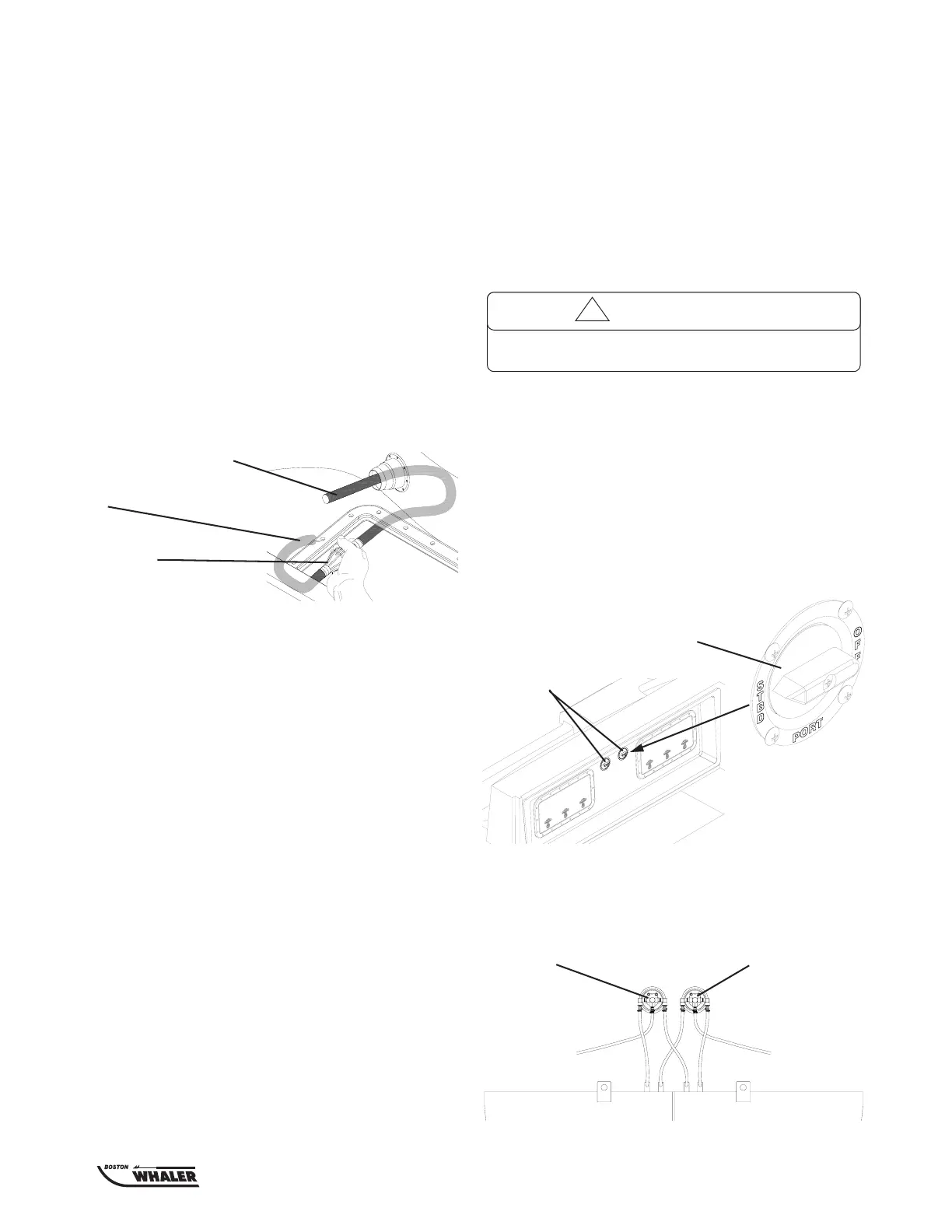
To Engine
Motorwell
hatch
Primer
bulb
Tank Selection
There are a pair of 3-way gasoline valves that con-
trol the flow of fuel to the engines. The fuel system
is designed to have the port engine supplied by the
port fuel tank and the starboard engine by the star-
board tank. The valves can be used so both engines
can be supplied by either tank. (If both engines will
be run from one fuel tank, the boat will eventually
list to the opposite side of the tank being used). The
valves have PORT, STARBOARD, OFF clearly
marked on the perimeter of each valve. Turn the valve
handles to the desired position for the appropriate
tank. Be sure to always check the level of each fuel
tank and position of fuel valves to prevent the boat
from becoming unbalanced while underway. The tank
selector gasoline valves are located on the aft wall
of the stern foldaway seat.
Fuel Valve
Fuel Valve
Location
Aft foldaway seat
has been removed
for clarity.
Primer Bulb (Optional)
If equipped, a pair of primer bulbs can be accessed
under the port and starboard sides of the motorwell
hatch. The primer bulbs are used to draw fuel from
the tank to the engine, usually after the fuel has been
drained from the entire system. There are also in-
structions regarding proper use of the primer bulb in
the engine manufacturers handbook.
From fuel
tank
Port Tank Starboard Tank
To Port
Engine
To Starboard
Engine
Port Tank
Selector Valve
Starboard Tank
Selector Valve
Fuel selector valves (looking forward)
The fuel tank(s) Deck fill plates have integrated fuel tank
vents which serve as a pressure/vacuum release, safety
overflow and flame arrestor.
Fuel Vent
EMPTY TANK:
A fuel tank with levels less than 1/4 full can cause
problems by stalling an engine due to fuel starvation
or by allowing sediment and dirt to enter the fuel
supply lines. Keeping the tank filled will reduce the
chance of this occurance; since the residue will most
likely settle to the bottom of the tank. Monitor the
fuel level often to prevent this from happening.
HOSES AND FITTINGS:
Hoses and fittings should be inspected at least every
100 hours. Check the hoses for cracks, abrasions and
deterioration and the strong smell of fuel prior to
starting the engine(s). If the hoses or fittings are dam-
aged or worn, replace them with only marine grade
NOTICE
!
Fuel gauge only reads accurately when boat is level (not
underway).
16


 To Next Page