Section 3 - Fuel System
320 Outrage-Owner’s Manual
18
• Secure the fill cap tightly.
• Portable tanks should only be filled while on the
ground; never on-board the boat.
REFER TO THE “Do’s and Don’ts At The Gas Pump”
DVD IN YOUR OWNER’S MANUAL PACKET FOR more
information.
Ethanol is an oxygenated hydrocarbon compound that
has a high octane rating and therefore is useful in in-
creasing the octane level of unleaded gasoline.
The fuel-system components of your Mercury engine(s)
have been tested to perform with the maximum level of
ethanol-blended gasoline (10% ethanol) currently al-
lowed by the EPA in the United States.
Special precautions should be considered with the use
of fuel containing ethanol in your system. Fuels with etha-
nol can attack some fuel-system components, such as
tanks and lines, if they are not made from acceptable
ethanol-compatible materials. This can lead to opera-
tional problems or safety issues such as clogged filters,
leaks or engine damage.
Your boat was manufactured, and shipped from the fac-
tory, with ethanol-compatible materials. Before introduc-
ing gasoline with ethanol into your fuel tank, ask your
dealer if any components have been added or replaced
that are not recommended by Boston Whaler, Mercury
or may not be ethanol-compatible.
FILLING THE TANK
It is best to maintain a full tank of fuel when the engine is
not in use. This will reduce air flow in and out of the tank
due to changes in temperature as well as limiting expo-
sure of the ethanol in the fuel to humidity and condensa-
tion.
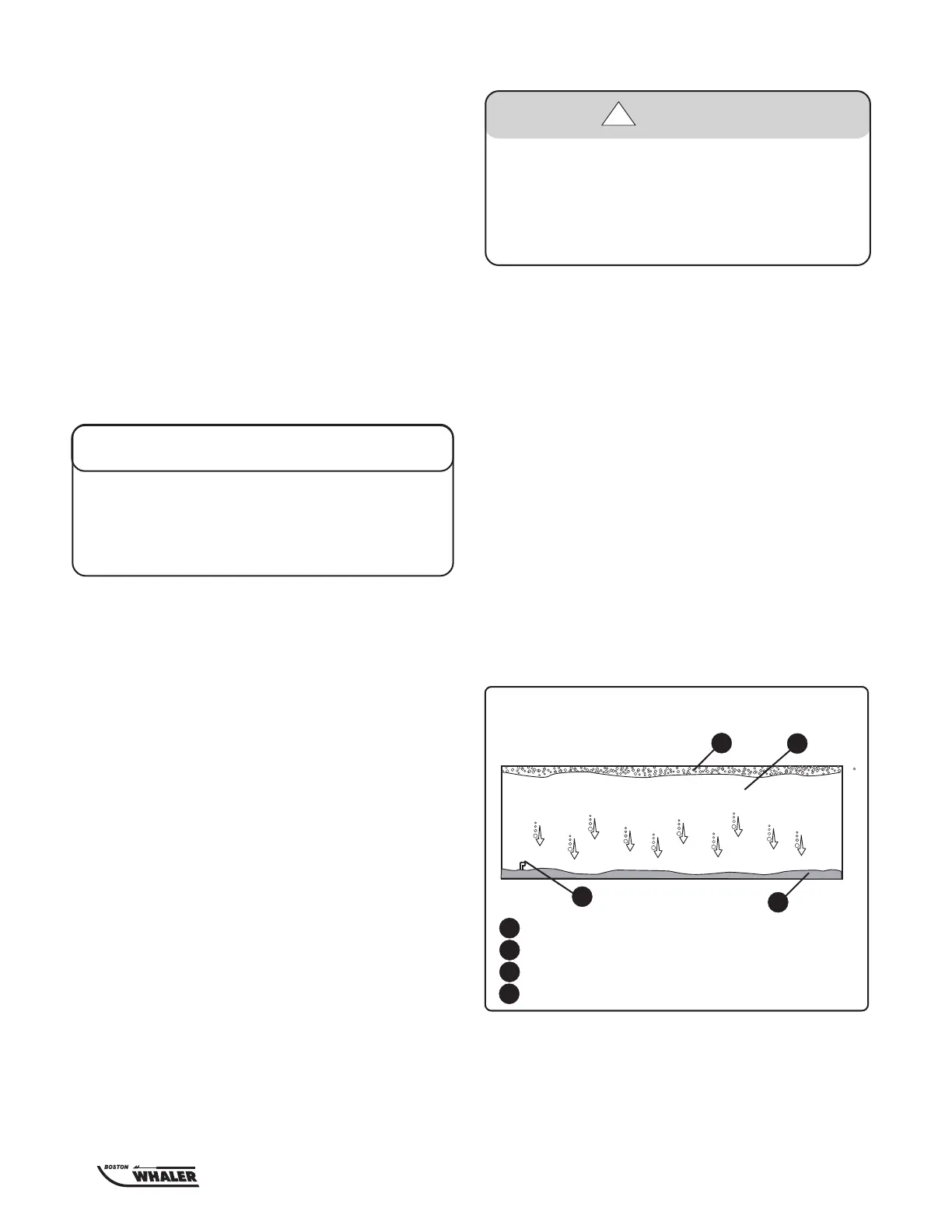
Example of Phase Separation
1
2
3
4
1
2
3
4
The use of improper gasoline or additives can
damage your fuel system and is considered
misuse of the system. Damaged caused by
improper gasoline or additives WILL NOT be
covered under warranty.
NOTICE
The use of fuels containing ethanol higher than
10 percent (E-10) can damage your engine and/
or fuel system and will void the warranty.
!
CAUTION
E85 FUELS COULD SERIOUSLY DAMAGE YOUR
ENGINES AND MUST NEVER BE USED.
Condensation
Upper Phase (water+fuel+ethanol)
Lower Phase (water+ethanol)
Fuel Inlet to Engine
Ethanol-Blended Fuel
PHASE SEPARATION
Humidity and condensation create water in your fuel tank
which can adversly effect the ethanol blended fuel. A
condition called phase separation can occur if water is
drawn into the fuel beyond the saturation point. The pres-
ence of water in the fuel beyond the saturation level will
cause most of the ethanol in the fuel to separate from the
bulk fuel and drop to the bottom of the tank, signifi-
cantly reducing the level of ethanol in the fuel mixture in
the upper level (phase). If the lower level (phase), con-
sisting of water and ethanol, is deep enough to reach the
fuel inlet, it could be pumped directly to the engine(s)
and cause significant problems. Engine problems can also
result from the reduced ethanol/fuel mixture left in the
upper phase of the tank.


 To Next Page