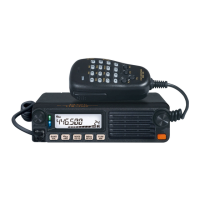
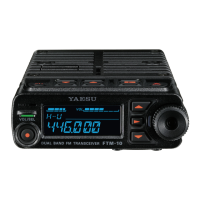
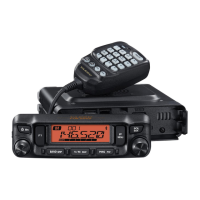
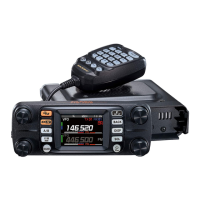
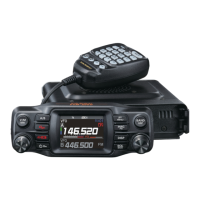
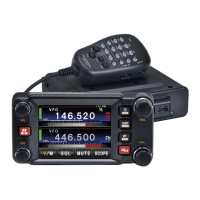
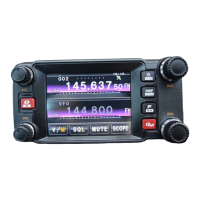
The Yaesu FTM-7250DR/DE is a VHF/UHF dual-band digital/analog transceiver designed for amateur radio enthusiasts. It supports C4FM/FM modes, offering both advanced digital communication capabilities and traditional analog FM operation.
Function Description:
The FTM-7250DR/DE serves as a versatile mobile transceiver, providing reliable communication across VHF and UHF bands. Its primary function is to transmit and receive voice and data signals, supporting both analog FM and Yaesu's C4FM digital mode. The C4FM digital mode offers several advantages, including improved voice clarity, data transmission capabilities, and advanced features like Automatic Mode Select (AMS), which automatically detects the incoming signal mode (C4FM digital or analog FM) and switches the receiver to match.
Key operational modes include:
- Basic Operation: Covers fundamental settings such as Microphone Gain, allowing users to adjust the microphone sensitivity for optimal audio input, and RF Squelch, which sets the squelch level to open only when signals exceeding a pre-set S-meter level are received, reducing unwanted noise.
- Advanced Operation: This section details more sophisticated functionalities.
- Programming Key Assignments: Users can customize the functions assigned to the P3 and P4 keys on the supplied MH-48A6JA Microphone, allowing for quick access to frequently used features like SQL OFF, HOME, WX CH, CD SRCH, SCAN, T CALL, TX POWER, MODE, GM, WIRES-X, and REV.
- Squelch Types: Supports various squelch types for both analog FM and C4FM digital modes, including Tone Squelch (CTCSS), Digital Coded Squelch (DCS), and Enhanced Paging & Code Squelch (EPCS). These features help filter out unwanted signals and allow for selective calling.
- Tone Search and DCS Search: Enables the transceiver to scan for incoming CTCSS tones or DCS codes, identifying the correct tone/code being transmitted by another station.
- Split Tone Operation: Allows for different CTCSS/DCS settings for transmit and receive, useful in repeater operations.
- EPCS (Enhanced Paging & Code Squelch): Provides advanced paging and selective calling features, enabling the transceiver to call a specific station or group. It includes functionalities for storing and activating EPCS tone pairs, and for notifying users of calls from remote stations via a bell function.
- DTMF Operation: Supports Dual Tone Multi Frequency (DTMF) operations, allowing users to transmit DTMF codes manually or register them in memory. This is useful for controlling repeaters or other devices. Settings for DTMF Autodialer sending speed and TX delay time are also available.
- Checking Repeater Uplink (Input) Frequency: Provides a way to verify the uplink frequency of a repeater, essential for correct repeater operation.
- Memory Operation:
- Split Memory: Allows for storing different transmit and receive frequencies in a memory channel, common for repeater use.
- Moving Memory Data to the VFO: Transfers data from a memory channel to the VFO (Variable Frequency Oscillator) for temporary use or modification.
- Memory Only Mode: Restricts operation to only memory channels.
- Naming a Memory Channel: Assigns alphanumeric "tags" (labels) to memory channels for easier identification.
- Scanning:
- Scan Resume Options: Configures how the scanner behaves after detecting a signal, including restarting scanning after a set amount of time or holding on the signal.
- Memory Skip Scanning: Allows users to skip specific memory channels during scanning.
- Preferential Memory Scan (PMS): Enables scanning of a "Preferential Scan List" of channels, which can be flagged for priority.
- Programmable Memory Scan (PMS): Sets up a PMS by registering lower and upper frequencies, allowing the transceiver to scan only within that defined range.
- Band Edge Beeper: Provides an audible alert when the scanning frequency reaches the band edge.
- Priority Channel Scanning (Dual Watch): Monitors a priority channel while simultaneously scanning other channels.
- Priority Revert Mode: Defines how the transceiver reverts to the priority channel during dual watch operation.
- GM Function (Group Monitor): This feature allows the transceiver to automatically check for other stations within communication range that are also using the GM function with the same DG-ID number. It displays information such as group mode, DG-ID number, memory tag, and frequency. It also includes GM Alert Beep, which provides alert beeps when detecting stations within range, and GM Polling Interval, which sets the polling frequency.
- Clone: Facilitates the transfer of memory and configuration data from one FTM-7250DR/DE transceiver to another.
- Setup (Menu) Mode: Provides access to a comprehensive list of menu items for configuring various transceiver settings.
Important Technical Specifications (Derived from the manual's content):
- Frequency Bands: VHF/UHF (specific frequency ranges not explicitly stated but implied by dual-band operation).
- Modes: C4FM Digital, Analog FM.
- Microphone: Supplied MH-48A6JA Microphone.
- Squelch Types: CTCSS, DCS, EPCS, RF Squelch.
- DTMF: 16-digit DTMF codes, up to 10 memory channels for DTMF.
- Memory Channels: Supports multiple memory channels for storing frequencies, split frequencies, and alphanumeric tags.
- Scanning Speed: Configurable scan resume options (e.g., 2.0 to 10.0 seconds).
- Power Output: Transmit power levels are adjustable (e.g., via TX POWER setting).
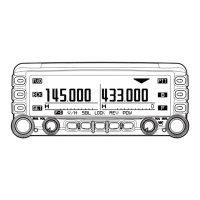
- Display: LCD display for showing frequency, mode, menu items, and other operational information.
- Connectivity: Modular plug for microphone, cloning cable connection (RJ12/6, 6 Position 6 Contact Modular Plug).
Usage Features:
- Intuitive Interface: The transceiver features a DIAL knob and dedicated buttons (e.g., [Mhz(SETUP)], [BAND(SQL)], [V/M(MW)], [GM(AMS)]) for easy navigation and setting adjustments.
- Customizable Controls: Microphone keys (P3, P4) can be programmed for quick access to frequently used functions, enhancing operational efficiency.
- Clear Display: The LCD provides clear readouts of operational status, frequencies, and menu selections.
- Digital Voice Clarity: C4FM digital mode offers superior voice quality compared to analog FM, especially in noisy environments.
- Automatic Mode Select (AMS): Simplifies operation by automatically switching between C4FM digital and analog FM modes based on the incoming signal.
- Selective Calling: CTCSS, DCS, and EPCS features allow users to communicate only with specific stations or groups, reducing interference from unwanted signals.
- Memory Management: Comprehensive memory features, including naming channels and split memory, help organize frequently used frequencies.
- Scanning Capabilities: Various scanning options (memory scan, PMS, priority scan) enable efficient monitoring of multiple channels or frequency ranges.
- Group Monitor (GM): Facilitates group communication and awareness of nearby stations using the GM function.
- Cloning Function: Simplifies the setup of multiple transceivers by allowing easy transfer of configurations.
Maintenance Features:
The manual primarily focuses on operational aspects rather than explicit maintenance features. However, implicit maintenance-related information includes:
- Firmware Updates: While not explicitly detailed as a user-accessible feature, modern transceivers often support firmware updates to improve performance or add new features. The "VER DISP" menu item displays the transceiver software version (CPU and DSP), which is relevant for checking current firmware.
- Troubleshooting: The manual provides guidance on specific error messages, such as "ERROR" during cloning, indicating issues like incorrect connections or battery voltage.
- Reset Functions: Although not explicitly shown in the provided excerpts, transceivers typically have reset functions to restore factory default settings, which can be a troubleshooting step.
- Cleaning: General electronic device maintenance practices, such as keeping the device clean and free from dust, would apply.
- Cable Management: Proper connection and disconnection of the microphone and cloning cables are important to prevent damage. The cloning section illustrates the correct pin assignments for the modular plug.
Overall, the Yaesu FTM-7250DR/DE is a feature-rich mobile transceiver designed to meet the diverse communication needs of amateur radio operators, offering a blend of advanced digital capabilities and reliable analog performance.

 Need help?
 General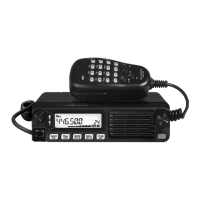

 To Next Page