252
CHAPTER FOURTEEN
mounting bolt on each side, tighten it to
72
N*m
(53
ft.-lb.). If equipped with three rear mounting bolts
on each side, tighten them to 24
N-m
(17
ft.-lb.).
Inspection
1.
Clean all bolts, nuts and threaded holes thoroughly
with solvent.
2. Inspect the suspension attaching bolts for thread dam
-
age or breakage. Replace damaged bolts as required.
3.
Visually inspect bolts for wear, cracks, bends or other
abnormal conditions. If there is any doubt about the con
-
dition of a bolt, replace
it.
4. Clean the complete suspension assembly and check
vi
-
sually for obvious damage.
5.
Inspect the wheels and slides for damage. Replace
parts as required.
6.
Check the suspension components and frame for obvi
-
ous damage. Refer to the appropriate sections in this chap
-
ter for inspection of specific components.
WEAR
STRIPS
The wear strips are installed on the bottom of the runner
and held in position with a single screw located near the
front. Replace the wear strips when worn or otherwise
damaged. If the wear strips are unusually worn, check the
slide rails for twists or
other damage.
1. Remove the rear suspension as described in this chap
-
ter.
2.
Inspect the slide rails for cracks or other damage. If
a
crack is found, replace the slide rail as described in this
procedure.
3.
Install new wear strips
if
the thickness is less than
10
mm
(0.39
in.)
thick.
NOTE
Replace the wear strips as a set.
4.
Remove the wear strips as follows:
Turn the rear suspension over and rest
it
upside
down on the workbench.
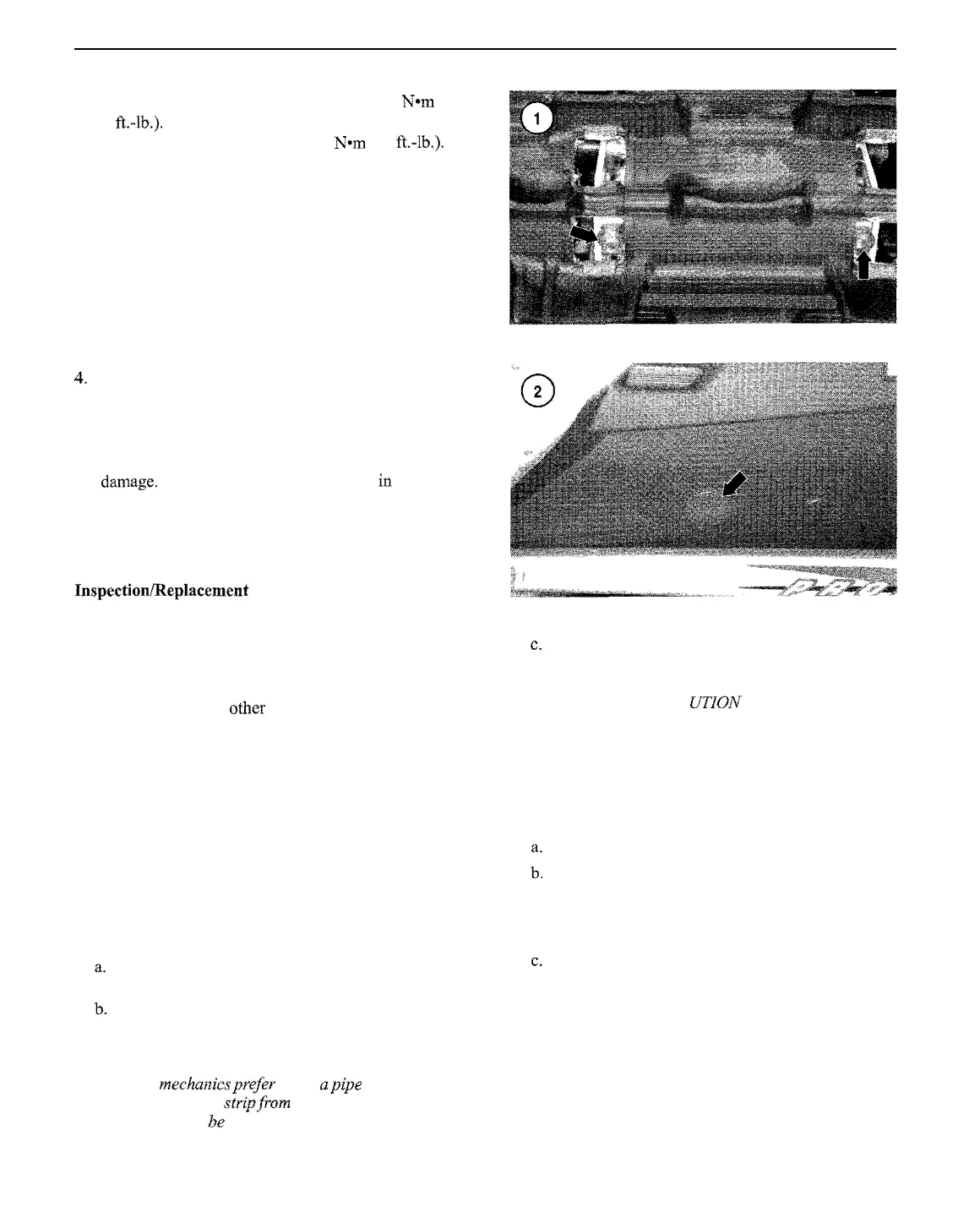
Remove the screw
(Figure
5)
from the front of each
wear strip.
NOTE
Some mechanicsprefer to use apipe wrench
to
roll
the
wear strip/rom a rail. Ifremoving
in
this
way,
be
careful
not
to damage the
rail.
c. Working at the front of the slide rail, drive the wear
strip to the rear of the rail.
CA
UTION
If
necessary,
use a wooden block
and.
ham
-
mer
to
drive the wear strips toward the rear.
Do not use a steelpunch or
it
may damage
the slide rail.
5.
Inspect the slide rail as follows:
Clean the slide rail with solvent and dry thoroughly.
Place a straightedge along the side of the rail and
check for bends.
If
a slide rail is bent, straighten or
replace
it.
If the bend is excessive or if the rail is
cracked or damaged, replace it.
Check the slide rail for gouges or cracks along the
path of the wear strip. Smooth any rough surfaces
with a file or sandpaper.
6.
Install the wear strips as follows:
a. Grease the rail surface lightly to ease installation.
b. Working from the back of the runner, align the front
of the wear strip (end with hole) with the rear of the
rail. Push the wear strip onto the rail. Use a wooden
block and hammer if necessary.






 To Next Page