Need help?
Do you have a question about the Yamaha PC4800N and is the answer not in the manual?
Details compliance with FCC Part 15 for Class B digital devices.
Explains symbols for high voltage and caution.
Instructions for safe earthing and wire color coding for mains connection.
Warnings related to power cord, liquids, objects, and installation environment.
Warnings regarding power cord, unit cover, modifications, and lightning.
Steps to take if smoke, odor, noise, or foreign objects are detected.
Advice on suitable locations and avoiding hazards during installation.
Importance of airflow and maintaining clearance for cooling.
Details on XLR connector wiring for audio signals.
How cell phones can cause noise and mitigation advice.
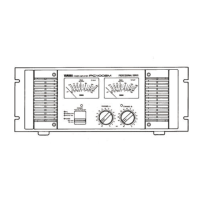
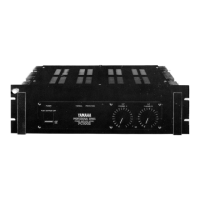
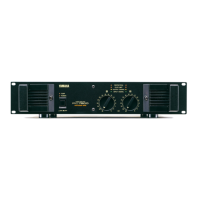
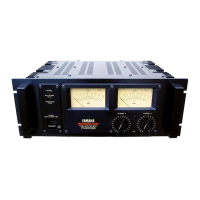
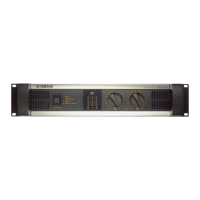
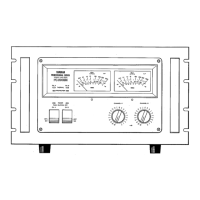
Highlights of the amplifier's capabilities, modes, and components.
Explanation of POWER/STAND-BY, REMOTE, PROTECTION, and TEMP indicators.
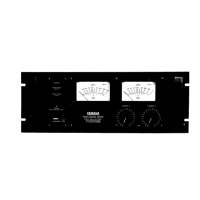
Description of output level meters, CLIP indicators, and volume knobs.
Information on air intakes and the security cover for volume controls.
Details on XLR inputs, STEREO/PARALLEL/BRIDGE modes.
Information on Speakon, binding post outputs, and HPF switches.
Explanation of DATA ports for external control and AMP ID switch.
Covers GND terminals for hum reduction and the AC inlet.
Diagrams and impedance for STEREO/PARALLEL connections.
Diagrams and impedance for BRIDGE mode connection.
Instructions for connecting speakers using the Speakon connector.
Step-by-step guide for connecting via Euroblock terminals.
How to connect speakers using binding posts, including wire preparation.
Instructions for connecting speakers via the Speakon jacks.
Explanation of the unit's forced cooling system and air intake/exhaust.
Recommendations for rack mounting to ensure proper ventilation and stability.
Detailed technical parameters for PC9500N and PC4800N models.
Visual representation of the amplifier's internal circuitry and signal flow.
Diagrams showing the external measurements of the amplifier unit.
Table of common problems, causes, remedies, and protection circuits.
Graphs illustrating power consumption versus output power for different models.

 To Next Page

 General