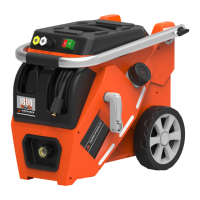
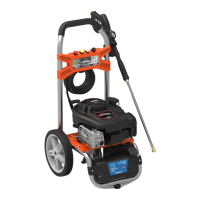
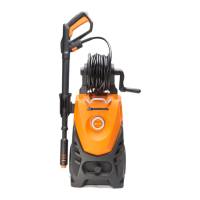
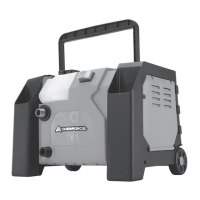
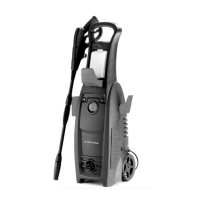
The document describes the Yard Force YF2200LC Electric Pressure Washer, a tool designed for outdoor cleaning tasks. This pressure washer is intended for residential use and is equipped with features to ensure efficient and safe operation.
Function Description
The Yard Force YF2200LC is an electric pressure washer that uses a high-pressure stream of water to clean various surfaces. Its primary function is to remove dirt, grime, and other contaminants from outdoor areas such as driveways, patios, siding, vehicles, and more. The device operates by drawing water from a garden hose, pressurizing it through a pump, and then expelling it through a spray gun and wand with various nozzles.
A key functional aspect is the Total Stop System (TSS). This system senses when the trigger on the spray gun is depressed or released. When the trigger is released, the TSS opens the power circuit to the motor, causing the pressure washer motor to stop. The motor automatically restarts when the trigger is depressed again. This feature not only conserves energy but also prolongs the life of the pump by preventing it from running continuously when not actively spraying.
The pressure washer is designed to be used with cold water only, and connecting it to a hot water supply is explicitly warned against as it can significantly reduce the life of the pump. It is also designed for use with specific cleaning detergents approved for pressure washers, which can be dispensed through a dedicated system for enhanced cleaning effectiveness.
Usage Features
The YF2200LC offers several features that contribute to its ease of use and versatility:
- Nozzle System: The pressure washer comes with multiple nozzles, including a Turbo nozzle, 15°, 25°, 40° nozzles, and a Soap nozzle. These different spray tips allow users to select the appropriate spray pattern and pressure for various cleaning tasks. For instance, the Soap nozzle is used for applying detergents at low pressure, while higher-degree nozzles are suitable for rinsing and general cleaning. The Turbo nozzle provides a concentrated, oscillating stream for tough dirt.
- Detergent Dispenser: The integrated detergent tank allows for the application of cleaning solutions. When using the low-pressure spray tip (black), the liquid detergent automatically mixes with water and is discharged through the nozzle. This feature is crucial for tasks requiring soap application to loosen dirt before high-pressure rinsing. Users are advised to apply detergent from bottom to top on vertical surfaces and allow it to sit briefly before rinsing.
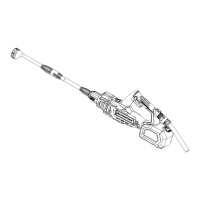
- Safety Lock: The spray gun is equipped with a safety lock to prevent accidental engagement of the trigger. This is a critical safety feature, especially when changing nozzles or when the unit is not in active use.
- Mobility: The unit is designed with wheels and a handle, making it easy to move around the cleaning site. The assembly process involves attaching the wheels, handles, and storage bucket, indicating a focus on user convenience and portability.
- GFCI Protection: The power cord includes a Ground Fault Circuit Interrupter (GFCI) for additional protection against electrical shock. Users are instructed to test the GFCI before each use to ensure it is functioning correctly.
- Water Supply Requirements: The device requires a garden hose of at least 1/2" (13 mm) in diameter with a flow rate of at least 2 GPM (gallons per minute) and a supply pressure between 40 to 80 PSI. The maximum water supply temperature is 104°F (40°C).
Maintenance Features
Proper maintenance is essential for the longevity and optimal performance of the pressure washer. The manual outlines several key maintenance procedures:
- Water Filter Screen Cleaning: The pressure washer is equipped with a water inlet filter screen to protect the pump from debris. Regular cleaning of this screen is crucial to prevent restriction of water flow and potential damage to the pump. The process involves removing the inlet adaptor, taking out the filter screen, rinsing it, and then replacing it. A similar filter screen is present in the wand and also requires regular cleaning using needle-nose pliers and a cleaning tool.
- Nozzle Cleaning: Clogged spray tips can lead to excessively high pump pressure. The manual provides instructions for cleaning the spray tips by carefully inserting a provided needle into the tip to remove any deposited dirt.
- Detergent System Cleaning: After using detergents, the system should be rinsed clean by filling the detergent tank with clean water and running it at low pressure for one minute. This prevents clogging of the dispensing system.
- General Cleaning: The main body of the pressure washer should be cleaned using only mild soap and a damp cloth. Users are warned against using the unit to clean itself.
- Lubrication: Connections on pressure washer hoses, the gun, and the spray wand should be regularly cleaned and lubricated with non-water soluble grease to ensure smooth operation and prevent wear.
- Winterizing Procedure: For storage in freezing temperatures, an "Optimum Winterizing Procedure" is recommended using a Pressure Washer Pump Saver (not included). This process involves connecting the pump saver hose to the water inlet and running the fluid through the system to lubricate internal parts, protect against rust, and prevent freezing.
- Storage: After use, the unit should be depressurized, disconnected from water and power, and stored in a room that does not reach freezing temperatures, away from heat sources that could dry out pump seals.
The manual emphasizes that repairs should be performed by authorized service centers using identical replacement parts to ensure product safety and reliability.


 To Next Page
 General