46 YORK INTERNATIONAL
SPECTRAL ALARM BANDS FOR 4/6 LOBE TWIN SCREW CHILLERS (Cont’d)
(YS___S0 through S5 YORK Screw Chillers)
Reference: Proven method for specifiying spectral band alarm levels and frequencies using today’s predictive main-
tenance software systems
James E. Berry, Technical Associates of Charlotte, Inc.
OVERALL LEVEL OA 0.500 IN/SEC (0-PK)
MTR/MALE RTR RPM MTR 3570 RPM = 59.5 Hz
4/6 LOBE RATIO LR 0.67
FEMALE ROTOR IDLE 2380 RPM = 39.7 Hz
MALE ROTOR LOBES LOB 4
PUMPING FREQUENCY BPF 14280 CPM = 238.0 Hz
FREQUENCY MAX FMAX 178500 CPM = 2,975.0 Hz
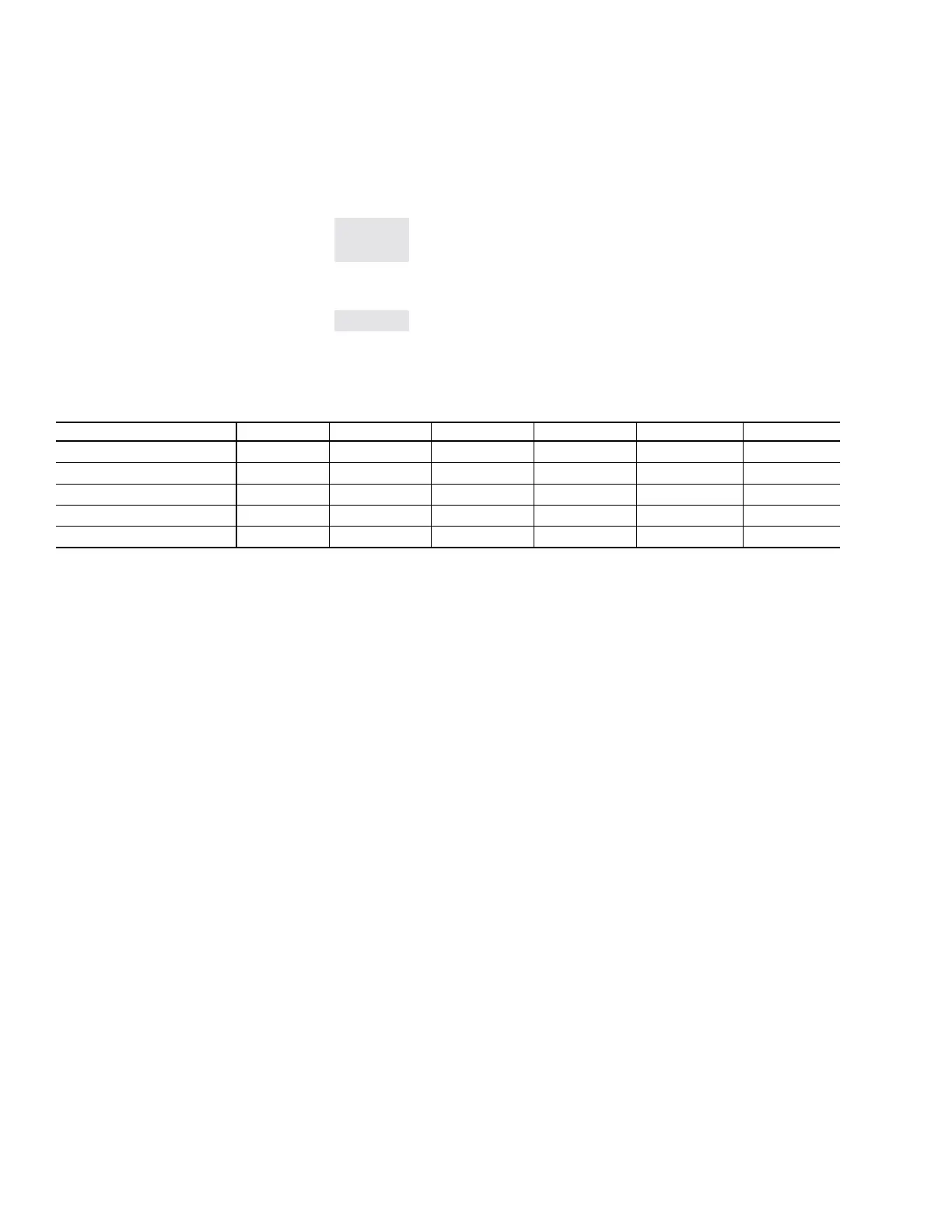
ITEM BAND 1 BAND 2 BAND 3 BAND 4 BAND 5 BAND 6
BAND LOWER FREQ., CPM 1,904 6,426 11,424 35,700 64,260 92,820
BAND UPPER FREQ., CPM 6,426 11,424 35,700 64,260 92,820 178,500
BAND LOWER FREQ., Hz 32 107 190 595 1,071 1,547
BAND UPPER FREQ., Hz 107 190 595 1,071 1,547 2,975
BAND ALARM LEVEL 0.27 0.2 0.4 0.35 0.3 0.15
DESCRIPTION OF BAND COVERAGE
BAND 1 MOTOR/MALE RTR & FEMALE RTR RPM
BAND 2 2X - 3X MOTOR/MALE ROTOR
BAND 3 1X - 2X COMPR. PUMPING FREQUENCY
BAND 4 3X - 4X COMPR. PUMPING FREQUENCY
BAND 5 5X - 6X COMPR. PUMPING FREQUENCY
BAND 6 >6X COMPR. PUMPING FREQUENCY - FMAX.
NOTES:
1. Assume measurements by accelerometer or velocity pickup as close as possible to Bearing Housing, see Fig. 26.
2. Assume machine NOT mounted on vibration isolators (for isolated machinery - set alarm levels 50% higher).
3. Set motor levels same as compressor given above.
4. Chiller must be at a consistent condition (not only motor amps) when measurements are taken. Monitor and record all performance
parameters.
5. Aerodynamic noise (pressure pulsation) sources dominate mechanical sources at pumping frequency and harmonics and does not
represent energy transmitted through bearings.
6. Set danger levels 50% higher than alarm levels.
7. Another set of data with much higher Fmax can be used to detect additional stages of bearing failure using techniques described in
Preventative Maintenance literature.




 To Next Page