Page 44 Large-scale Decoder & Sound Decoder MX695/6/7/9
ZIMO cab key arrangement
((((( 1 F0 ((((( 2 F1 ((((( 3 F2
((((( 4 F3 ((((( 5 F4 ((((( 6 F5
((((( 7 F6 ((((( 8 F7 ((((( 9 F8
ZIMO cab key arrangement:
((((( 1 F0 ((((( 2 F1 ((((( 3 F2
((((( 4 F3 ((((( 5 F4 ((((( 6 F5
((((( 7 F6 ((((( 8 F7 ((((( 9 F8
a wrong key is pressed (F4, F5 etc.)
The “confirmation jingle” is played after ending the selection procedure with F3 or F8.
The engines can be operated normally during the selection procedure: with speed regulator,
direction key and MAN key (the latter only with ZIMO cabs); functions cannot be actuated until
the selection procedure is terminated with F3, F8 or by other programming steps, see above.
Selecting boiling, whistle, blow-off, brake squeal sounds…
within a sound collection or a sound project containing several samples per group:
The selection procedures for these “automated background sounds” are initiated with a
“Pseudo-Programming” in operations mode programming
CV #300 = 128 for the boiling sound (steam only) .
CV #300 = 129 for direction-change sound .
CV #300 = 130 for the brake squeal .
CV #300 = 131 thyristor-control sound (electric engine) .
CV #300 = 132 for the “start” whistle or horn .
CV #300 = 133 for blow-off sound =cylinder valves (STEAM only) .
NOTE: the blow-off selection (CV #300 = 133) is also valid for function key playback (CV #312).
CV #300 = 134 for the driving sound of ELECTRIC engines .
CV #300 = 135 for rolling noise .
CV #300 = 136 for the switchgear sound of ELECTRIC engines .
CV #300 = 137 for a second Thyristor sound (ELEKTRIC engines) .
CV #300 = 141 for the turbo charger (DIESEL engine) .
CV #300 = 142 for the „dynamic brake“ (Electric brake, ELEKTRIC engines) .
The selection procedure for background sounds is the same as for the selection of chuff
sounds. EXCEPT: the engine should be at a standstill because the speed regulator is used
for setting the volume of the relevant sound file!
Note: these sound files can also be used as function sounds, allocated to function keys (see
next page); the automated back-ground sounds can then be cancelled with the function keys.
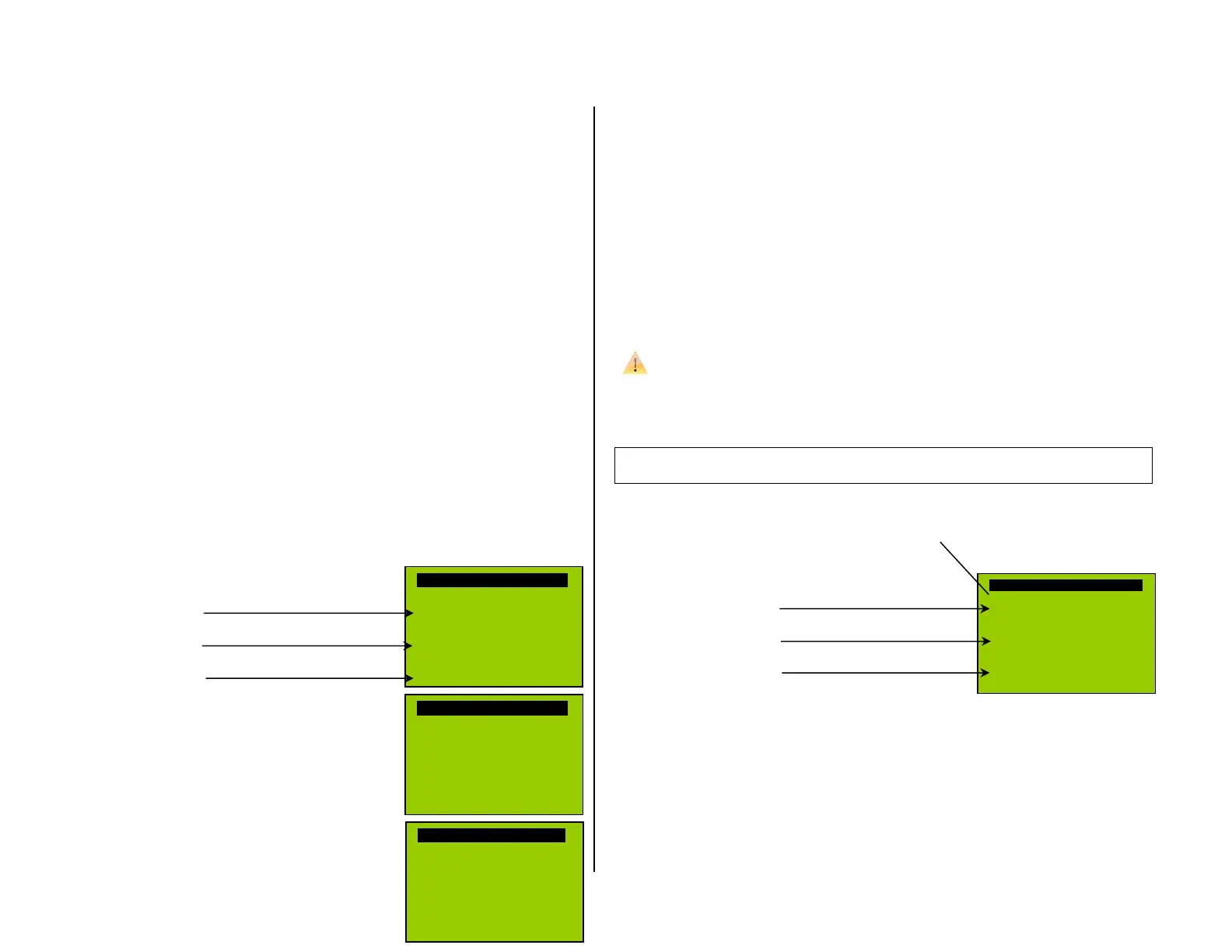
The function keys have the following special meaning
during the selection procedure; speed regulator is
used for volume setting!
Function keys are used as with chuff selections:
F0 = play: plays back the currently selected sound
F1, F2 = prev., next: plays back the previous or next recording.
F4, F5 = prev., next: switches between sound groups.
The speed regulator acts as volume control for the
background sound during the selection procedure.
F3 = CLEAR + end: Selection procedure is stopped
and the current sample removed.
F8 = STORE + end : Selection procedure is stopped
and the new selection activated.
The selection procedure can also be ended by any other
programming procedure or by removing power.
Normal function outputs cannot be activated as long as
the selection procedure is active.
Allocating sound samples to function keys F1 … F19:
within a sound collection or a sound project containing several samples per group:
A sound sample can be allocated to each function key F1…F19 from the sound samples
stored in the decoder. It is absolutely permissible to have a function key assigned for a func-
tion output (FO1, FO2 etc.) as well as for a sound function, both of which will be activated
when the key is pressed.
The allocation procedure for function sounds are initiated with a “Pseudo-Programming” in
operations mode programming:
CV # 300 = 1 for function F1
CV # 300 = 2 for function F2
etc. until F19
CV # 300 = 20 for function F0 (!) .
Note: Function F4 is by default used for water drainage sound (with CV #312); if F4
is to be used for something different, CV #312 must be set to zero (CV #312 = 0).
The allocation procedure is very similar to the selection procedures for driving and back-
ground sounds, with the difference that sound allocation is not limited to sound samples of a
certain group but also allows switching between groups to find the desired sample.
Sound samples are organized in groups for easier location; i.e. groups like “short whistle” /
“long whistle” / “horn” / “bell” / “shoveling coal / “announcements” and much more.
The engine should remain stationary though since the speed regulator is used for volume
settings during the allocation procedure!
Depends on entry: F1 . . . F19
The function keys have the following
special meaning during the selection
procedure!
F0 = play : plays back the current chuff sound for evaluation.
F1, F2 = prev, next : plays back the previous or next recording stored in the decoder.
F4, F5 = prev, next : switches between sound groups (e.g. whistles, bells etc.); starts play
back the with the first sample of this group.
The speed regulator acts as volume control for the selected sound during allocation procedure.
F6 = loop : If F6 is “on” when exiting the allocation procedures, the sound sample is stored
and played back as long as the relevant function key is pressed by
Playable whistle! repeating the sound between the loop markers (the loop marks are part of
the sound file).
F7 = short : If F7 is “on” when exiting the allocation procedures, the sound sample is
FUNCTION SOUND SELECTION.
F6 --- SAMPLE ---
((((( play ((((( prev ((((( next
CLEAR --- GROUP ----
((((( + end ((((( prev ((((( next
----- LOOP ----- STORE
((((( loop ((((( short ((((( + end
SOUND SELECTION .
BOILING --- SAMPLE ---
((((( play ((((( prev ((((( next
CLEAR --- GROUP ----
((((( + end ((((( prev ((((( next
STORE
((((( ((((( ((((( + end
SOUND SELECTION .
BREAK SQUEAL -- SAMPLE -
((((( play ((((( prev ((((( next
CLEAR --- GROUP ----
((((( + end ((((( prev ((((( next
STORE
((((( ((((( ((((( + end
SOUND SELECTION .
BLOW OFF --- SAMPLE ---
((((( play ((((( prev ((((( next
CLEAR --- GROUP ----
((((( + end ((((( prev ((((( next
STORE
((((( ((((( ((((( + end


 To Next Page